What Is Halal Meaning? A Clear Guide to Halal Definitions and Practices
What Is Halal Meaning? A Clear Guide to Halal Definitions and Practices
What is the halal meaning? This is not a single, static answer, but a living concept whose definition expands across faith, culture, law, and everyday decision making. In this long guide, we explore the halal meaning from multiple angles: theological foundations, practical rules for food and non-food items, certification practices, and how people navigate complex products and industries. You will encounter variations of the phrase “what is halal meaning” as we describe how the term operates in different contexts and regions. The goal is to offer a clear, comprehensive, and usable map of the halal definition for readers who seek both depth and practical guidance.
At its most basic level, halal is an Arabic word that translates roughly to "permissible" or "allowed." But the halal meaning goes beyond a mere legalistic checkbox. In Islamic ethics, the concept encompasses not only what is allowed, but what is beneficial and pure. The central idea combines two strands: a legal category (what is permitted by Islamic law) and a moral/ethical dimension (what is wholesome and good for a person and society). In short, the halal meaning is about permission plus responsibility.
For readers seeking a precise definition, a concise formulation is: Halal refers to actions, products, and processes that are deemed permissible under Islamic law (Sharia) and consistent with welfare, cleanliness, and humane treatment. The halal definition therefore includes both the prohibition of haram (forbidden) items and the affirmative authorization of things that fulfill the criteria of cleanliness, ethical conduct, and accountability.
Two quick phrases often used to capture the scope are halal meaning as “lawful and wholesome” and “permitted by God’s law with an emphasis on purity and ethical intent.” In everyday speech, people also use phrases like what is halal meaning in food or halal meaning in commerce, and those phrases point to domain-specific rules while sharing the same overarching framework.
Halal Meaning Across Contexts: Food, Finance, and Lifestyle
Halal in Food and Drink
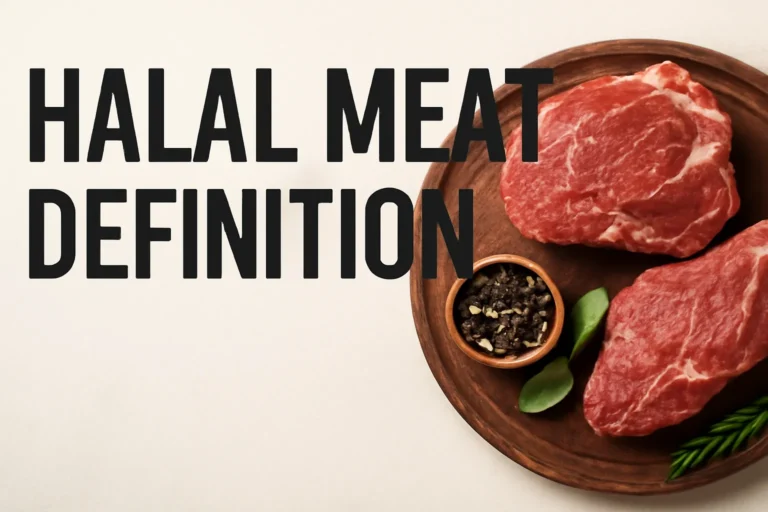
The most familiar domain for the halal meaning is food. When Muslims talk about halal foods, they are usually referring to meat that has been slaughtered according to zabiha (permissible slaughter) and prepared under stringent cleanliness standards. But halal meaning in food also covers how animals are raised, fed, and treated, as well as the absence of prohibited ingredients such as pork, alcohol, and other intoxicants. The halal definition for edible products often encompasses processing aids, flavorings, and additives that may be derived from haram sources or may have cross-contamination risks.
In broader terms, halal meaning in cuisine includes labeling accuracy, ethical sourcing, and consistency across products. For example, a product labeled as halal should not only declare that it contains permissible ingredients but also avoid contamination with haram substances during production, packaging, and distribution. This is why many manufacturers obtain formal halal certification and subject their facilities to audits.
Beyond the kitchen, the halal meaning extends to business, banking, insurance, and investment. In Islamic finance, halal meaning translates into financial products that comply with Shariah principles. Key constraints include avoidance of interest (riba), prohibition of excessive uncertainty (gharar), and prohibition of investments in haram sectors (such as alcohol, gambling, or weapons). Financial products that meet these criteria are often described as halal finance or halal investments.
For consumers, the halal definition in finance means choosing banks, funds, and insurance plans that are certified as Shariah-compliant. The halal meaning in commerce also covers transparency, fairness, and ethical conduct in contracts, pricing, and advertising. The term frequently appears with certification marks or a list of screened product categories to guide shoppers toward permissible options.
Halal Beyond Food: Personal Care, Medicines, and Travel
In daily life, the halal meaning also applies to cosmetics, pharmaceuticals, and even travel or media. Personal care products should avoid haram ingredients such as certain alcohol-based solvents in some interpretations, while medicines must adhere to safety and efficacy standards without including prohibited components. Hospitals, clinics, and pharmaceutical manufacturers may seek halal certification to demonstrate compatibility with Muslim consumers’ expectations. Travel, education, and media may also be evaluated through the halal meaning lens, emphasizing cleanliness, modesty, and avoidance of exposure to haram content.
Common Misconceptions About Halal Meaning
Halal is the same as kosher: While both systems share a framework of religious dietary law, they originate in different traditions and have distinct rules. The halal meaning is rooted in Islam and differs from kosher guidelines in several specifics, though some overlapping concepts exist—especially around slaughter methods and animal welfare.
All halal foods are automatically healthy: Halal status concerns permissible ingredients and methods, not necessarily the nutritional quality or healthfulness of a product. Consumers still need to assess sugar, fat, salt, and other ingredients.
Halal certification guarantees premium quality: Halal certification focuses on compliance with religious and ethical standards, not necessarily on taste, quality, or safety alone. It is an important marker, but not a universal guarantee of excellence.
Halal and Tayyib are interchangeable: “Halal” means permissible, while “Tayyib” adds the dimension of wholesomeness and good quality. Some discussions treat Tayyib as a higher-level ideal that complements halal by addressing purity, freshness, and welfare.
Halal applies only to meat: The halal meaning extends to many product categories, including drinks, processed foods, cosmetics, medications, and financial products. The scope is broader than meat alone.
The Halal Slaughter and the Zabiha Method
A primary component of the halal meaning in meat products is the slaughter method, often referred to as zabiha or dhabihah. In this method, a trained Muslim slaughterer swiftly and humanely severs the animal’s throat with a sharp knife, while the name of God (the remembrance of Allah) is invoked. The goal is to minimize suffering, ensure rapid blood drainage, and maintain overall hygiene and purity if the animal is healthy and slaughtered under appropriate conditions.
Important elements of the halal definition for slaughter include:
- The animal must be lawful to consume (for instance, certain species are permitted, others are not).
- The animal should be healthy and slaughtered with a swift, single motion.
- The name of God must be invoked at the moment of slaughter (in many traditions, this is a short declaration or blessing).
- The facility must prevent contamination with haram substances and maintain cleanliness throughout processing.
There are variations in practice among different schools of thought, cultures, and certification agencies, but the core principle remains the same: humane treatment, clear labeling, and adherence to recognized halal standards. Some Muslim communities may also accept meat slaughtered by other means if they align with the halal meaning of being lawful and ethically sound, while others require explicit zabiha methods. This nuance is often addressed by local certifying bodies and consumer education materials.
Halal Certification and Certification Bodies
Certification is a practical mechanism to translate the broad halal meaning into everyday shopping choices. A halal certification is typically issued by a recognized body that audits a product, facility, or supplier against a comprehensive standard. These standards cover ingredient sources, processing aids, cross-contamination risks, storage and handling, labeling, and documentary traceability. The goal is to reassure consumers that the product aligns with the halal definition in all relevant aspects.
Key components of halal certification include:
Pre-approval of ingredients to ensure they are permissible and free from haram components.
Sanitation and hygiene controls to prevent cross-contamination with haram substances.
Periodic inspections and audits of the production line, storage, and packaging.
Traceability from raw material to finished product, including supplier certification of ingredients.
Clear labeling on packaging to communicate halal status to consumers, often with a certification mark, code, or certificate number.
Documentation showing compliance with regional and international halal standards, which may be recognized by retailers and institutions.
There are many certifying bodies around the world, reflecting regional interpretations, local laws, and industry needs. The presence of a credible halal certification often makes it easier for products to enter markets with Muslim consumers and institutions such as mosques, schools, and government procurement programs. Consumers who are careful about the halal meaning should look for certification marks, assess the credibility of the certifier, and verify whether the seal is current and applicable to the product in question.
Regional Variations and Standards
Because halal practice is embedded in religious and cultural contexts, there are regional differences in standards, labeling, and certification expectations. In some regions, the standard for halal is highly prescriptive, while in others it allows for more flexibility depending on the market and consumer base. The halal meaning in different regions can be influenced by:
Local religious authorities and their interpretations of Shariah law.
National food safety regulations and consumer protection laws.
The presence of international halal certification bodies and how they interact with local standards.
Market forces, including demand from Muslim communities and expectations of non-Muslim consumers seeking ethical supply chains.
Examples of regional considerations include: Asia-Pacific markets where many products carry consumer-facing halal logos alongside other certifications; the Middle East where large-scale halal meat production is integrated with national standards; Europe and North America where halal certification often accompanies kosher certification or stands alone; and Africa where local halal bodies collaborate with international standards. The upshot is that the halal meaning is adaptable to local conditions while maintaining core principles of permissible sources, humane treatment, cleanliness, and transparency.
Ethics, Welfare, and the Tayyib Connection
Another dimension of the halal meaning is the relationship between halal and tayyib, an Arabic term meaning wholesome, good-tasting, and beneficial. In practice, many scholars and certification programs treat halal as the baseline and tayyib as an elevated standard that emphasizes farmer welfare, environmental stewardship, humane slaughter practices, and the overall quality and wholesomeness of the product. The combination “halal and tayyib” reflects a moral philosophy: what is permissible should also be good, pure, safe, and ethically produced. This linkage resonates with consumers who seek not only compliance with religious law but also socially responsible and sustainable supply chains.
Practical Guide: How to Verify Halal and Read Labels
For everyday shoppers, navigating the halal meaning on product labels can be challenging. Here is a practical, step-by-step guide to help you verify halal status effectively:
Look for a credible halal certification mark on the packaging. If the product has no label, proceed to step 2 with caution.
Check the name of the certifying body. Research whether the certifier is recognized in your country or region and whether it publishes its standards publicly.
Read the ingredient list carefully. Watch for haram components such as pork derivatives, alcohol, enzyme sources of uncertain origin, and gelatin or emulsifiers derived from haram animals.
Consider processing aids and potential cross-contamination. Even if an ingredient is halal, the facility should prevent contact with haram substances during production, storage, and handling.
Check for cross-border or multi-region acceptance. Some products may be halal in one market but not in another, due to differing certification scopes.
Ask questions if in doubt. Contact manufacturers, retailers, or local mosques for guidance on ambiguous ingredients or labeling practices.
Be aware of regional interpretations. Some audiences accept certain ingredients or slaughter methods that others do not. Understanding local practice helps you align choices with your own criteria.
In addition to product labeling, you may encounter terms such as halal-compliant, Shariah-compliant, or Halal Certified. Each term signals a degree of conformity to religious and ethical standards, but you should verify the certifier and the scope of the certification. The halal meaning is best understood through ongoing education and awareness of the labels you encounter on your favorite foods, cosmetics, and medicines.
How Halal Is Explained in Everyday Life
Beyond the technical definitions, many Muslims approach halal as a daily practice: choosing foods that align with faith, supporting humane products, and ensuring that purchased items reflect personal ethics. The halal meaning in daily life can be summarized through a few guiding questions:
Are ingredients free from haram substances such as pork products and alcohol?
Was the product produced under clean, humane, and supervised conditions?
Is the product accurately labeled, with a credible certification if applicable?
Does the purchase support ethical supply chains and fair labor practices?
Would you feel comfortable explaining the product’s halal status to a family member or friend?
These questions help maintain a consistent approach to halal meaning in shopping, grooming, and personal care. For many people, the process fosters trust in brands, retailers, and communities that prioritize ethical sourcing and transparency.
Global Market and Cultural Impact
The halal meaning has become more than a personal or religious matter; it is a global market force. The halal industry spans food, cosmetics, pharmaceuticals, travel, and financial services, with hundreds of certifications, networks, and industry associations shaping standards and best practices. As global populations grow and supply chains become more complex, the demand for credible halal assurance rises. Consumers seek products that are not only permissible but also responsibly produced and consistently labeled. The expanding market encourages manufacturers to invest in traceability, supplier audits, and stakeholder engagement, reinforcing the practical dimensions of the halal definition.
For communities around the world, halal certification can also support cultural continuity, commerce, and interfaith dialogue. When retailers display halal logos, they provide a bridge for Muslim shoppers and a signal of inclusive practices that respect diverse dietary laws. This global dimension of the halal meaning demonstrates how a religious concept can influence business models, regulatory debates, and everyday choices across borders.
Common Scenarios: Interpreting Halal Meaning in Ambiguous Cases
In modern supply chains, there are often ambiguous scenarios where the halal meaning must be interpreted carefully. Here are some typical situations and how the meaning might be applied:
Ingredient ambiguity: If an ingredient’s origin is unclear (e.g., a flavor or enzyme sourced from an animal), consult the certifier’s guidance or request documentation from the manufacturer.
Cross-contamination risk: When a facility handles both halal and haram products, a strong halal program with dedicated lines and strict sanitation reduces risk, but consumers may differ in their thresholds.
Non-meat products: For cosmetics or personal care items, the concern focuses on alcohol content, animal-derived ingredients, and testing methods. Halal certification for these products often emphasizes purity and humane sourcing.
Faith and practicality: In some jurisdictions, Muslims may consider certain permissible exceptions due to scarcity, necessity, or religious observance calendars. These nuanced cases illustrate how the meaning can adapt to context while preserving core principles.
The halal meaning is not a single button to press or a single rule to memorize. It is a dynamic framework that blends religious jurisprudence, ethical conduct, and practical judgment. The core idea remains straightforward: halal denotes what is permissible under Islamic law, while also embodying principles of cleanliness, welfare, and moral responsibility. The extension of this meaning across food, finance, cosmetics, and daily life shows how a religious concept can guide vast areas of human activity without becoming rigid or exclusionary.
As markets evolve and consumer expectations grow, the way we understand and apply the halal definition continues to adapt. This adaptability is not a sign of weakness but a testament to the depth and relevance of the concept. For Muslims and non-Muslims alike, a clear grasp of what is halal means better decision making, greater trust in products and services, and a shared commitment to ethical, transparent, and humane practices.
In summary, the What Is Halal Meaning? question invites a broad, inclusive view: it is about permission with responsibility, purity with integrity, and a path toward sustenance that honors faith, culture, and human dignity. By understanding the range of domains where halal applies—from zabiha slaughter to Shariah-compliant finance, from labeling to global supply chains—we gain a practical and meaningful compass for navigating a diverse, interconnected world.





Deja una respuesta