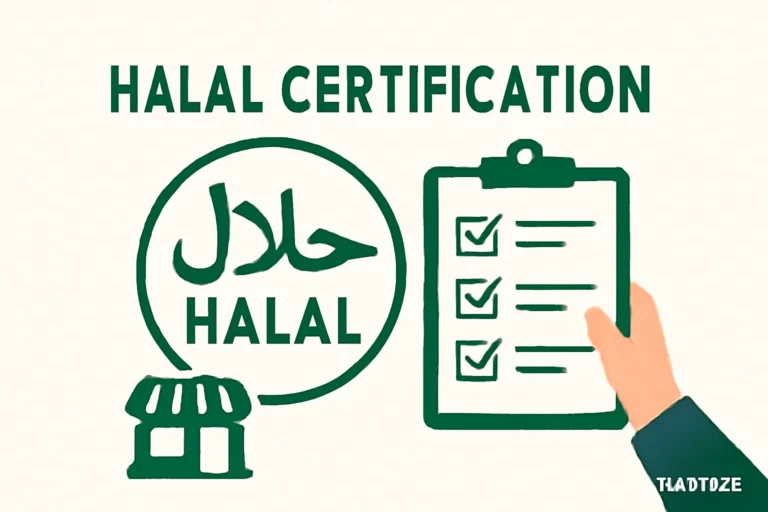
Halal certification is a formal recognition that products, processes, or services comply with Islamic dietary and lifestyle guidelines. It serves as a bridge between manufacturers and Muslim consumers who seek assurance that what they purchase aligns with halal principles. While the term is most commonly associated with food, it spans a wide range of industries, including cosmetics, pharmaceuticals, and food service. The core idea behind halal accreditation or halal approval is trust: a recognized authority audits ingredients, production methods, storage, handling, and traceability to ensure no prohibited (haram) substances contaminate the final product.
For many businesses, obtaining halal certification can unlock access to new markets, expand export opportunities, and demonstrate a commitment to ethical and transparent manufacturing. Consumers increasingly value the independent verification that a halal status is not just claimed but officially verified. In a global economy where supply chains are complex and multi-tiered, a credible halal verification program reduces risk for both producers and buyers.
Key Terms and Variations in Halal Certification
The language used around halal can vary by region and certification body. Understanding these variations helps in choosing the right path for your business:
Halal certification – the standard term for official approval that a product, process, or facility complies with halal rules.
Halal accreditation – often used to describe formal recognition of a certification body itself by international or national authorities.
Halal approval – a broad term sometimes used for internal approvals or endorsements issued by a certification body.
Halal status – the current standing or verifiable condition of a product or facility as halal.
Halal compliance – ongoing adherence to halal standards and continuous improvement to maintain certification.
Halal verification – the process of confirming that all elements meet halal criteria, often through audits and testing.
Halal seal or halal logo – the visible emblem on packaging indicating halal status, typically granted by a recognized body.
Different jurisdictions may emphasize different aspects of certification. Some bodies focus strongly on food safety and HACCP principles as part of halal assurance, while others emphasize clean supply chains and prohibition of specific ingredients. Regardless of terminology, the underlying objective remains the same: to build confidence among consumers that products are aligned with Islamic dietary laws and ethical norms.
The Lifecycle of Halal Certification
Halal certification is not a one-time badge. It is a lifecycle that includes preparation, evaluation, ongoing compliance, and renewal. This lifecycle can be understood through several key stages, from determining eligibility to ensuring long-term halal integrity across the supply chain.
Scope and Eligibility
Before beginning the process, assess what you want to certify. Is it a single product, multiple SKUs, a production line, or your entire facility? Some organizations start with a specific product category (for example, beverages) and later expand to halal compliance for other products or processes.
Documentation Preparation
Gather all required information about ingredients, formulation, suppliers, and manufacturing steps. A robust documentation package helps the certification body assess risk and determine whether halal accreditation is feasible. Documentation typically includes bills of materials, supplier declarations, ingredient certificates, production flow diagrams, and sanitation and cleaning protocols.
Audit and Verification
The core element of any halal certification program is an on-site audit. Auditors review:
Ingredient sources and supply chain traceability
Production processes and potential cross-contamination risks
Storage and handling to prevent contact with haram substances
In many regions, the audit also overlaps with HACCP (Hazard Analysis and Critical Control Points) and food safety standards to ensure that the product is not only halal but also safe for consumption.
Issuance and Surveillance
If the product and facility pass the audit, the certification body issues a halal certificate and a seal or logo for use on packaging. However, certification is not a static achievement. Most programs require periodic surveillance audits, annual renewals, and ongoing documentation updates to maintain halal status.
Step-by-Step Guide: How to Get Halal Certified
The path to halal certification typically follows a structured sequence. While the exact steps can vary by country and certification body, the core process is widely similar:
Define the scope of what you want to certify (product, facility, line, or service).
Choose a certification body with credible standing and regional acceptance.
Submit an initial application with preliminary information about ingredients, suppliers, and processes.
Provide documentation such as ingredient lists, supplier attestations, and manufacturing flowcharts.
Prepare for the audit by aligning production practices with halal requirements and implementing traceability and sanitation controls.
Undergo the on-site audit to verify compliance and identify any non-conformities.
Address non-conformities through corrective actions and verifications.
Receive halal certification and begin using the official seal on eligible products or services.
Plan for surveillance and renewal to maintain halal accreditation over time.
Important Considerations During the Process
When pursuing halal verification, keep in mind that impact extends beyond a single product. A robust halal program often requires supplier audits, staff training, and clear internal responsibilities to sustain halal compliance.
Preparation is the foundation of a smooth halal certification journey. The right documentation and operational readiness demonstrate to the certification body that your organization is capable of maintaining ongoing halal integrity.
Common Documentation Requirements
Ingredient lists and material safety data sheets (MSDS) for each product.
Supplier declarations or certificate of analysis confirming the halal status of ingredients.
Bill of materials (BOM) and any possible traceability records.
Formulation documentation showing no haram components or cross-contamination risks.
Facility layout and a production flow diagram to reveal potential contact points with haram substances.
Cleaning and sanitation protocols, including the validated cleaning agents and procedures used between product runs.
Receiving, storage, and handling procedures designed to prevent cross-contact and contamination.
Facility Readiness and Controls
Segregated storage and dedicated equipment for halal products where feasible.
Clear labeling and color-coding to prevent inadvertent mixing with non-halal items.
Supply chain controls to ensure halal integrity from raw materials to finished goods.
Quality management systems that align with HALAL standards while meeting national regulations.
Employee Training and Awareness
Training is essential for sustaining halal compliance. Staff should understand the importance of halal requirements, know how to handle ingredients, and be aware of the protocol for non-compliant situations. Documentation of training records is often required during certification audits.
Choosing the Right Certification Body
The selection of a credible halal certification body or halal authority is critical. A respected organization provides legitimacy for your halal label, acceptance in your target markets, and robust ongoing surveillance. Consider the following when choosing a partner:
Regional acceptance and alignment with your target markets for halal accreditation.
Recognition by national authorities or international Islamic organizations, which can facilitate export and market access.
Clear scope of certification (product, facility, service) and the ability to expand to multiple products later.
Requirements for supplier audits, traceability, and ongoing compliance beyond the initial certification.
Transparent fees, timelines, and renewal procedures.
Quality and consistency of audit teams, including multilingual capabilities if needed.
Understanding the Certification Body's Credibility
Ask for references and examine the body’s certification scope and the frequency of surveillance audits. A credible program will have:
Independent governance and fair processes.
Publicly available standards and guidance materials.
Clear guidelines for handling non-conformities and corrective actions.
Accessible records of certifiable products and facilities for stakeholders.
Some manufacturers operate in multiple regions. In such cases, it may be advantageous to obtain a certification that is globally recognized or to maintain separate recognitions for different markets. The concept of global halal certification is supported by major bodies that maintain alignment across regions to simplify cross-border compliance.
Audit and Compliance: What to Expect
The on-site audit is the centerpiece of the halal certification journey. During the halal audit, inspectors examine every facet of production, from raw materials to packaging, to ensure halal integrity is preserved.
Typical Audit Focus Areas
Ingredient approvals and supplier attestations
Cross-contamination controls and separation of halal and non-halal lines
Storage practices, handling, and transport conditions
Sanitation programs and validated cleaning procedures
Record-keeping accuracy and traceability across the supply chain
Labeling accuracy and correct use of the halal seal
Auditors may request samples for laboratory verification of ingredients or finished products, and they may interview personnel to gauge awareness and adherence to halal compliance.
Handling Non-Conformities
If non-conformities are found, the body will document them and require a corrective action plan. The speed and effectiveness in addressing these issues influence how quickly a certificate is issued or renewed. It is common to have a defined timeframe for corrective actions, re-inspection, and verification to ensure that the decline in halal status is not prolonged.
Costs, Timeframes, and Renewal
Investing in halal certification involves upfront costs, ongoing surveillance fees, and potential costs for supplier audits, staff training, and documentation improvements. Timeframes vary based on scope, readiness, and the certification body's schedule.
Typical Cost Components
Application and initial setup fees
Document review and gap assessment charges
On-site audit fees, including travel and accommodation for auditors
Laboratory or testing costs (if required)
Annual surveillance fees and renewal fees
Additional costs for expanding the scope or certifying new product lines
Timeline Expectations
From application to certification, timelines can range from several weeks to several months. A typical timeline might look like this:
Preparation and documentation: 2–8 weeks
Initial application review: 2–6 weeks
Audit scheduling and execution: 2–6 weeks
Non-conformities resolution: 2–8 weeks
Certification issuance: within 1–4 weeks after satisfactory audit
Remember that renewal and surveillance are ongoing obligations. Most programs require annual or biannual surveillance audits to maintain the halal status of the product or facility.
Halal Certification in Different Industries
While the core concept remains the same, different industries require tailored approaches to achieve and maintain halal status. Here are some industry-specific considerations:
Food and Beverage
For food and beverage products, the primary concern is ensuring that all ingredients, processing aids, packaging materials, and processing equipment are halal-compliant and free from contamination with haram substances. In addition, food service providers must ensure that kitchens, storage areas, and service utensils are clean and segregated as needed.
Cosmetics and Personal Care
Cosmetics often rely on ingredients like alcohol or animal-derived components. The halal certification for cosmetics emphasizes the source of ingredients, testing methods, and the absence of prohibited substances while maintaining product safety and shelf life. Packaging and labeling must accurately reflect the halal status and any usage instructions.
Pharmaceuticals
Halal certification in pharmaceuticals requires strict scrutiny of active ingredients, excipients, and manufacturing processes. A key goal is to ensure that medications are permissible for Muslim patients without compromising efficacy. Some regions also require allergen controls and clear labeling regarding halal compliance for injectable or oral dosage forms.
Food Service and Manufacturing
For institutions such as schools, hospitals, or catering companies, halal status may apply to meals, bulk ingredients, and bulk supply contracts. Effective traceability from supplier to plate is essential, and staff training is particularly important in dining services to prevent cross-contact and to maintain consistent halal practice.
Once certified, maintaining halal compliance is an ongoing effort. Here are practical strategies to safeguard your certification over time:
Establish a robust supplier management program with regular supplier evaluations and attestations.
Maintain current and accessible records of all ingredients, formulations, and processing changes.
Implement continuous improvement practices for cleaning, sanitation, and allergen controls.
Provide ongoing training for employees to reinforce awareness of halal standards and the importance of compliance.
Monitor regulatory changes or updates issued by your halal certifier and adjust practices accordingly.
Plan for timely renewals and annual surveillance audits to prevent lapses in halal status.
International Considerations and Trade
In global trade, halal certification can be a strategic asset. Operating in multiple markets often requires obtaining certifications from bodies that are recognized in target regions or aligning with international guidelines to enable smoother cross-border commerce. Companies may pursue global halal certification programs or maintain a portfolio of regional halal approvals to maximize market access.
Trade facilitation benefits include
Increased consumer trust and brand reputation across diverse markets.
Reduced risk of product recalls or labeling disputes related to halal status.
Improved negotiation leverage with retailers and distributors who require verifiable halal assurance.
However, businesses should also be prepared for regional divergences, such as ingredient restrictions, testing standards, or label approval requirements that differ from one country to another.
Greatest Challenges and Common Myths
Even as halal certification becomes more widespread, organizations encounter challenges and myths. Addressing them upfront can prevent delays and misalignments.
Common Challenges
Disparate supply chains with multiple tiers of suppliers complicate traceability.
Ingredients with hidden or unclear halal status require additional diligence and testing.
Cross-contamination risks in shared facilities demand stringent controls and dedicated lines where feasible.
Changing formulations to accommodate halal requirements may affect cost or sensory attributes.
Common Myths
Halal certification is a one-time event rather than an ongoing process.
Any certificate from any body is equally credible in all markets.
Halal is only about ingredients; processing and packaging do not matter.
To navigate these realities, work with credible certification bodies, maintain transparent documentation, and invest in robust internal controls that protect the integrity of the halal program.
Frequently Asked Questions
How long does it take to obtain halal certification?
Typical timelines range from a few weeks to several months, depending on the scope, readiness, and the scheduling of the audit. Planning ahead and addressing gaps promptly can shorten the timeline.
Is halal certification mandatory for all products?
Halal certification is not universally mandatory. It depends on market demand, regulatory requirements in the target country, and brand strategy. In some regions, certification is highly desired or required by prominent retailers or government programs.
Can I certify multiple products under one halal certificate?
Yes, many certification bodies offer multi-product or multi-line scopes under a single halal accreditation, provided all items meet the necessary halal criteria and share compliant supply chains.
What happens if a product changes formulation after certification?
Any formulation change typically requires a review by the certification body and may necessitate a re-audit or re-review to ensure ongoing halal compliance. It is critical to inform the certifier before implementing changes.
What is the difference between halal certification and halal labeling?
Halal certification is the formal process that proves compliance, while halal labeling is the use of a certified seal or logo on packaging to signal to consumers that the product has passed the certification process. Proper labeling must reflect the scope and limitations defined by the certifier.








Deja una respuesta