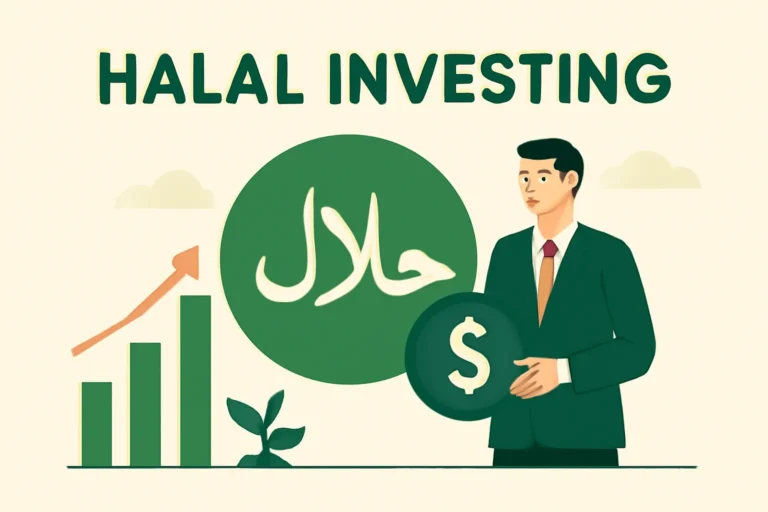
In the modern financial landscape, Muslim investors increasingly seek Shariah-compliant ways to grow wealth without compromising religious principles. This article offers a comprehensive tour of halal investment options, covering traditional stock-based approaches, debt instruments that meet Islamic screening standards, and newer asset classes that align with Islamic finance ethics. Whether you are just starting out or refining an established portfolio, understanding the core concepts behind halal investing helps you make informed decisions that respect both financial goals and spiritual values.
The goal of a halal portfolio is to avoid riba (interest), speculative risk or gharar (excessive uncertainty), and investments in prohibited industries. Instead, the emphasis is on asset-backed financing, risk sharing, and real economic activity that contributes to society. This guide lays out practical paths, criteria for evaluation, and actionable steps to construct a well-diversified, compliant portfolio suitable for different risk appetites.
Core Principles of Islamic Finance
Prohibition of Riba (Interest) and Risk Sharing
A central pillar of Islamic finance is the prohibition of riba, or excessive interest. Instead of earning money primarily from interest, many halal investment options emphasize profit-and-loss sharing structures such as mudarabah and musharakah, where profits and losses are shared between partners in a risk-sharing arrangement. This fosters real economic participation and aligns incentives with productive enterprise.
Gharar and Ethical Investment
The principle of gharar discourages excessive uncertainty and ambiguous contracts. In practice, this means avoiding investments with unclear cash flows, speculative bets, or opaque terms. Ethical screening also plays a role, guiding investors toward activities that are socially beneficial and compliant with Islamic teachings.
Asset-Backed Financing and Compliance
Shariah-compliant financial products are typically asset-backed or tied to tangible business activity. This ensures that financing represents the real economy rather than purely speculative or virtual instruments. The emphasis on fundamentally sound underlying assets helps reduce risk and aligns with a long-term, sustainable investment outlook.
Screening Standards and Certification
To determine whether an investment qualifies as halal, many scholars and institutions rely on screening criteria. Industry bodies such as AAOIFI (Accounting and Auditing Organization for Islamic Financial Institutions) and proprietary indexes like the Dow Jones Islamic Market Index or the FTSE Shariah series provide frameworks for evaluating financial statements and product offerings. When in doubt, consult a qualified Shariah advisor or certificating authority to verify compliance.
Halal Investment Options: A Practical Guide
Shariah-Compliant Equities and Equity Funds
The core component of many halal portfolios is equities (stocks) that meet strict Shariah screening criteria. This involves two layers: business activity screening (avoiding industries such as alcohol, gambling, conventional finance, weapons, and tobacco) and financial screening (ensuring financial ratios are within acceptable limits, e.g., debt ratios, interest income, and liquidity thresholds).
Direct halal stocks selected through a compliance screen.
Shariah-compliant mutual funds that pool investors’ money into a diversified portfolio of halal stocks and sometimes Shariah-screened bonds.
Islamic ETFs (Exchange-Traded Funds) that track Shariah indexes and offer transparent exposure with lower costs and liquidity.
Sukuk: Islamic Bonds and Debt-like Instruments
Sukuk are Islamic securities that represent partial ownership in a tangible asset or project, rather than a promise to repay debt with interest. Sukuk structures can be asset-backed and provide regular income streams through permissible profit-sharing arrangements or rental income. They are a common way to gain fixed income exposure within a Shariah-compliant framework.
Islamic mutual funds and ethical ETFs offer diversified exposure across sectors deemed halal. These funds typically maintain ongoing Shariah compliance reviews and annual or semi-annual screening. For investors who prefer a hands-off approach, these funds can be an efficient way to access a broad halal allocation while maintaining professional oversight.
Profit-and-Loss Sharing Arrangements: Mudarabah and Musharakah
In mudarabah, one party provides capital while another provides expertise and management. Profits are shared according to a pre-agreed ratio, while losses are borne by the capital provider unless there is negligence or violation by the manager. In musharakah, all partners contribute capital and participate in profits and losses according to a stored ratio. These structures are often used in private equity, venture capital, and project financing where risk-sharing aligns incentives with productive ventures.
Real Estate and Other Tangible Assets
Real estate investments, when acquired or financed through Shariah-compliant methods (for example, Ijara-based leases), offer broad diversification and potential for rental income. Real assets like real estate, infrastructure projects, and equipment leasing can be structured to meet Shariah criteria and provide steady, cash-flow-oriented returns.
Ijarah: Islamic Leasing and Asset-Backed Finance
Ijarah is a lease-based contract in which an asset is leased to a client for a rental fee. The underlying asset remains with the owner, while the lessee gains the use of the asset. This model aligns with asset-backed financing and can be used in project finance, vehicle leasing, equipment purchases, and other capital-intensive activities.
Insurance and Takaful
The Takaful model offers Islamic alternative to conventional insurance by emphasizing mutual cooperation and shared risk. While not an investment per se, Takaful products can play a role in a holistic financial plan by managing risk in a compliant way. Investors may consider Takaful-linked products that complement their halal investment strategy.
Crypto and Digital Assets: A Cautious Path
The status of cryptocurrencies in Islamic finance is debated. Some scholars accept certain crypto assets if they serve legitimate purposes, have transparent governance, and are not a medium of riba-based lending. Others caution due to gharar and volatility. If you consider crypto investments, adopt strict screening, limit exposure, and consult a Shariah advisor. It may be prudent to treat crypto as a small, well-researched allocation within a broader halal strategy.
Alternative and Thematic Investments
Beyond core holdings, halal investors may explore thematic opportunities aligned with ethical and sustainable growth. Examples include Shariah-compliant clean energy projects, water infrastructure, healthcare innovation with ethical standards, and socially responsible enterprises. The aim is to identify productive sectors that contribute positively to society while meeting halal guidelines.
Technology, Fintech, and Robo-Advisors
Advances in fintech and robo-advisory services have led to Shariah-compliant digital wealth management solutions. These platforms may offer automatic screening, portfolio rebalancing, and transparent reporting. When selecting a robo-advisor, verify that the platform applies ongoing Shariah screening and maintains appropriate disclosures about fees and performance.
Tax-Advantaged Halal Investing
Tax considerations differ by jurisdiction, but many investors can optimize after-tax returns by choosing halal accounts or funds that minimize tax inefficiencies while remaining compliant. Some regions offer specific accounts or allowances for socially responsible investing that align with Islamic ethics; consult a tax professional who understands both local law and Islamic finance principles.
Define goals and risk tolerance. Determine whether you are aiming for growth, income, or capital preservation. Your time horizon and capacity for risk influence the mix of halal assets you choose.
Apply Shariah screening to each candidate. Use both business activity checks (to avoid prohibited industries) and financial screen criteria (to limit leverage, interest income, and liquidity concerns).
Check certification and governance. Confirm whether the product or fund has been reviewed by a recognized Shariah board or certifying body, and review the frequency of compliance audits.
Assess liquidity and transparency. Ensure you can exit the investment with reasonable ease and that reports provide clear, timely information about holdings, fees, and performance.
Review fees and costs. Compare management fees, performance fees, and transaction costs. Lower costs can be particularly important for long-term halal investing.
Analyze financial metrics in the context of Shariah limits. For equities, examine debt levels, interest income, and cash flow patterns to ensure alignment with Islamic finance standards.
Plan periodic reviews. Establish a schedule for annual or biannual reviews to re-screen holdings, especially as companies broaden or modify activities.
Seek professional counsel. When in doubt, consult with a Shariah advisor or a reputable financial planner who understands Islamic law and local regulations.
Practical Screening Tools and Resources
Shariah screens based on industry exposure and financial ratios.
Indexes such as Dow Jones Islamic Market and FTSE Shariah series as benchmarks.
Third-party ratings and certifications for funds and Sukuk.
Annual compliance reviews by a Shariah board to ensure ongoing adherence.
Constructing a Halal Portfolio: A Practical Guide
Building a robust halal portfolio involves balancing growth, income, and risk management while preserving Shariah compliance. The following framework can help you design a strategy that aligns with your preferences and circumstances.
Portfolio archetypes by risk tolerance
Conservative Halal Portfolio — Focus on low-risk, income-oriented assets such as Sukuk, high-quality Islamic bonds, and defensive, screen-friendly equities. Target a heavier weight in fixed income and real assets to reduce volatility.
Balanced Halal Portfolio — A blend of halal stocks, Sukuk, and a diversified allocation to real estate, REIT-like assets, and thematic investments with ethical screening. Aims for steady growth with moderate income.
Growth Halal Portfolio — Emphasizes equities in fast-growing sectors that pass screening, supplemented by a reasonable allocation to Sukuk and alternative assets. Suitable for investors with a longer horizon and higher risk tolerance.
Note: Actual allocations depend on jurisdiction, availability of products, and personal circumstances. These are examples intended to illustrate how to structure a halal portfolio.
Conservative (ages 40+ or risk-averse): 50–60% Sukuk and Shariah-compliant bonds, 20–30% halal equities, 10–20% real assets (real estate or Ijarah-related investments), 0–10% cash equivalents.
Diversification within a halal framework helps manage risk. Consider sector diversification (finance, healthcare, technology, consumer staples) and geographic diversification to reduce concentration risk. Be mindful that liquidity risk and currency risk can affect certain halal assets, especially Sukuk and real assets in specific markets.
Ethical and social considerations
In addition to Shariah compliance, many investors favor ethical screening and environmental, social, and governance (ESG) criteria. Some halal funds explicitly combine religious screening with ESG standards, creating portfolios that reflect both religious ethics and broader social responsibility.
Common Mistakes and Myths About Halal Investing
Assuming all "Islamic" funds are equal. Not all funds apply the same screening or governance standards; verify the basis of their screening and the credibility of their Shariah boards.
Overlooking debt-heavy companies. Some seemingly halal companies have significant interest income in their business models; ensure comprehensive financial screening.
Underestimating the importance of ongoing reviews. Shariah compliance is not a one-time check; periodic re-screening is essential as companies evolve.
Ignoring tax and regulatory nuances. Tax treatment of Islamic financial products varies by jurisdiction and can affect after-tax returns.
Relying solely on labels. A fund labeled “Islamic” may still include exposures or practices that require closer scrutiny; always review disclosures and screens.
Is it possible to be fully halal in a modern market?
While it is challenging to guarantee perfection in every instrument, a disciplined approach—grounded in strict Shariah screening, ongoing governance, and diversification—can produce a predominantly halal portfolio aligned with livelihood goals and religious values.
What certifications should I look for?
Look for certifications or endorsements from recognized Shariah boards or auditing bodies, such as AAOIFI, or funds that explicitly reference Shariah-compliant methodologies and annual compliance reports.
Yes. Real estate can be included through Ijarah leases, real estate investment trusts that follow Shariah screening, and other asset-backed arrangements. The key is to structure financing and ownership in line with Islamic law and to avoid interest-based debt.
How often should I review my halal holdings?
A minimum of once per year is recommended, though more frequent reviews (twice a year) are prudent in fast-moving markets or when a fund or company undergoes major changes that could affect Shariah compliance.
Conclusion: Navigating Halal Investment Options with Confidence
Building a robust, halal investment strategy is a journey that blends faith with financial prudence. By understanding the core principles of Islamic finance, applying rigorous screening, and constructing a diversified portfolio that balances growth, income, and risk management, Muslim investors can pursue wealth creation without compromising their values. Remember that transparency, governance, and ongoing education are your allies. Seek trusted guidance when needed, stay informed about evolving standards, and approach evolving markets with patience and discipline. A well-tuned halal portfolio can provide meaningful participation in the global economy while remaining faithful to the ethical tenets that guide your financial choices.




Deja una respuesta