Give Zakat Meaning: What Zakat Means and How to Give Zakat Correctly
Give Zakat Meaning: What Zakat Means and How to Give Zakat Correctly
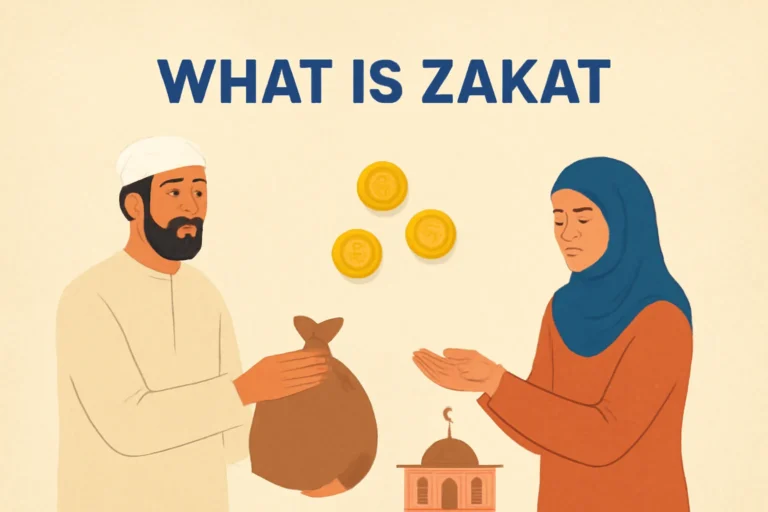
The topic of give zakat meaning covers a range of ideas that sit at the heart of Islamic ethics and practice. This article aims to explain what zakat means, why it matters, who is obligated to give zakat, who may receive it, and how to give zakat correctly. If you are exploring the concept for personal growth, community service, or scholarly study, you will find a comprehensive guide that blends linguistic clarity with practical steps. We begin with the core meaning and move toward actionable guidance on calculation, timing, and distribution.
In Arabic, the word zakat has a dual resonance. Linguistically, it derives from the root that means purification and growth. Prophet Muhammad (peace be upon him) described zakat as a means to purify wealth and the soul, turning material wealth into spiritual and social benefit. The meaning of zakat giving is thus not merely a transaction; it is a spiritual discipline, a social instrument, and a ritual act with concrete effects on families and communities.
The phrase give zakat meaning can be understood in several connected ways. First, zakat is an obligatory form of almsgiving, entrusted with ensuring that wealth circulates and no one is left destitute in the midst of a prosperous economy. Second, zakat is a process of redistribution that recognizes the rights of the poor and the vulnerable as part of a cohesive society. Third, zakat is a form of economic ethics, inviting the well-off to consider their wealth as a trust (amanah) rather than a personal possession with no social accountability.
When people speak about the meaning of giving zakat, they often emphasize three dimensions:
Personal purification—zakat removes greed and attachment to wealth, promoting spiritual balance.
Social justice—zakat channels resources toward those in need, helping to reduce inequality.
Divine blessing—for many Muslims, zakat is a means to receive spiritual reward and divine favor.
The broader interpretation, the meaning of giving zakat in social life, is that wealth is not merely a private asset but a public trust. By giving zakat, a Muslim affirms accountability to God and responsibility toward neighbors. The language of zakat—whether we say giving zakat, to give zakat, or the act of zakat—points to a shared ethic that wealth should serve life, dignity, and opportunity for all.
Who Is Obliged to Give Zakat?
The obligation to give zakat applies to Muslims who possess wealth that reaches or exceeds a defined threshold for a full lunar year. This threshold is called the nisab. The nisab acts as a minimum amount, below which ownership does not obligate zakat. The exact nisab can be calculated in two common forms: based on the value of gold or the value of silver. The traditional values are:
The gold nisab is equivalent to 85 grams of gold,
The silver nisab is equivalent to 595 grams of silver.
In practice, many communities today use the current market value of gold or silver to determine the nisab, choosing the standard that leads to the correct threshold in a given era. The point to remember is that zakat is due when net wealth surpasses the nisab for a full lunar year, not merely for a moment. Some wealth forms are subject to zakat, while others are not. The obligations include assessing the assets you hold, any debts payable within the year, and then determining whether the net amount qualifies for zakat.
The basic conditions for giving zakat can be summarized as:
Intention (niyyah): the intention to perform zakat is essential; it is a spiritual act as well as a financial one.
Ownership: you must own the wealth free of any external right or constraint.
Threshold (nisab): wealth must meet or exceed nisab for a lunar year.
Payment: zakat is calculated as 2.5% of the eligible wealth after deductions and is paid to eligible recipients.
It is also important to acknowledge that the obligation applies to eligible Muslims who have the specified level of wealth. Non-Muslims are generally not required to pay zakat on Muslims’ wealth, though some communities encourage charitable acts that are aligned with the same ethical values of caring for the vulnerable. The concept of giving zakat meaning emphasizes not only the personal duty but also the social contract that supports communities in times of need.
Who May Receive Zakat (The Asnaf)
Zakat must reach specific categories of recipients, collectively known as the asnaf (the eight groups mentioned in traditional Islamic sources). The distribution framework ensures that wealth moves toward those most in need and toward projects that advance public welfare.
The poor (al-Faqir): those with insufficient means to meet basic needs.
The needy (al-Masakeen): those who may have some income but are still struggling to secure essential needs.
Zakat collectors (al-‘Aamila): individuals who are tasked with administering or collecting zakat funds.
To attract hearts to Islam (al-Muallafatu Qulubuhum): those whose conversion or support would benefit from zakat influence, including new Muslims or those under a campaign of unity.
To free captives or slaves (ar-Riqaab): in historical contexts, this included freeing slaves; today, it can be interpreted as supporting those in bondage or seeking to regain independence, where applicable to local law and ethics.
Those in debt (al-Ghaarimeen): individuals burdened by debt and unable to repay, especially when debt threatens basic subsistence.
In the path of Allah (fi sabil-illah): those working to support Islamic causes, education, relief, and other forms of public benefit.
Travelers in need (ibnu s-sabil): travelers who are cut off from resources due to travel and who lack means to complete their journey safely.
When planning the distribution, the phrase the meaning of zakat recipients should guide the decision: ensure that funds go to groups defined by tradition, and where possible, align with local authorities or reputable charitable organizations that apply zakat rules carefully. In practice, many communities choose to direct zakat to locally identified families or projects, as long as the recipients fall into one or more of the asnaf categories.
Calculating Zakat: How Much to Give and What to Include
The calculation of zakat is a careful process. The cornerstone figure is 2.5%, but the steps to arrive at that percentage involve understanding which assets are zakatable, which debts can be subtracted, and how to handle different forms of wealth.
Key steps in zakat calculation
Identify zakatable wealth: cash, bank balances, savings, stocks and shares, business inventory, rental income, and other forms of wealth that have been held for a full lunar year above nisab.
Exclude personal essentials: do not include your primary home, personal transportation, clothing for daily wear, education or medical expenses unless they fall under debt and need in a specific context.
Assess debts payable within the year: subtract immediate, qualifying debts from the total zakatable wealth. This reduction should reflect amounts you owe that are due within the year, not long-term obligations that do not affect the current year’s wealth.
Determine the nisab: compare your net wealth to the nisab value (gold or silver standard). If your wealth exceeds nisab for a full lunar year, zakat becomes due on 2.5% of that net wealth.
Calculate 2.5%: multiply the eligible net wealth by 0.025 to obtain the zakat amount.
Choose a recipient: decide whether to give to individuals directly, through a mosque, or via a recognized charitable organization that is reputable in administering zakat.
Below is a simplified example to illustrate these steps. This is for educational purposes and should be adapted to your local market prices and personal circumstances.
Example scenario: You maintain the following assets for a lunar year and owe one credit against your name that is due within the year.
Cash and bank balances: $24,000
Stocks and business inventory: $8,000
Receivables (money owed to you): $3,200
Gold jewelry held for investment: $2,500
Personal debts payable within the year: $1,000
Estimated nisab threshold (gold): equivalent value of $10,000 at current prices
If the net wealth after subtracting the debt is above the nisab, zakat is calculated as 2.5% of the eligible amount. In this example, the total zakatable wealth would be the sum of assets minus debts and personal exempt items, and the zakat payable would be calculated on that basis. The point is to ensure accuracy in zakat calculation and to maintain documentation so you can verify the calculation if needed.
A practical tip: many people use quarterly or annual reviews to track assets and liabilities so the calculation is straightforward when the lunar year ends. When you make zakat payments, you may log the date, amount, and recipient to maintain clear records for family or community accountability.
What to include and exclude in zakat calculations
Cassette assets such as cash, savings, and investment accounts: include these if they have been held for a full lunar year and meet nisab.
Trade stock and inventory: value at fair market value; include if part of business wealth that has been held over the year.
Gold and silver: included if held as wealth rather than as ornamentation or personal jewelry; many scholars treat normal personal jewelry as exempt unless it is stockpiled for wealth purposes.
Debts owed by others to you: include receivables only if they are due within a reasonable period; not all forms of debt are treated the same in every jurisdiction.
Personal debts you owe: exclude personal liabilities not directly tied to zakat wealth; subtract only the debts that are due within the year and affect wealth.
The central aim is accuracy and transparency in the calculation, not to overwhelm with complex rules. It is perfectly acceptable to seek guidance from a local imam, scholar, or a trusted charitable organization that administers zakat. This ensures your calculation aligns with local practice and scholarly interpretation.
The timing of zakat is tied to the lunar year. The standard practice is to pay zakat once the wealth has remained above nisab for a full lunar year. This is known as the hawl—one complete lunar year. The meaning of paying zakat on schedule is to fulfill the obligation in a timely manner and to ensure resources are available for those who need them most.
While the lunar-year cycle is the canonical framework, many Muslims choose to
pay zakat during Ramadan, recognizing the heightened spiritual focus of the month, or
distribute zakat as early as possible within the year if wealth exceeds the nisab and there is a clear need in their community.
The important idea is timeliness and intentionality. Delaying zakat without good reason may be seen as neglecting a sacred duty, while pre-emptively paying zakat when wealth has not yet met the nisab would be miscalculation. If you are unsure about the timing, consult with a trusted religious authority or a reputable zakat organization.
Also note the separate obligation of Zakat al-Fitr, an obligatory charity that Muslims give at the end of Ramadan before the Eid al-Fitr prayer. It is intended to purify the fast and to provide for the needy, ensuring everyone can celebrate the festival with dignity. While not a substitute for zakat on wealth, Zakat al-Fitr shares the same spirit of caring for the vulnerable and reinforcing community bonds.
Methods and Channels for Giving Zakat
When it comes to giving zakat meaning in practice, there are multiple legitimate channels. Each method has its own advantages depending on personal preference, local customs, and the availability of reputable institutions.
Direct giving to recipients
Some people prefer to give directly to individuals in need. Direct zakat can offer transparency and a personal touch, but it requires careful vetting to ensure the recipients truly belong to a zakatable category. If you choose direct giving, consider:
Verifying the person’s eligibility in alignment with the asnaf categories.
Ensuring the amount is appropriate and does not create dependency or inequity.
Documenting the distribution for your own records or for family accountability.
Zakat through mosques and charitable organizations
A widely used and recommended method is to give zakat through mosques or credible zakat organizations. These bodies provide:
Professional administration and accountability,
Streamlined receiving and distributing processes,
Assistance in identifying valid recipients and ensuring proper use of funds,
Auditable records and annual reports for donors.
The meaning of efficient zakat distribution is that money reaches those in need promptly and goes toward sustainable benefits, such as food security, healthcare support, education, or debt relief. When choosing a channel, look for:
Clear governance and financial transparency,
Explicit confirmation that funds are used for eligible zakat recipients,
Good track record and community endorsement,
Compliance with local laws and cultural norms.
The ethics of transparency and accountability
The giving zakat meaning includes accountability. Donors should feel confident that their funds are used as intended. Recipients should receive support with dignity and respect. Reputable zakat channels publish donor dashboards, annual audits, and impact reports to maintain trust within the community.
Common Mistakes and Misconceptions
Even seasoned Muslims can encounter pitfalls in the practice of zakat. Here are some common mistakes and how to avoid them:
Confusing zakat with general charity (sadaqah): zakat is obligatory for eligible wealth, while sadaqah is voluntary and can be given at any time or amount.
Paying zakat on wealth below nisab: if wealth stays below the nisab for a full lunar year, zakat is not due on that wealth.
Misclassifying assets: not all assets are zakatable in the same way; for example, personal use items and primary residences are generally exempt, while business inventory and cash are typically zakatable.
Neglecting proper calculation: failing to account for debts owed within the year or to miscalculate the nisab can lead to shortfalls or overpayment.
Donating for tax-like incentives in places where zakat is not recognized or misrepresenting the purpose of funds.
A thoughtful approach to the meaning of zakat distribution is to seek guidance, use established calculators, and engage with community leaders. This reduces the likelihood of mistakes and ensures the funds contribute to real improvements in people’s lives.
Zakat and Social Justice in the Modern World
Beyond the mechanics of calculation and distribution, the meaning of zakat in contemporary society includes a commitment to social justice. Zakat acts as a bridge between individual wealth and collective welfare. It helps to build resilience in communities by funding essentials such as nutrition programs, healthcare access, microfinance initiatives, and education that empower people to break cycles of poverty.
In modern terms, giving zakat meaning can be seen as a form of economic reform—an effort to reorient resource allocation to favor human dignity and opportunity. It also creates a moral standard: wealth should be used not solely for personal comfort but as a means to uplift others. This ethical posture resonates with many people, regardless of their exact religious practice, because it aligns with universal values such as compassion, solidarity, and fairness.
The global dimension of zakat is also worth noting. In today’s interconnected world, zakat can support international relief projects, education for girls and boys, clean water initiatives, and disaster response. However, the best practice remains transparent, accountable giving that respects local contexts and recipient dignity. The broader meaning of zakat in the 21st century includes balancing local needs with global solidarity, within the boundaries of zakat rules and local law.
Practical Tools: How to Start Your Zakat Journey
Whether you are new to the practice or revisiting how to give zakat meaningfully, these practical steps can help you begin or refine your process.
Learn your nisab and determine whether your wealth meets the threshold for zakat this year. If in doubt, consult a scholarship or use reputable online calculators that reflect your local currency and assets.
Inventory your wealth: list cash, savings, investments, business assets, and other wealth forms that could be zakatable. Do not forget minor sources of wealth that add up over the year.
Subtract eligible debts: identify debts that are due within the year and reduce your zakatable wealth accordingly.
Calculate 2.5% of the zakatable net wealth to determine the zakat due for the year.
Choose recipients: decide whether to give directly to people you know, or through a mosque or zakat organization that follows due process.
Document the process: keep records of the calculation, nisab reference, and recipients for your personal accountability and future reference.
For those who want to go beyond the basics, consider pairing zakat with sadaqah (voluntary charity) to address needs that fall outside the eight asnaf categories, such as relief for sudden disasters, education subsidies, or healthcare outreach. In all cases, the meaning of careful giving is to preserve human dignity and promote sustainable well-being.
Frequently Asked Questions about Zakat
Is zakat the same as charity?
No. Zakat is an obligatory act for Muslims who meet the nisab threshold, and it has specific recipients and calculation rules. Charity (sadaqah) is voluntary and can be given in any amount at any time to any cause.
Can non-Muslims give zakat?
The obligation of zakat is a religious duty for Muslims who meet the conditions. Non-Muslims can, however, participate in related charitable activities and give to Islamic relief organizations in the spirit of shared humanitarian values.
What forms can zakat take?
Zakat is most commonly given as money, but it can also be used to support goods and services that directly alleviate poverty, such as food, clothing, or medical support, provided the gifts align with zakat guidelines and the recipients fall within the eligible categories.
What is the difference between Zakat and Zakat al-Fitr?
Zakat on wealth is an annual obligation on wealth above nisab, while Zakat al-Fitr is a fixed charitable amount due at the end of Ramadan to purify the fast and help those who are poor during Eid. The two acts share the goal of supporting the vulnerable but are distinct in timing and scope.
Should I pay zakat if I am in debt?
If your wealth is above nisab, you typically still owe zakat even if you owe debts, but some debts that are due within the year and affect your ability to meet basic needs may be considered when calculating your net wealth. It is best to consult a knowledgeable authority for specific guidance in your context.
Final Thoughts: The Meaning and Practice of Zakat in Your Life
The practice of zakat encompasses a profound moral vision—that wealth, when held in trust, ought to contribute to human flourishing. The meaning of giving zakat includes spiritual purification, social justice, and communal solidarity. By fulfilling the obligation, Muslims reaffirm the interconnectedness of personal wealth and collective welfare. This is not only a religious ritual but also a social mechanism that reduces hardship and creates more opportunities for all members of society.
As you consider the meaning of zakat giving, think about how your resources can best serve the vulnerable while maintaining dignity for every recipient. Use reliable, transparent channels, stay informed about the needs of your community, and keep up with updates in zakat practice and guidance from scholars and authorized organizations. Whether you are describing give zakat meaning in a personal journal, teaching others, or implementing a family plan, a thoughtful approach yields lasting positive impact.



Deja una respuesta