What is Zakat? Definition, Meaning, and the Core Idea
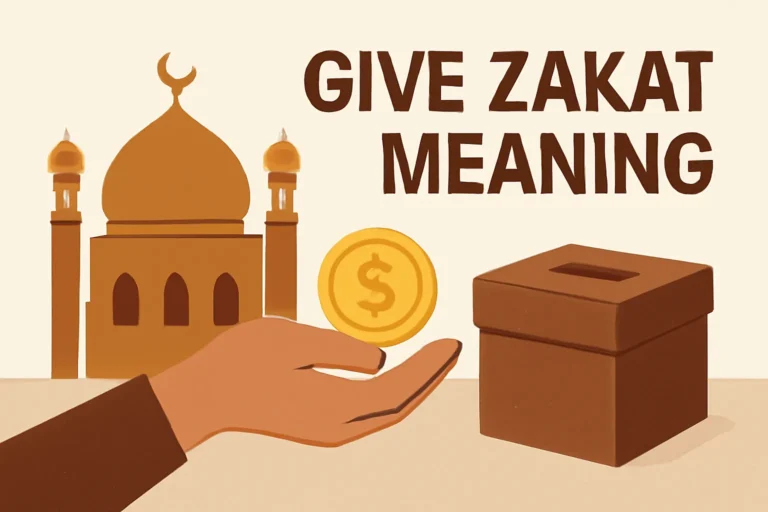
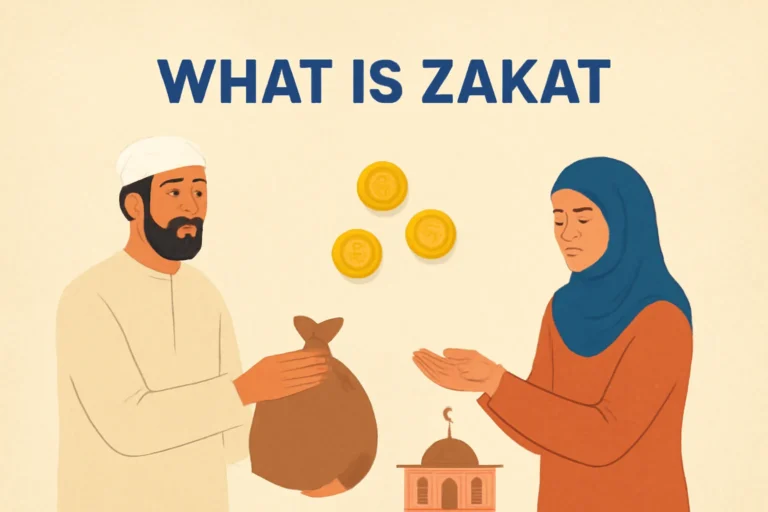
Zakat is a central concept in Islam, often described as the obligatory almsgiving that accompanies prayer and fasting as a core practice of faith. In its linguistic sense, the word zakat denotes purification and growth—the idea that wealth is purified when a portion is returned to the community, and that the act of giving fosters moral and social growth for both the giver and the recipient. In Islamic law, Zakat is a fixed annual duty on certain kinds of wealth when it reaches a minimum threshold known as the nisab.
Many scholars describe what is a zakat as not merely charity but a formal obligation with spiritual significance and social purpose. It is sometimes called zakat al-mal (zakat on wealth) to distinguish it from zakat al-fitr (the charitable due paid at the end of Ramadan, which has its own rules). Throughout this article, you will encounter different formulations of the same idea: the obligation, the calculation, and the distribution of zakat as a mechanism to reallocate wealth for the public good.
The Significance of Zakat in Islam
The practice of zakat serves multiple roles within an Islamic framework. At the most personal level, it symbolizes a recognition that wealth is a trust from God, not only a personal achievement. It is a reminder that material resources exist within a larger social fabric, and responsibility to others is part of righteous living. At the societal level, zakat functions as a system of redistribution that aims to reduce poverty, promote social cohesion, and provide a safety net for vulnerable people.
Economic justice: By transferring a portion of wealth from the more affluent to the less fortunate, zakat helps lessen extreme inequality and fosters a more balanced economy.
Social solidarity: The act of giving creates bonds across classes and backgrounds, reinforcing communal responsibility and mutual support.
Spiritual purification: For many Muslims, paying zakat is a purification of wealth that helps cultivate humility, gratitude, and awareness of divine ownership over all possessions.
Ethical discipline: The requirement to assess wealth annually and to give a portion away encourages prudent financial planning and mindful consumption.
Across different Muslim communities, the significance of zakat is expressed in local emphasis on helping families in need, supporting education and healthcare initiatives, and funding microfinance or small-business ventures that enable sustainable livelihoods. While the forms and channels of distribution may vary, the core aim remains constant: to relieve poverty, protect dignity, and nurture a just society.
Key Concepts: Nisab, Rate, and Recipients
Nisab: The Threshold and Its Meaning
The nisab is the minimum amount of wealth a person must possess before zakat becomes due for that year. It is commonly framed as the value of 85 grams of gold or the equivalent value of 595 grams of silver, though the exact form may vary according to school of thought, local customs, and current market prices. In practice, people determine nisab by converting their wealth into a common currency and checking whether the net wealth exceeds the nisab threshold.
Because market values change, many scholars advise using the prevailing price of gold or silver in your local market at the time of calculation. If your wealth does not reach the nisab, zakat may not be due that year. If it does, the zakat rate is applied to the appropriate eligible wealth base.
Rate: The Percentage to Be Given
In the vast majority of traditions, zakat on wealth is fixed at 2.5% (one-fortieth) of the zakatable assets that remain in your possession for a full lunar year after deductions. This rate is designed to be modest enough to be sustainable for those who owe zakat while powerful enough to effect meaningful redistribution for the recipients.
The Qur’an specifies eight categories of zakat recipients, commonly enumerated as follows:
Al-Fuqara (the poor) who lack sufficient means to meet basic needs.
Al-Masakin (the needy) who may have some resources but remain in hardship or precarious circumstances.
Aamileen (the zakat collectors) who are responsible for collecting and distributing zakat.
Mu’allafat Qulubuhum (those whose hearts are to be reconciled), including new converts and others to whom zakat can support social or political stability.
Riqaab (those in bondage or captivity) in ways that free captives or reduce debt burdens, depending on interpretation.
Gharimeen (the indebted) who are burdened by debt and unable to meet essential needs.
Fi Sabilillah (in the cause of God), which can include charitable projects and support for religious institutions and initiatives that promote the common good.
Ibn as-Sabil (the wayfarer) who is stranded or traveling away from home and lacking resources to continue the journey.
In contemporary practice, communities often tailor the application of these categories with local councils or mosques to ensure funds reach those truly in need. Some projects prioritize local recipients first, while others support regional or international relief initiatives. The essential principle is that zakat funds should be directed to those who genuinely deserve them.
Who Should Pay Zakat and Who Receives It
Paying zakat is a personal religious obligation for eligible Muslims who possess wealth above the nisab threshold for a full lunar year. It is not applicable to every person or every asset; rather, it applies to wealth types that can accumulate and be stored, such as cash, savings, gold, and certain business assets. It is also possible for non-Muslims or charitable organizations to help collect and distribute zakat, provided they operate within ethical and religious guidelines and with the consent of the zakat payer.
The distribution of zakat to the rightful recipients often occurs through:
Local mosques or charitable foundations that maintain transparent accounts and publish annual reports.
Dedicated zakat committees that assess needs, verify eligibility, and monitor how funds are used.
Community projects, such as educational programs, healthcare initiatives, and small-business loans that relieve poverty and support self-sufficiency.
How to Calculate Zakat: Step-by-Step Guidance
Calculating zakat can be straightforward for simple cases and more nuanced for complex wealth structures. The essential steps below provide a practical framework that applies to most people who hold zakatable wealth for a lunar year.
Identify zakatable assets for the year. These typically include cash in hand, money in bank accounts, savings, gold and silver, business stock, trade goods, rental income owed, shares and investments, and other instruments that can be converted into cash.
Determine the nisab threshold using the current value of gold or silver, and convert all zakatable wealth into a single currency to compare against nisab.
Subtract allowable debts and expenses that are owed and have not yet been paid if they pertain to essential living costs or legitimate obligations, and do not permanently impair your ability to meet basic needs.
Consider obligatory expenses like regular living costs, housing, education, and healthcare for you and your dependents, if they deplete the wealth available for zakat.
Compute 2.5% of the remaining zakatable wealth once you have accounted for debts and expenses, and ensure that the net amount is above zero and satisfies the nisab condition.
Choose distribution channels by assigning the calculated zakat to eligible recipients according to local guidance and preferences, while aiming to maximize impact and accountability.
Example: If a person has 50,000 in cash, possessions, and receivables that are zakatable and the nisab threshold is 5,000 after accounting for essential expenses and debts, the zakat due would be 2.5% of the net zakatable wealth. If after deductions the net wealth is 20,000, the zakat due would be 500 for that year. This simplified example illustrates the arithmetic, but real-world calculations may require consulting with a knowledgeable adviser to account for nuances like debts, business inventories, and market valuations.
Zakat on Various Assets: What Qualifies and What Does Not
Cash, Savings, and Bank Balances
Zakat on cash and liquid assets is straightforward in many schools of Islamic jurisprudence. If cash and cash equivalents (including funds in savings or checking accounts, or money market instruments) meet or exceed the nisab value after a full lunar year, they become zakatable at the standard rate of 2.5%.
Gold and Silver
Gold and silver holdings have long been a primary basis for nisab calculations. Some people hold jewelry for personal use, not as wealth. In most interpretations, jewelry worn for personal adornment is exempt if it is of typical usage and not intended for sale, whereas gold and silver kept as investment, hoarded, or held for business purposes are zakatable. The decision often depends on the intent, the quantity, and the nature of the assets.
Business Assets and Inventory
For business owners, zakat on business wealth includes inventory (goods intended for sale), accounts receivable, and other liquid assets of the enterprise that have remained in the business for a year and exceed the nisab threshold. The rules can vary if the business is primarily service-based or if inventory is only intermittently stocked. In many cases, business owners calculate zakat on the net inventory and outstanding receivables at the annual anniversary of ownership.
Investments and Stocks
Investments such as stocks, mutual funds, and other financial instruments may be zakatable depending on the investor’s wealth status and the nature of the investment. Some scholars treat the market value of shares as zakatable wealth, while others differentiate between passive investments and income-generating assets. The key question is whether the investment is held for wealth accumulation and can be converted into cash within a year. When in doubt, many communities advise counting the net value of investments above any necessary reserve funds.
Historically, zakat also applied to agricultural produce and livestock. Different rules apply based on the amount produced, irrigation methods, and the type of livestock. While some urban and modern contexts emphasize cash zakat, rural communities may still observe traditional rates on crops or animal wealth, typically with specific percentages depending on the irrigation method used for crops or the number and type of animals.
Other Wealth Forms
Some modern Muslims also consider other wealth forms like royalties, rental income, and cryptocurrency holdings under the zakatable umbrella, depending on local fatwas (religious rulings) and the interpretation of wealth as a store of value. In all cases, the underlying principle is to assess whether wealth is ready to be exchanged for buying needs by those in need, and whether it has remained in one’s possession for a full lunar year.
Distributing Zakat: Channels and Practical Considerations
The practical aspect of zakat involves deciding how to distribute it. While personal preference and local practices matter greatly, the overarching aim is to reach the most deserving and to maximize the benefit for the community.
Distribute locally to neighbors, relatives, and community members who meet the eligibility criteria.
Use established zakat institutions or mosques that audit the distribution process and publish transparent reports.
Combine immediate relief with long-term assistance, such as microfinance programs or vocational training that empower recipients to become self-sufficient.
Ensure that recipients’ privacy and dignity are protected during distribution.
Some communities also channel a portion of zakat to humanitarian and development projects abroad when local need is met or insufficient. This approach aligns with the broader ethical aim of solidarity with people beyond one’s own locality, provided the local authorities maintain accountability and ensure that funds reach the intended beneficiaries.
Zakat and Economic Justice: A Deeper Perspective
Beyond the mechanics, zakat embodies a philosophy of social justice rooted in a divine mandate. The idea is not merely to transfer wealth but to transform economic relationships so that prosperity is shared and exploitation is minimized. In this view, zakat acts as a safety valve that prevents poverty from becoming entrenched, while enabling communities to invest in education, health, and infrastructure.
Critics and commentators sometimes raise questions about the effectiveness and scope of modern zakat systems. Proponents respond by highlighting that when zakat is administered transparently, consistently, and in proportion to need, it can complement government social protection programs. It can promote financial discipline for donors, encourage philanthropic culture, and foster a moral economy in which wealth serves the common good.
Because zakat is a central religious duty with significant practical implications, there are many common questions. Here are a few widely discussed points and clarifications:
Is zakat the same as charity? Not exactly. Zakat is an obligatory act tied to wealth thresholds, whereas sadaqah is voluntary charity given at any time and amount.
Can non-Muslims pay zakat? Some non-Muslims participate in zakat through Islamic charitable organizations as a gesture of goodwill, but the religious obligation applies to Muslims who meet the nisab and other conditions.
Do I have to pay zakat every year? If your wealth qualifies for zakat for a full lunar year and remains above the nisab threshold, then zakat is due annually.
What if I have debt? Personal debt may lower the zakatable wealth if it is a legitimate obligation, but the rules about deducting debts are nuanced and depend on local guidance and interpretation.
Is zakat payable on all assets? No. Zakat applies to specific wealth categories that hold value and are ready for exchange. Some assets, such as basic living necessities, are generally exempt.
Zakat in Contemporary Contexts: Global and Local Practices
In the modern world, zakat is practiced within a diverse range of communities. Some Muslims view zakat as a local obligation, contributing to neighborhood welfare, while others support international relief and development projects. The emergence of formal zakat institutions, online calculators, and standardized reporting has helped many Muslims perform this obligation with greater accuracy and accountability.
Local regulation and cultural variation shape how zakat is implemented. In some countries, religious authorities oversee zakat funds. In others, independent nonprofits or charitable organizations handle collections and distributions. Regardless of the framework, the essential elements—intention, accuracy, and transparency—remain central to trust and effectiveness.
Practical Tips for Readers Who Want to Learn More
Consult a trusted local scholar or an established zakat institution to understand the nisab for the current year and the prevailing interpretations of wealth categories.
Keep careful records of all zakatable assets, debts, and expenditures. Documentation helps ensure accountability and simplifies annual calculation.
Engage with community education programs to understand how zakat funds are used and what impact they have in local and broader contexts.
When distributing zakat, prioritize recipients who meet the religious criteria and who genuinely face hardship and need, while also considering programs that promote long-term resilience.
Be mindful of currency and conversion issues. Since the nisab depends on the value of gold or silver, you may need to recalculate the threshold when prices fluctuate significantly.
Conclusion: The Continual Relevance of Zakat
In sum, zakat is more than a financial transaction; it is a practice that intertwines faith, ethics, and social responsibility. By defining who pays, who may receive, and how wealth should be redistributed, zakat anchors a moral economy within the broader religious and cultural landscape. The—phrase “what is zakat” encompasses a family of questions—about definition, significance, and operational mechanics—that guide Muslims in their daily lives, their communal obligations, and their relationship to wealth as a trust from God.
Whether you are approaching zakat from a personal spiritual perspective, a family budgeting lens, or a community leadership angle, the essential elements stay the same: identify eligible wealth, determine nisab, calculate at the standard rate, and distribute to rightful recipients with integrity and care. In doing so, zakat remains a living practice—one that continues to adapt to changing economic realities while maintaining a timeless aim: to purify wealth, to ease hardship, and to build a just society.

Deja una respuesta