The idea of eating meat that was grown in a lab rather than harvested from a farm animal sounds like science fiction to many people. In the last decade, however, lab-grown meat—also called cultured meat or cell-based meat—has evolved from a niche laboratory curiosity into a serious field of food science and technology. This article serves as a comprehensive guide to what lab meat is, how it is produced, why researchers and policymakers are paying attention, and what the future might hold for this evolving form of protein. By exploring the many names, processes, and implications, readers can gain a nuanced understanding of a topic that sits at the intersection of biology, ethics, environmental stewardship, and consumer choice.
What is lab meat? A precise definition
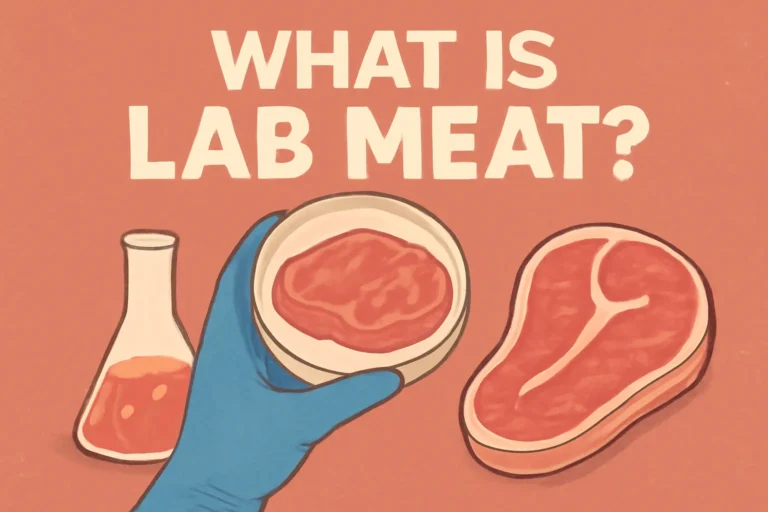
At its core, lab meat refers to animal muscle tissue that is grown outside of a living animal. It is created by taking a small sample of cells from an animal and feeding those cells a controlled mix of nutrients until they proliferate and differentiate into muscle fibers. The result is a tissue that, when prepared and cooked, resembles conventional meat in texture, flavor, and nutritional profile—without requiring a traditional animal slaughter. Important distinctions exist between terms, but the common thread is clear: the meat comes from cultured cells rather than an animal raised for food.
There are several reasons people use different labels for this product. Some emphasize the source and method (for example, cell-based or in vitro meat), while others highlight the broader framework in which it sits (such as cultured meat within cellular agriculture). Across the literature and media, you will encounter a spectrum of descriptors that all point toward the same general concept: real animal tissue produced via controlled laboratory or industrial processes.
The terminology landscape
Understanding the vocabulary helps prevent confusion as the field grows. Here is a concise guide to common terms and their rough nuances:
Lab-grown meat — Emphasizes the idea of meat that has been grown in a laboratory setting from animal cells.
Cultured meat — Focuses on the cultivation of cells into muscle tissue, highlighting the tissue-building aspect.
Cell-based meat — Stresses the cellular origin of the product and its divergence from traditional animal farming.
In vitro meat — A scientific descriptor that signals growth outside of a living organism, in controlled conditions.
Clean meat — A marketing-friendly term that underscores ethical and environmental promises, though opinions about the label vary.
Synthetic meat — A broader term that some use to describe engineered protein products; not all synthetic meat is cultured, but some cultured products fall under this umbrella.
Cultured protein — A more general phrase that can include non-meat animal tissues or alternative proteins, but is often used in the same conversation as cultured meat.
Each term has its own audience and connotations. When evaluating research, policy, or product labeling, it helps to note the context and the intent of the speaker or organization using a particular descriptor.
How lab-grown meat is made: The science behind it
Biological foundations
The process begins with a tiny cell source—typically stem cells or satellite cells that live in muscle tissue. These cells are capable of dividing, differentiating, and forming structured tissue. The challenge is to coax them to proliferate rapidly enough to be economical and to organize themselves into tissue that has the texture and mouthfeel of real meat.
The cells need a supportive environment that provides the right nutrients, signals, and physical cues. In nature, a living animal supplies these through blood flow, hormones, and extracellular scaffolds. In a lab or factory setting, engineers replicate those conditions using carefully designed growth media, scaffolds (supportive structures), and bioreactor systems.
Cell sourcing: A small biopsy or cell line is obtained from an animal. The goal is to minimize animal harm while preserving the cells’ capacity to grow into muscle tissue.
Cell expansion: Cells are placed in a controlled growth medium that provides sugars, amino acids, minerals, and signaling molecules. The cells multiply to create a sufficient quantity for tissue formation.
Differentiation: The proliferating cells are guided to become muscle fibers and, in many cases, fat cells as well. This step is crucial for achieving the characteristic texture of meat.
Scaffolding: A three-dimensional framework supports cells as they grow. Scaffolds help create a structure that resembles natural tissue rather than a flat sheet.
Fat and connective tissue development: Textural realism often benefits from fat cells and connective tissue, which influence flavor and juiciness.
Maturation and harvesting: The tissue is cultured until it reaches the desired maturity, then it is harvested, processed, and prepared for traditional culinary use (grilling, frying, etc.).
Production environments
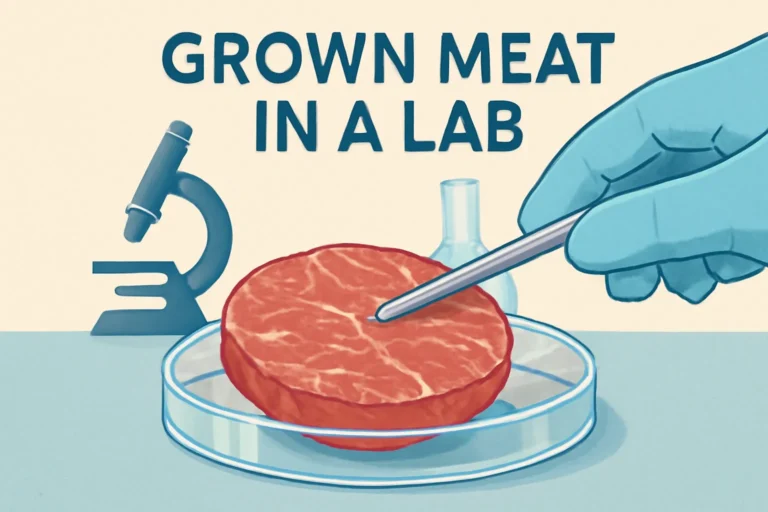
In early demonstrations, scientists grew small pieces of meat in petri dishes or simple bioreactors. As the field advances, large-scale bioreactors and industrial-scale production concepts are being applied to achieve broader availability. A critical piece of the puzzle is the growth medium—the nutrient mix that cells require. While some early media relied on fetal bovine serum, most researchers are moving toward serum-free or plant-based alternatives for ethical, economic, and regulatory reasons.
History and milestones: From curiosity to a growing industry
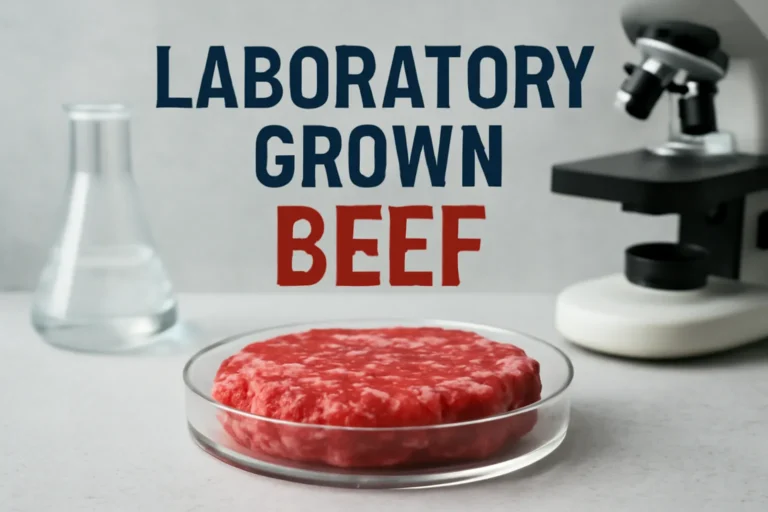
The notion of cultivating meat outside the animal first captured public imagination in the late 20th century. Early experiments demonstrated that animal cells could proliferate outside the body, but the idea of turning this into scalable, palatable meat faced technical, regulatory, and cultural hurdles. A landmark moment came in 2013 when researchers presented a lab-grown beef burger, signaling that the science could reach a consumer-ready form—at least in a demonstration setting.
Since then, advances have included improvements in cell lines, serum-free media, scaffolding technologies, and the development of robust bioprocessing methods. A number of startups and established food companies have pursued different approaches to bring products to market. While progress on pricing and taste continues, the overarching trajectory has been toward greater realism, safety, and scalability.
Lab meat versus conventional meat: How they compare
Texture, flavor, and culinary experience
Traditional meat delivers a complex mix of muscle fibers, fat distribution, moisture, and connective tissue that create specific textures and flavors. Lab-grown meat has made substantial progress toward reproducing these attributes, but achieving the exact mouthfeel of a well-marbled steak or a juicy chicken thigh remains challenging. Chefs and researchers often emphasize the potential for custom fat content, tailored textures, and unique flavor profiles through controlled formulations. In practice, many products arrive as ground-like or minced formats first, offering culinary versatility while texture refinements continue.
Nutrition and safety
Nutritionally, lab meat can be designed to deliver comparable or even improved profiles relative to conventional meat. This includes adjustable fat composition, higher levels of certain micronutrients, or reduced contaminants. However, safety testing and sterile manufacturing conditions are essential to prevent contamination and to ensure product consistency. Consumers should stay informed about nutritional labels, fortification, and any differences in cholesterol or fatty acid balance.
Environmental footprint and resource use
A central argument for cultured meat is the potential to reduce land use and water consumption, as cell culture systems can, in theory, produce protein with less dependence on animal agriculture’s land-intensive footprint. However, the energy demands of bioreactors, supply chains for growth media, and other processing steps can offset some gains if not managed carefully. The net environmental impact depends on scale, energy sources, and process optimization. The field is actively studying life-cycle assessments to quantify real-world benefits and trade-offs.
Environmental, ethical, and societal considerations
Animal welfare
One of the strongest ethical arguments for cell-based meat is the potential to maintain animal welfare by avoiding routine animal slaughter and reducing the number of animals raised for meat. Even when cell lines originate from a small initial biopsy, ongoing research seeks to minimize animal use and improve welfare across the production chain.
If lab-grown meat becomes cost-competitive, it could influence global food security by providing a stable protein source independent of weather conditions, disease outbreaks, or feed price volatility. This shift could affect rural economies that depend on traditional livestock industries. Policymakers may need to manage transitions, support retraining, and consider impacts on rural livelihoods.
Labels, trust, and consumer choice
How products are labeled can influence consumer acceptance. Some people respond positively to terms like clean meat or cultured meat, while others prefer descriptors that emphasize nutrition, safety, or sustainability. Transparent labeling, credible safety data, and consistent regulatory oversight are essential to building trust in this category of products.
Regulation, safety, and policy landscape
Who regulates lab-grown meat?
Regulatory responsibility varies by country. In some jurisdictions, food safety authorities oversee product safety and labeling, while other agencies handle animal health, biotechnology approvals, and environmental impact. A common approach is to treat cultured meat as equivalent to conventional meat for purposes of safety assessment, with additional scrutiny on the production process, growth media, and potential contaminants.
Labeling and market access
Labeling policies influence market access and consumer perception. Some regions require clear disclosures about production methods, origin, and ingredients. Others permit standard meat labeling if the final product resembles traditional meat in composition. Ongoing debates focus on the balance between accurate information, consumer freedom, and the potential for greenwashing.
Consumer acceptance and ethics
Public perception and cultural considerations
Acceptance of cultured meat often hinges on food neophobia, cultural norms surrounding meat, familiar taste and texture, and the perceived naturalness of the product. Some consumers welcome the ethical and environmental advantages, while others express reservations about the idea of “eating something grown in a factory.” Education, taste demonstrations, and transparent communication about nutrition and safety can help bridge gaps in understanding.
Gender, age, and demographic dynamics
Attitudes toward novel foods, including cell-based meat, can vary by demographics. Younger consumers may be more receptive to technological innovation, while other groups evaluate the product through the lenses of tradition, trust in institutions, and personal health concerns. Market research increasingly emphasizes taste testing, branding, and price sensitivity to gauge adoption curves.
Global perspectives: Where lab meat is taking root
The development of lab-grown meat is a global endeavor with activity across North America, Europe, Asia, and beyond. Some regions emphasize policy incentives and research funding to accelerate fundamental biology and manufacturing readiness, while others prioritize consumer trials and pilot-scale production to quantify real-world performance. While the pace of regulatory approvals varies, the overarching trend is toward more countries engaging with the concept, testing products, and shaping standards for safety and labeling.
Economic and market landscape
Cost, scale, and competitiveness
Price parity with conventional meat remains a central challenge for many cultured meat products. Early demonstrations often involved premium pricing due to small-scale production, bespoke facilities, and high material costs. Economies of scale, process optimization, and improved growth media formulations are expected to drive costs downward over time. The path to affordability depends on industrialization, supply chain efficiency, and consumer demand.
Investment and industry structure
Venture capital, corporate R&D, and government funding have fueled a growing ecosystem of startups and established food companies exploring cell-based meat, cultured proteins, and related technologies. Some players focus on niche products (e.g., cultured chicken or cultured seafood), while others pursue broader lines of cultured proteins intended to diversify protein supplies. Partnerships with chefs, retailers, and foodservice providers help test market acceptance and refine product formats.
Nutrition, safety, and culinary potential
Nutrition and health considerations
Because lab-grown meat can be engineered with specific fat profiles and micronutrient levels, it offers the possibility of tailoring nutrition to meet dietary guidelines or consumer needs. For example, producers might create products with higher omega-3 content or lower saturated fat. Nonetheless, consumers should review precise nutritional labels, as variation will exist among products and batches.
The culinary potential of cultured meat is vast. Chefs experiment with fat distribution, fiber alignment, and moisture content to simulate traditional cuts. There is also interest in using cultured meat in novel formats—such as ground meat for burgers, meatballs, or sausages—where texture is more forgiving and production can scale more quickly. Some researchers envision hybrid products that mix cultured cells with plant-based textures to achieve the best of both worlds.
Challenges and opportunities ahead
Technical challenges
Key hurdles include achieving consistent texture and mouthfeel at scale, reducing production costs, and ensuring robust supply chains for growth media and scaffolds. Long-term stability, batch-to-batch uniformity, and the ability to recreate complex cuts (steaks or roasts) remain active areas of research. Interdisciplinary collaboration among biology, chemical engineering, materials science, and culinary science is essential to advance the field.
Regulatory and public acceptance challenges
Regulators must balance safety, transparency, and public benefit. Honest communication about production methods, environmental claims, and nutrition is critical to building consumer trust. Public education campaigns, independent oversight, and credible third-party testing help address skepticism and ensure that cultured meat reaches broader audiences responsibly.
Environmental and ethical opportunities
If scaled effectively, lab-grown meat could reduce demand for land use, freshwater resources, and greenhouse gas emissions associated with traditional livestock farming. It could also offer ethical advantages by decreasing the need for farm animal slaughter. Yet the environmental benefits will depend on how energy-intensive production becomes and whether the energy is sourced from renewables. A thoughtful policy framework can maximize positive outcomes.
Frequently asked questions
Is lab meat safe to eat?
Current research and regulatory review emphasize safety in production, cleaning, and handling. Like any new food product, ongoing safety testing, traceability, and quality controls are essential. When properly managed, cultured meat is expected to be safe for consumption if it meets established food safety standards.
Will cultured meat replace traditional meat?
It is unlikely that cultured meat will entirely replace conventional meat in the near future. More plausibly, it will coexist with traditional meat, offering an additional option that can complement farmers, supply chains, and consumer preferences. The extent of adoption will depend on price, taste, branding, and regulatory clarity.
How soon can I buy cultured meat in stores?
Availability varies by country and regulatory status. A handful of products are already hitting store shelves or restaurant menus in certain markets, while broader global access may take several more years as production scales and costs decline. Consumer trials, pilot programs, and partnerships with retailers are accelerating the timeline in some regions.
Conclusion: The evolving landscape of lab-grown meat
Lab meat, cultured meat, and the broader field of cellular agriculture represent a bold reimagining of how humans source protein. The promise is compelling: a way to deliver real animal tissue without some of the ethical, environmental, and health concerns associated with traditional livestock farming. The challenges are equally real—technical hurdles, regulatory frameworks, price pressures, and consumer skepticism all demand careful attention. As research progresses, manufacturers refine processes, and regulators establish clear guidelines, the story of lab-grown meat will continue to unfold in the public arena, kitchens, and laboratories around the world. Whether you view it as a transformational leap or a cautious incremental improvement, it is clear that this is not a passing trend but a persistent avenue for innovation in our global food system.
For readers who want to keep exploring, watch for new terms, study results, and culinary demonstrations. The core idea remains simple and powerful: real meat grown from cells—an approach that blends biology, engineering, and gastronomy in a way that could reshape how humanity nourishes itself in the decades to come.




Deja una respuesta