Introduction to Halal Food Requirements and the Role of Certification
Halal food requirements represent a comprehensive framework that combines religious observance with
food safety, ethical considerations, and supply chain integrity. For many consumers, halal
is more than a label; it is a declaration about how food is produced, prepared, and presented to meet
specific standards of permissibility. In today’s global marketplace, halal certification serves
as a trusted signpost that a product, a facility, or a brand adheres to defined ingredient guidelines,
slaughter methods, processing practices, and traceability requirements. This article explores the essential
elements of halal food requirements, the practical process of obtaining certification, and the everyday
implications for manufacturers, retailers, and consumers.
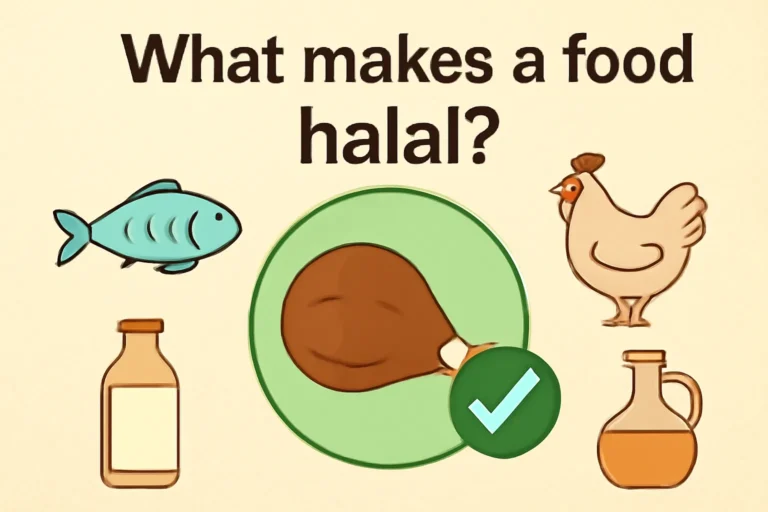
What Halal Means in Food and Why Certification Matters
The word halal translates to “permissible” in Arabic, but in the context of food it conveys a set of
conditions that extend beyond mere avoidance of prohibited substances. A halal framework aims to
ensure that ingredients are from permissible sources, that animals are treated in a humane and lawful way, and
that the manufacturing environment preserves the integrity of the product throughout its life cycle.
Certification plays a crucial role in bridging religious principles with practical supply chain management. For
manufacturers, halal certification programs provide a rigorous assessment of raw materials, processing aids,
facility controls, and packaging practices. For retailers and consumers, a certified product offers confidence that
the items labeled as halal have undergone independent verification against a defined standard. In a global market,
where ingredients and facilities may cross multiple jurisdictions, standardized certification helps to
minimize ambiguity and reduce the risk of accidental non-compliance.
Halal Certification: Scope, Bodies, and the Certification Process
At its core, halal certification is a formal attestation that a product, a production facility, or a distribution
system complies with established halal criteria. The exact scope can vary by certifying body and jurisdiction, but
several core elements are common across most programs.
Key components of halal certification
Permissibility of ingredients (zaabiha-compliant sources, avoidance of haram substances).
Slaughter and meat processing practices for animal products, where applicable.
Processing aids and additives evaluation, including enzymes, emulsifiers, and flavorings.
Cross-contamination controls to prevent contact with haram substances.
Facility and equipment integrity, including dedicated lines, cleaning protocols, and storage practices.
Supply chain traceability and documentation that demonstrate chain-of-custody.
Labeling and packaging to ensure that the halal status remains intact from production to consumer.
Who issues halal certification?
Halal certification is typically issued by autonomous bodies, government-backed agencies, or private certifiers
that operate under a recognized set of standards. Some well-known models include national authorities, such as
those affiliated with government agencies in certain countries, as well as independent halal-certification
organizations that operate internationally. The certifying body conducts audits, reviews product formulations,
inspects facilities, and periodically re-audits to ensure ongoing compliance. It is common for a product to carry a
logo or seal from the certifier, indicating that the item has met the authority’s criteria for halal status.
The certification process in practice
Pre-application review: the applicant assesses whether existing products and processes meet the basic halal requirements and prepares initial documentation.
Documentation and product evaluation: ingredients lists, source of raw materials, and supplier certificates are reviewed for halal compliance.
Facility audit and inspection: a现场 inspection assesses manufacturing practices, equipment cleanliness, segregation measures, and storage controls.
Approval and certification: upon successful review, the certifier issues a halal certificate and permits the use of the certification mark on eligible products.
Surveillance and renewal: ongoing audits and periodic re-certification ensure continued compliance.
Ingredient Guidelines: Halal, Haram, and Everything in Between
A central pillar of halal compliance is the careful evaluation of ingredients and inputs. A product may be
composed of dozens or hundreds of ingredients, each of which must be assessed for its source, processing,
and potential for cross-contact. The field is nuanced, and the terminology can be complex, but the guiding
principle remains clear: all ingredients and processing aids must be permissible and properly handled to maintain halal integrity.
What counts as haram and what is permissible
Pork and pork by-products are strictly prohibited in halal products.
Blood and blood by-products are not allowed.
Alcohol and intoxicants, even in trace amounts, are generally prohibited in the context of halal certification, except where a certifier explicitly permits trace usage under exceptional circumstances with strict controls.
Animals not slaughtered in accordance with dhabiha or methods that do not meet halal standards are not permissible sources of meat or meat-derived ingredients.
Gelatin, collagen, and enzymes derived from haram sources (such as non-halal slaughtered animals) are typically disallowed, unless the certifier approves alternatives (e.g., halal-slaughtered sources, fish gelatin, microbial or plant-based enzymes).
Processed fats and emulsifiers must come from permitted sources and be free from non-halal contaminants or hidden haram components.
Flavorings and natural or artificial flavors must be scrutinized for alcohol content, carrier oils, and potential haram processing aids.
Color additives and carriers must be sourced from halal-approved suppliers and not derived from haram origins, with documentation available upon request.
Processing aids and solvents used in manufacturing must not introduce haram substances into the final product, and some certifiers require that these materials be non-harmful and non-detectable in finished goods.
Practical categories for ingredient evaluation
Animal-derived ingredients (meat, fats, gelatin, rennet, and enzymes) must come from animals slaughtered in a halal manner and processed under halal guidelines.
Plant-derived ingredients are frequently acceptable, provided there is no contamination with haram substances during harvesting, processing, or packaging.
Seafood and fish products are generally considered halal, but processing aids and additives must still be halal-compliant and free from haram cross-contact.
Dairy components require careful verification of sourcing, namely that any coagulants, cultures, or stabilizers come from halal-appropriate producers or non-animal origins.
Flavorings and natural flavors may require supplier attestations or certificates showing halal compliance and the absence of alcohol or haram solvents.
Key concerns that drive ingredient evaluation
Source verification: traceability from raw material to finished product and supplier declarations.
Processing aids: items used during production that do not end up in the product but may influence its halal status.
Cross-contact risk: shared equipment or facilities that could transfer haram substances to halal products.
Label transparency: clear disclosure of all ingredients so consumers can decide based on their beliefs and restrictions.
Processing, Cross-Contamination, and Facility Controls
Maintaining halal integrity is as much about how a product is made as what goes into it. The processing
environment, equipment, and handling practices can all affect whether a product remains halal from the
production floor to the consumer’s table.
Cross-contamination prevention in manufacturing
Dedicated lines or clearly separated processing areas for halal and non-halal products help prevent cross-contact.
Rigorous cleaning protocols using agents that are certified halal and free from haram residues.
Segregated storage for raw materials, intermediates, and finished goods to avoid mix-ups.
Labeling controls to ensure that packaging and product labels reflect the halal status and any certifications.
Supplier approvals and ongoing supplier audits to confirm that ingredients continue to meet halal standards.
Facilities, equipment, and packaging considerations
Equipment design should enable thorough cleaning and prevent accumulation of haram residues.
Cleaning in place (CIP) and sanitization procedures must be validated to remove haram contaminants effectively.
Packaging materials should be free from haram contamination and should preserve the halal status of the product to the point of sale.
Transportation and warehousing practices must maintain segregation and prevent exposure to haram elements during distribution.
Slaughter, Animal Welfare, and Slaughter Methods in Halal Circles
For meat and meat-derived products, halal standards typically address the slaughter method, the welfare of the animal,
and the proper invocation of the divine name. While practices vary by jurisdiction and certifying body, some widely
shared principles include a swift, single incision that causes rapid loss of consciousness, as well as humane handling
and restraint.
Core elements of zabiha-style slaughter under halal guidelines
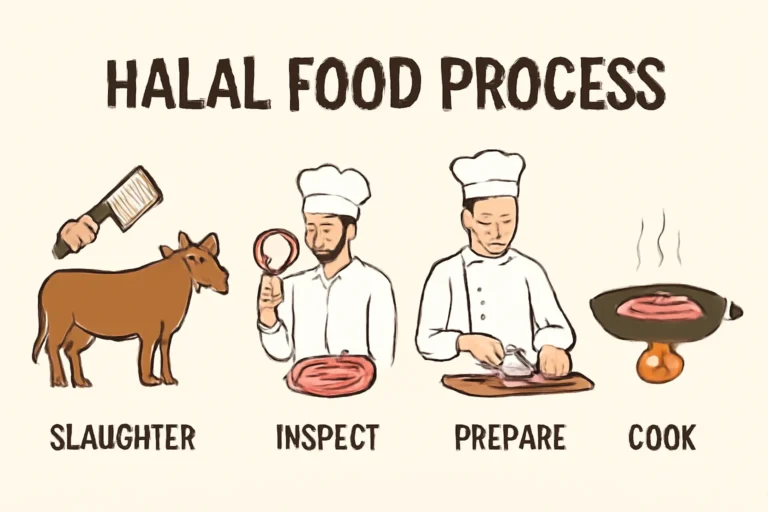
Single, swift cut to the throat with a sharp blade to minimize suffering.
Severing the trachea, esophagus, and major blood vessels to ensure rapid blood drainage and reduce residual stress.
Invocation of the name of Allah at the moment of slaughter in many certifying regimes, though some jurisdictions permit non-Muslim slaughterers with proper oversight.
Healthy animal criteria ensuring that only animals fit for consumption are processed under halal rules.
Stunning considerations: opinions differ; some halal standards permit reversible stunning when it does not kill the animal, while others prohibit stunning altogether. Certification may specify allowed methods based on regional ethics and veterinary science.
Preventing contamination during slaughter and avoiding contamination of meat with haram substances in the processing facility.
Labeling, Certification Marks, and Consumer Guidance
A critical dimension of halal compliance is transparency at the point of sale. The labeling on packaging, the presence
of a recognized certification mark, and accompanying documentation help consumers verify halal status and make informed
choices. Labels may indicate the certifying body, country of origin, and any special conditions attached to the halal claim.
What consumers should look for on labels
Halal certificate or logo from a credible certifying body.
Certified product scope indicating whether the seal covers the entire product line, a specific batch, or a particular ingredient.
Ingredient list with full disclosure of all components, including flavorings, processing aids, and carriers.
Source declarations for animal-derived ingredients (species, and, when relevant, whether halal slaughter was conducted).
Expiration or certification validity period to ensure ongoing compliance and re-audit status.
Global Landscape: Variations Across Regions and Markets
Halal standards are not uniform worldwide. Different regions may emphasize distinct aspects of halal compliance,
and some markets rely on multi-country certification schemes. The diversity reflects varied religious practices, local
laws, food industry structures, and consumer expectations. Nevertheless, most major markets share a core set of principles:
permissibility of ingredients, humane handling, and robust traceability.
Regional examples and their implications
East Asia and the Middle East: Mature halal ecosystems with established certifiers and widely recognized marks; emphasis on slaughter practices, export readiness, and cross-border supply chain transparency.
Southeast Asia: Strong adoption of halal certification in major economies; collaboration with national authorities and a focus on domestic consumption and international trade.
Europe and North America: Growing demand for halal products, with certification often balancing religious guidelines and local regulatory frameworks; emphasis on product labeling, supplier due diligence, and allergen controls.
Global supply chains: For multinational brands, maintaining halal integrity across factories, co-packers, and distributors requires rigorous documentation and effective supplier management, often supported by third-party audit programs.
As the halal landscape grows more complex, several misconceptions circulate. Understanding these can help
manufacturers avoid pitfalls and help consumers interpret labels more accurately.
Myth vs. reality in halal labeling
Myth: “If it’s vegetarian, it’s automatically halal.” Reality: Vegetarian or plant-based ingredients may still be processed in facilities that handle haram substances, so cross-contact controls and certification remain important.
Myth: “Kosher equals halal.” Reality: While there is overlap, halal and kosher standards reflect different religious requirements, and a product certified as kosher is not automatically halal and vice versa.
Myth: “Any gelatin is acceptable if labeled as halal.” Reality: Gelatin’s halal status depends on its source and processing; many certifiers require halal-origin gelatin (or alternatives like fish or microbial gelatin) to be verified.
Myth: “Certified halal means zero risk of contamination.” Reality: Certification reduces risk, but ongoing diligence is essential because supply chains are dynamic and ingredients can change.
FAQs for manufacturers and retailers
Q: How often do halal certifications require renewal?
A: Renewal intervals vary by certifier, typically annually or bi-annually, with ongoing surveillance audits in between.
Q: Can a product carry multiple halal certifications?
A: Yes, some products carry marks from more than one certifier, especially for global brands targeting multiple markets; however, the product must meet the stricter standard of the certifiers involved.
Q: What happens if an ingredient supplier changes a formulation?
A: The certifier usually requires re-evaluation and possibly a new approval or updated certificates to ensure continued compliance.
Practical Guidance for Industry: Building Halal-Ready Operations
For companies aiming to serve halal-conscious consumers, building a robust halal-ready operation starts with leadership
commitment, explicit policy statements, and a clear plan for supply chain governance. It also requires ongoing training,
supplier engagement, and a culture of transparency.
Steps to implement halal-ready production
Establish internal halal policy with defined roles, responsibilities, and goals for compliance.
Conduct a gap analysis to identify where current practices diverge from halal standards and prioritize remediation.
Choose appropriate certification bodies based on target markets, product categories, and distribution plans.
Develop supplier approval processes that require attestations, certificates, and on-site verification as needed.
Design a traceability system that captures material origins, batch-level data, and movement through every stage of production and packaging.
Train staff on halal requirements, cross-contamination prevention, and the importance of documentation.
What Consumers Should Do: Reading Labels and Verifying Claims
Consumers who rely on halal labeling should exercise due diligence to understand what certification means in a given context.
Not all halal claims are created equal; some reflect internal corporate standards, while others are backed by independent
verification.
Guidance for consumers
Look for certification marks from reputable halal certifiers with clear scope and expiration dates.
Check ingredient lists for haram ingredients or any entries that require special attention, such as “natural flavors” or “processing aids.”
Be mindful of country of origin and the certifier’s jurisdiction, as standards and interpretations may vary.
Seek transparency from brands about supply chain practices, including sourcing and facility controls.
Conclusion: The Path Forward for Halal Certification and Ingredient Integrity
The landscape of halal food requirements continues to evolve as consumer demand grows and supply chains become
more interconnected. Certification stands at the heart of trusted commerce, offering a framework that harmonizes religious
observance, food safety, and ethical sourcing. By focusing on key areas—ingredient provenance, processing integrity,
animal welfare considerations where applicable, cross-contamination prevention, and transparent labeling—manufacturers,
retailers, and regulators can work together to support halal integrity in the global food system.




Deja una respuesta