Halal Meat Requirements: A Comprehensive Guide to Certification, Slaughter, and Compliance
Halal Meat Requirements: A Comprehensive Guide to Certification, Slaughter, and Compliance
Welcome to this comprehensive guide on halal meat requirements. Whether you are a producer, a retailer, a butcher, or a consumer seeking clear standards, understanding the full landscape of halal certification, slaughter methods, and compliance expectations is essential. This article uses variations of the phrase to cover the breadth of semantic meaning, including halal slaughter criteria, halal processing standards, zabihah requirements, and certification criteria for halal meat. The goal is to equip readers with practical guidance, policy context, and actionable steps to maintain halal integrity across the supply chain.
Understanding the Core Concepts of Halal Meat Requirements
At its core, halal meat requirements define what is permissible in the production, processing, and distribution of meat that Muslims may consume. These requirements encompass beliefs, religious rituals, hygiene, animal welfare, and traceability. They also address the interactions between religious rulings and modern food safety systems. While the specifics can vary by jurisdiction and interpretation, most frameworks share a common structure: an approved animal, a sanctioned method of slaughter, clean handling, and transparent documentation.
Key terms you may encounter include zabihah (the ritual slaughter method), dhabiha or dhabihah spelling variations, and certified halal labeling. In some regions, there is debate about whether pre-slaughter stunning disqualifies meat from being halal, while other authorities permit certain forms of reversible stunning that do not kill the animal. Across the field, the emphasis remains on ensuring that the animal is treated humanely, that the slaughter is performed with a swift and humane cut, and that the meat remains free from non-halal ingredients or contamination.
From a supply-chain perspective, the term halal compliance extends beyond the slaughter ritual. It includes ingredient disclosures, processing controls, equipment sanitation, segregation of halal and non-halal products, and meticulous recordkeeping. Consumers rely on these elements to verify that the product they purchase truly aligns with their beliefs. For producers, mastering halal production standards means building robust systems that can withstand audits, satisfy regulators, and earn consumer trust.
Halal Certification: Bodies, Process, and Scope
Halal certification is a formal recognition that a facility, product, or supply chain meets established halal criteria. It is typically granted by independent, accredited organizations known as halal certification bodies. These bodies perform audits, verify documentation, inspect processes, and issue certificates that accompany products to markets around the world.
What certification covers
Certification commonly covers three domains: slaughter practices, processing and ingredients, and traceability and labeling. A comprehensive scope may include:
Approval of the slaughter method and the knife quality used in abattoirs or central slaughter facilities.
Verification of animal welfare standards before and during the killing process.
Assessment of ingredient lists, including processing aids and potential cross-contamination risks.
Inspection of clean-in-place protocols and lines that separate halal from non-halal products.
Documentation and traceability systems that allow product recalls or verifications.
Application and submission of documents for the facility, product line, or both.
Pre-audit document review to assess compliance with halal standards and applicable regulations.
On-site audits and inspections of slaughter, processing, packaging, and storage operations.
Issuance of a certificate for approved lines, with defined scope and validity period.
Regular surveillance audits and re-audits to maintain active certification.
Annual or periodic renewals and updates to reflect changes in products or processes.
Choosing an appropriate halal certification body is a strategic decision. Buyers and retailers often require certifications from recognized, reputable bodies with robust< strong>global recognition and consistent audit methodologies. When evaluating certification options, consider factors such as audit scope, language of reports, geographic coverage, and the body’s reputation for impartiality and expert knowledge in your product category.
Halal certification is not a single universal standard. While many principles overlap, regional interpretations may affect the treatment of pre-slaughter stunning, use of certain ingredients, or the level of facility segregation required. Some markets emphasize strict prohibitions on any form of pre-slaughter stunning, while others accept specific, reversible techniques under stringent controls. Therefore, it is crucial to map your target markets and align certification choices with the requirements of those markets to ensure market access and consumer confidence.
Slaughter Rules: The Zabihah Method and Variations
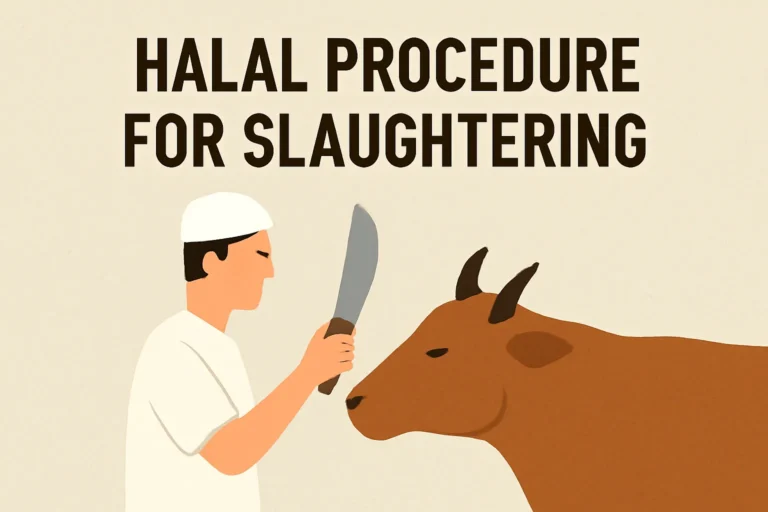
The central act of halal slaughter is commonly referred to as zabihah (also spelled dhabihah in some traditions). The ritual is designed to be swift, humane, and in harmony with prayerful intent. While the specifics can vary, the following elements are widely emphasized in halal slaughter guidelines:
The animal must be healthy and capable of movement at the time of slaughter, free from distress or coercion.
The blade should be sharp to ensure a quick, clean cut that minimizes suffering.
The act must involve a single, deliberate cut to the throat, severing the carotid arteries, jugular veins, and trachea (and sometimes the esophagus) in a single motion.
The slaughter should be performed by a adult Muslim who is of sound mind, ideally someone who recites the name of God (the Bismillah) during the act, depending on local practice.
Post-slit, the animal should bleed out without delay to ensure the meat is permissible and pure.
Pre-slaughter handling and welfare
Halal standards place a strong emphasis on animal welfare. Animals should be treated humanely and transported under humane conditions, provided water, and spared unnecessary fear and stress before slaughter. Welfare considerations include proper handling, appropriate lairage, and adherence to regional animal welfare regulations. A halal-compliant facility will document these practices as part of its overall certification.
Stunning: debates and allowances
There is ongoing debate about the acceptability of pre-slaughter stunning in halal slaughter. Some authorities permit reversible stunning or non-fatal stunning if it does not cause death and if the animal is subsequently slaughtered according to zabihah principles. Other schools maintain that the animal must be alive at the time of the cut and reject any prior stunning. Because interpretations differ by region and certification body, producers often work with their certifier to document the specific stun method used and to ensure it complies with market requirements.
Equipment and knife standards
Halal slaughter requires a clean, sharp knife or blade suitable for a single, uninterrupted cut. Some facilities use single-use blades or ensure a strict sterilization protocol to minimize risk of cross-contamination. The instrument’s condition, maintenance, and sanitation are typically reviewed during audits to verify ongoing compliance with halal slaughter guidelines.
Processing, Packing, and Keeping Halal Integrity
Maintaining halal integrity across the entire processing chain means preventing contamination by non-halal substances, ensuring the segregation of halal and non-halal products, and validating that all processing aids, additives, and packaging materials comply with halal standards.
Segregation and flow of materials
Facilities must design segregated production lines to prevent cross-contact between halal and non-halal products. This includes dedicated equipment, separate storage areas, and careful scheduling to minimize risk. Cross-contamination prevention is often tested through environmental swabbing and routine audits.
Ingredients and processing aids
Halal compliance covers ingredient lists, processing aids, and any substances that come into contact with the product. Even trace amounts of non-halal components, solvents, or flavorings can jeopardize halal status. Many certifying bodies require suppliers to provide certificates of halal compliance for all inputs, with a clear chain of custody and usage guidelines.
Cleaning and sanitation
Cleaning protocols must demonstrate robust sanitation practices that remove residues of non-halal products from equipment and surfaces. Documentation should show routine sanitation cycles, validated cleaning agents, and effective rinsing procedures to prevent carryover into halal products.
Packaging, labeling, and packaging materials
Packaging must preserve halal integrity. Labels should accurately reflect the halal status, including the name of the certifying body and any relevant symbols. Packaging materials themselves, including inks and adhesives, should also be compliant with halal standards when in contact with the product.
Traceability, Documentation, and Recordkeeping
One of the strongest pillars of halal compliance is traceability. Without transparent records, even the best slaughter practices may fail the certification test. Documentation should enable a traceable path from farm to fork, documenting inputs, processes, and movements through every link in the chain.
Farm origin and animal health records, including proof of slaughter eligibility.
Certificate numbers, batch codes, and production dates on all halal products.
Detailed ingredient declarations and allergen information.
Maintenance logs for slaughter equipment and processing lines, including knife sanitization and sharpening records.
Environmental monitoring results and evidence of successful cross-contamination controls.
Recordkeeping best practices
Best practices include digitized systems that capture real-time data, secure storage for audit trails, and the ability to retrieve records quickly during inspections. A robust traceability system supports recall readiness and market transparency, which are increasingly important for consumer trust and regulatory compliance.
Local and Global Compliance: Regulations and Standards
Compliance with local laws and international standards is a core requirement for halal meat supply chains. In some countries, halal certification is regulated or required by law, while in others it operates through voluntary certification. Producers should align their practices with:
National meat inspection and animal welfare regulations that govern slaughter practices and facility cleanliness.
Food safety standards (e.g., HACCP-based programs) to ensure risk management at every step.
Specific halal legislation or guidelines published by recognized halal authorities or certification bodies.
Trade requirements for export markets, including documentation like Certificates of Halal Compliance and the halal mark on packaging.
For global brands, harmonization of halal standards across markets can be challenging. Some organizations publish searchable product approval databases, enabling retailers to verify the halal status of items in different regions. Producers are encouraged to maintain ongoing dialogue with their certifiers to stay updated on any changes in standards, labeling requirements, or permissible ingredients.
Consumer Assurance: Labeling, Certification Marks, and Market Expectations
Labels and marks are the most visible signals of halal certification for shoppers. Clear, accurate labeling helps prevent confusion and fosters confidence among Muslim consumers and retailers. Important elements often include:
The name of the certifying body and the certificate number.
A recognizable halal logo or symbol that confirms the product meets halal standards.
Scope details indicating whether the certification covers the entire product, a specific batch, or a particular ingredient.
Statements about traceability and recall readiness in the event of issues.
Marketplace demands may also require ongoing verification of products. Companies often publish a public database or provide customer service contacts to confirm the halal status of their items. In addition, some retailers require annual or biannual certification renewals and random audits to maintain shelf space for halal products.
Practical Guidance for Accreditors, Butchers, and Producers
Whether you are a small artisanal facility or a large multinational operation, the following practical steps can help maintain halal compliance and reduce risk of certification loss:
Engage early with a reputable halal certification body to define scope and expectations.
Develop and implement a formal halal management system that integrates with your existing quality management framework.
Maintain clear segregation practices between halal and non-halal products, including dedicated lines and color-coded equipment.
Adopt strict ingredient verification procedures, including supplier attestations and periodic audits of inputs.
Institute robust traceability and recall protocols that can be activated quickly if a halal concern arises.
For slaughterhouses, a practical checklist may include the following:
Validated knife sharpness and regular maintenance scheduling.
Proven slaughter timing to minimize animal distress and ensure compliance with zabihah guidelines.
Documentation of pre-slaughter handling and welfare conditions.
Clear separation of halal and non-halal waste streams and effluents.
Producers should also plan for ongoing training, internal audits, and third-party inspections. A culture of continuous improvement helps ensure that halal integrity is preserved as the business grows and markets evolve.
Common Myths and Misconceptions about Halal Meat Requirements
Several myths persist around halal meat standards. Addressing them with accurate information supports informed decision-making for consumers and industry professionals alike.
All halal meat is slaughtered without stunning. In reality, practices vary by jurisdiction and certifier. Some allow reversible stunning under strict conditions, while others do not—always under the guidance of the certifying body.
Halal means the animal is ritually blessed in every hand movement. The ritual elements are a part of tradition in many communities, but the essential requirements focus more on humane treatment, the method of slaughter, and ensuring the product remains halal through processing and packaging.
All halal products are identified with a single universal symbol. In practice, multiple certifying bodies use different marks and logos. Consumers should verify the specific certifier and certificate number.
Halal certification guarantees global market access automatically. While certification greatly facilitates market access, producers must still meet local labeling laws and country-specific import requirements.
Understanding these nuances helps prevent misinterpretation and supports responsible supply-chain decisions that respect both religious guidance and food-safety norms.
Ethical and Welfare Considerations in Halal Practice
Ethics and welfare are integral to thoughtful halal meat production. halal standards frequently emphasize humane handling, minimal distress, and respectful treatment of animals. Consumers increasingly expect assurance that animals are raised and killed in ways that reduce suffering. Therefore, halal compliance is often tied to broader welfare programs, including:
Avoiding unnecessary fear or stress during transport and on arrival at the facility.
Ensuring animals are kept in clean, well-lit environments with adequate space and ventilation.
Implementing careful handling to prevent injury and pain before slaughter.
Providing water and comfortable resting periods prior to processing when feasible within operational constraints.
Producers may align these welfare goals with international animal welfare standards, where applicable, to strengthen both religious compliance and public trust. Ethical certification considerations, such as third-party welfare audits, can complement halal certification and broaden market appeal.
Global Variations in Halal Practices
Halal practices are not monolithic. Regional differences can influence acceptable slaughter methods, permitted ingredients, and labeling conventions. For example, some markets require explicit certification of all ingredients used in processed foods, while others permit certain ingredients with religiously approved status. As a result, companies seeking to serve diverse markets should:
Identify target markets and understand their halal labeling requirements and scope.
Work with multiple certifiers if necessary to achieve broad market coverage.
Maintain a central documentation system so that product specifications can be updated quickly in response to market changes.
Monitor export regulations for halal products, including certificate issuance, validity periods, and renewal requirements.
Global manufacturers often pursue a harmonized approach by adopting internationally recognized halal standards alongside local adaptations. This strategy helps ensure consistency, reduces the risk of non-compliance, and supports smoother cross-border trade.
How to Choose a Halal Certification Body
Choosing the right certifier is a critical decision that can shape your product’s credibility and access to markets. Consider the following criteria when evaluating halal certification bodies:
Reputation and track record in your target markets and product category.
Audit coverage — whether the body can assess slaughter facilities, processing plants, and supply chains.
Certifications issued and the credibility of their marks in major markets.
Clear certification scope and well-defined renewal processes with predictable timelines.
Transparent documentation, reporting format, and language availability for your stakeholders.
Ask potential certifiers for references, sample certificates, and a written overview of how they handle
Stunning practices and acceptable methods
Ingredient verification and supplier approvals
Traceability and recall procedures
Audit frequency and corrective action timelines
Ultimately, the most effective choice balances rigorous oversight, practical feasibility for your operations, and alignment with the markets you serve. A robust halal certification program can improve supply-chain resilience, support brand integrity, and foster consumer trust.
Conclusion: The Path to Responsible Halal Compliance
In a global food landscape that increasingly values transparency, halal meat requirements represent more than ritual compliance. They embody a framework for humane animal treatment, safe processing, and trustworthy labeling that resonates with both faith-based communities and general consumers who demand quality. The journey toward halal certification and ongoing compliance involves careful planning, rigorous documentation, and continuous improvement across farms, slaughter facilities, processing plants, and packaging lines.
By embracing a holistic approach to halal slaughter criteria, processing standards, and traceability, businesses can minimize risk, protect brand reputation, and open doors to markets where halal products are increasingly in demand. Remember that halal integrity is built through everyday practices as much as through the final certificate. Whether you’re starting a new line, expanding into new regions, or improving operations for existing products, the core principles remain the same: humane handling, clean and compliant slaughter, careful separation of halal and non-halal streams, thorough documentation, and a commitment to ongoing education and certification upkeep.



Deja una respuesta