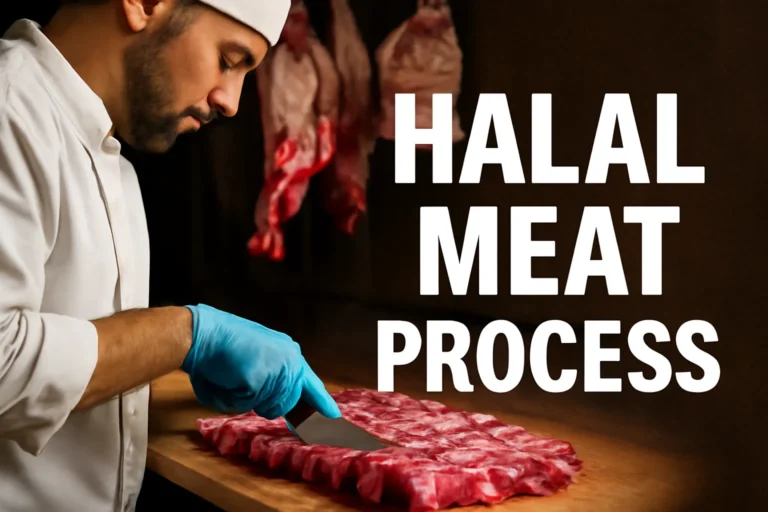
The topic of Halal meat touches on faith, animal welfare, food safety, and the global supply chain. When people speak about the halal meat process, they are usually referring to a set of interconnected practices that cover preparation, slaughter, post-slaughter handling, and the continuing oversight that ensures products remain compliant with standards and certification requirements. This broad view, sometimes called the halal slaughter process, also encompasses governance, traceability, and consumer transparency. In this article, we explore the halal meat process from farm to table, with emphasis on slaughter, certification, and the standards that guide producers, processors, and retailers around the world. We will use variations of the phrase to reflect the semantic breadth of this topic and help readers understand how the idea of halal is implemented in different settings.
At its core, the halal slaughter process is a religiously guided method designed to be humane, hygienic, and compliant with Islamic law. While there are regional differences in how zabiha is interpreted, most widely accepted frameworks share several common elements: recitation of the Tasmiyah (name of God) at the moment of slaughter, a single precise cut, and rapid drainage of blood. Beyond the ritual aspect, the physical handling, equipment cleanliness, and worker training are critical to producing meat that remains halal throughout the entire processing chain.
Prerequisites: animal welfare and preparation
Animals must be healthy and fit for slaughter, with no disease that would render meat non-halal or unsafe.
Pre-slaughter handling should minimize distress, pain, and fear, in line with widely accepted welfare practices.
Water access, appropriate fasting and feeding practices, and clean facilities help ensure the animal’s condition supports a humane process.
Transport and holding facilities should avoid crowding, rough handling, or exposure to extreme temperatures, which can affect meat quality and compliance.
All staff involved in the process receive training on halal standards, cleanliness, and respectful handling of animals.
The act of slaughter
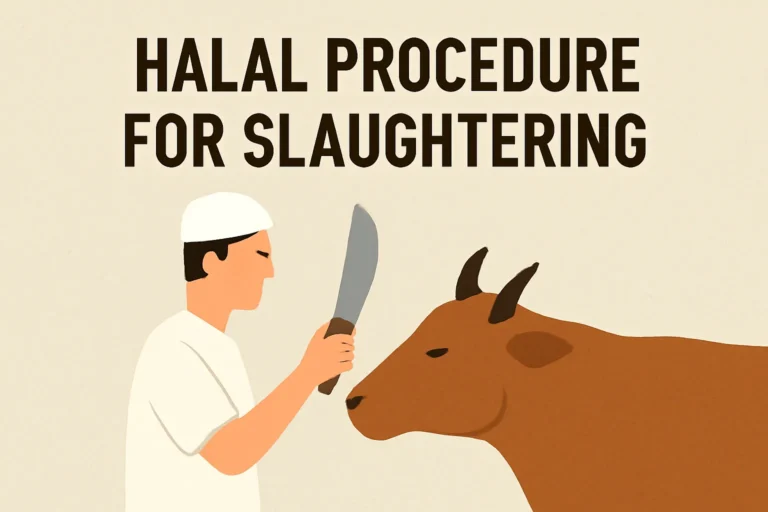
The slaughter is performed by a trained person who is typically Muslim, with the invocation of God pronounced through the Bismillah and Allahu Akbar (in many traditions). Variations exist, but the intention and awareness of halal requirements are consistent expectations.
A single swift cut across the throat is made with a sharp knife, designed to sever the major trachea, esophagus, and the primary blood vessels, enabling rapid exsanguination.
The animal should ideally remain calm and conscious at the moment of the cut, but the practice of stunning to facilitate humane handling is interpreted differently by various certification bodies and schools of thought. Some authorities accept reversible stunning if it does not kill the animal, while others require no stunning before slaughter.
After the cut, the animal is expected to experience rapid blood drainage, reducing residual blood in the carcass and facilitating subsequent processing steps.
Post-slaughter handling
Immediate inspection for signs of health or halal integrity concerns, including ensuring that the invocation was performed and recorded according to the applicable standard.
Careful bleeding and drainage of blood to meet both safety and religious requirements, followed by humane slaughterhouse practices to minimize contamination.
Pre-processing steps, such as skinning, evisceration, and initial carcass assessment, are carried out in a clean environment to maintain halal integrity.
Proper labeling, documentation, and traceability are established to connect each carcass or cut to its source, the slaughter method used, and the certifying authority.
Certification is the mechanism by which producers demonstrate compliance with halal standards and reassure consumers that the meat they purchase aligns with their faith and dietary preferences. The halal certification process typically includes formal audits, documentation reviews, facility inspections, product testing, and ongoing oversight. Certification bodies, whether national authorities or independent third parties, evaluate both the slaughter method and the surrounding processing line to prevent cross-contamination and ensure traceability.
Key components of halal certification
Formal application and review of all relevant documents, including supplier declarations, slaughterhouse procedures, and equipment maintenance records.
On-site audits of facilities to verify cleanliness, workflow, separation of halal and non-halal lines, and proper handling of equipment and tools.
Verification of slaughterhouse practices, including the presence of a trained operator, appropriate use of knives, and the invocation of God when required by the standard.
Assessment of supply chain controls to prevent cross-contact with non-halal products or contaminated inputs.
Product labeling and lot tracing to enable consumers to identify halal-certified items in the market.
Common players and frameworks
National halal authorities that set baseline rules for a country or region and may issue official seals on labels.
International or independent certification bodies that operate across borders and provide certification services to multinational brands.
Shariah boards or advisors that interpret religious requirements and provide guidance to ensure compliance with Islamic law.
Industry associations and consumer advocacy groups that promote transparency, animal welfare, and accurate labeling.
Common requirements across standards
Source animal origin documentation confirming species, age range, and health status.
Clear separation of halal and non-halal lines in facilities, including dedicated equipment and restricted access where feasible.
Technical control of stunning practices, where allowed, with defined conditions that do not compromise halal status.
Records that demonstrate traceability from farm to fork, enabling recall and compliance checks.
Ongoing employee training on halal requirements, cleanliness, and safety protocols.
Outcomes of certification
Certification marks or certificates that appear on packaging, providing consumer confidence about halal compliance.
Regular surveillance audits to ensure continued adherence, with corrective action plans for any identified gaps.
Guidance on product diversification, such as halal-friendly by-products, ingredients, and processing aids that must also comply with halal rules.
Standards, Audits, and Compliance in Practice
Standards establish the minimum expectations for halal integrity, while audits are the mechanism by which insurers, certifiers, and regulators verify that those standards are being met. For manufacturers and slaughter facilities, the practical implementation of halal standards requires careful planning, documentation, and monitoring across every step of the halal meat processing line.
What auditors look for in a halal facility
Evidence of proper animal handling and welfare, with humane access to water and minimal stressors.
Verification of the zabiha method, including the requirement for a trained operator and, where applicable, recitation of the invocation.
Separation controls to prevent cross-contamination between halal and non-halal products, including dedicated equipment and clearly defined workflows.
Cleanliness and sanitation standards that meet general food safety expectations as well as halal-specific criteria.
Accurate labeling and lot traceability, so that every product can be traced back to its source and processing conditions.
Facilities implement physical barriers, color-coded tools, and separate storage to minimize the risk of contact between halal and non-halal inputs.
Operational procedures include clean-in-place and validated cleaning schedules to prevent residues from impacting halal products.
Non-halal inventory management ensures clear segregation, accurate recordkeeping, and restricted access to halal zones during production.
Documentation and recordkeeping
Strong recordkeeping is essential for auditors and for ongoing consumer trust. Typical documentation includes slaughter logs, maintenance records for knives and equipment, training histories of slaughter staff, and supplier attestations for ingredients and processing aids. Digital traceability systems are increasingly common, enabling real-time visibility into every step of the chain.
Global Variations: How Regions Shape the Practice
The halal meat process varies in meaningful ways across regions due to religious interpretations, legal frameworks, cultural norms, and market expectations. Some regions emphasize a strict no-stunning policy, while others permit reversible stunning under specific conditions. Certification bodies in different countries often adapt to local realities while preserving core religious principles and safety standards.
Regional practice notes
In parts of the Middle East and North Africa, strict adherence to traditional zabiha practices is common, with rigorous oversight by national halal authorities and Shariah boards.
In Southeast Asia, multiple halal certification schemes coexist with strong government involvement in some markets, leading to a mix of national and international recognition.
Europe and North America have diverse approaches; some markets emphasize animal welfare standards and allow reversible stunning, while others require non-stunning slaughter for halal designation.
Large global brands often pursue harmonized supply chains to meet multiple halal standards, expanding the scope of cross-border certifications and labeling practices.
Ethics, Welfare, and Public Confidence
Ethical considerations are a central part of the discourse around halal meat processing. Consumers increasingly demand transparency about how animals are treated, how slaughter is performed, and how the meat is verified as halal. Welfare concerns intersect with religious requirements and food safety; thus, many producers invest in staff training, better facilities, and continuous improvement programs to bolster public confidence in halal products.
Transparency and labeling
Clear labeling helps consumers identify halal-certified products, including the name of the certifying body and the scope of the certification.
Supply chain disclosures, such as the origin of animals and the slaughter method used, contribute to trust and informed choices.
Open communication about any changes in standards, audits, or certifications helps maintain credibility and reduces misinformation.
Animal welfare as a baseline
Across regions, many halal standards align with general animal welfare principles. The aim is to balance religious requirements with humane treatment, safe handling, and clean processing, ensuring that meat remains fit for consumption while meeting the expectations of diverse consumers.
Frequently Asked Questions and Common Misconceptions
As with any complex topic, there are prevalent questions and myths surrounding the halal meat process. The following section addresses some of the most frequent inquiries to help readers distinguish fact from misconception.
What distinguishes halal slaughter from other religious slaughter? (Q&A)
Q: Is Bismillah required for every halal slaughter? A: In many traditions, the invocation is a standard requirement, but the exact practice can vary by certification body and school of thought. Some allow a short recitation, while others emphasize the act of naming God at the moment of slaughter.
Q: Can animals be stunned before slaughter for halal meat? A: Yes, in many markets, reversible stunning or certain controlled stunning methods are permitted under specific halal standards. Others require no stunning. Practices depend on the certifier and local regulations.
Q: What is meant by the term zabiha? A: Zabiha refers to the ritual method of slaughter defined by Islamic law, typically involving a swift cut and the invocation of God, along with humane handling and proper equipment.
Q: How important is traceability in halal supply chains? A: Traceability is essential for verification, recalls, and consumer trust. It helps ensure that every product bears evidence of halal compliance from farm to consumer.
Q: Are all halal products labeled the same? A: Not necessarily. Certification marks vary by certifying body and country. Labels often include the certifier’s name or logo and might indicate the scope of the halal certification.
Q: Does halal certify only meat? A: While halal certification is commonly associated with meat, many halal standards also apply to other animal-derived products, ingredients, and processing aids to ensure overall halal integrity.
The halal meat process is a complex ecosystem that blends deep religious tradition with modern food safety, governance, and consumer expectations. From the careful slaughter method and the invocation that accompanies it to the meticulous certification processes and ongoing adherence to standards, every link in the chain plays a vital role in delivering meat that is both spiritually compliant and scientifically sound. Modern halal supply chains strive for robust traceability, humane animal handling, and clear, trustworthy labeling so that consumers around the world can make informed choices. By embracing regional variations while upholding universal principles of cleanliness, welfare, and accountability, the halal meat industry continues to adapt to changing markets, new technologies, and evolving consumer expectations. This convergence of faith, ethics, and commerce helps ensure that halal meat remains a meaningful and accessible option for Muslims and non-Muslims alike, reinforcing the idea that the halal standard is more than a label—it is a comprehensive framework for responsible food production.
In future iterations of halal practice, we may see greater harmonization of certifications, more transparent auditing, and innovations in humane handling that align with religious guidance while meeting stringent quality and safety benchmarks. The ongoing dialogue among producers, certifiers, religious scholars, and consumers will shape how slaughter, certification, and standards evolve—always aiming to protect welfare, preserve tradition, and support global food security.

Deja una respuesta