Diglycerides of Fatty Acids: Definition, Uses, and Safety
Diglycerides of Fatty Acids: Definition, Uses, and Safety
Diglycerides of fatty acids, often referred to in short as diglycerides or diacylglycerols, are a class of glyceride molecules that sit at an important intersection between chemistry and food technology. They consist of a glycerol backbone with two fatty acid chains attached, which gives them distinctive surface-active properties and a versatility that makes them valuable in many food formulations. In everyday language, people may hear about emulsifiers or processing aids in connection with these molecules, and indeed diglycerides play a central role in improving texture, stability, and mouthfeel in a wide range of products. This article explores the definition, variations, production, uses, safety, regulatory status, and the broader context of diglycerides of fatty acids in the modern diet.
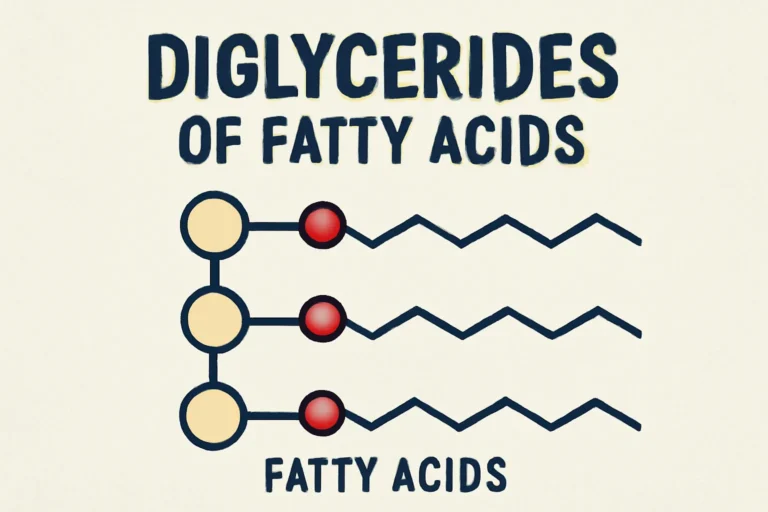
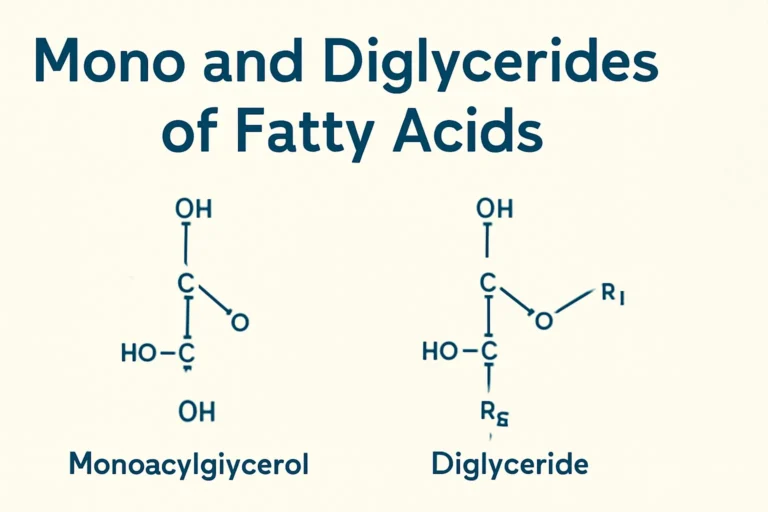
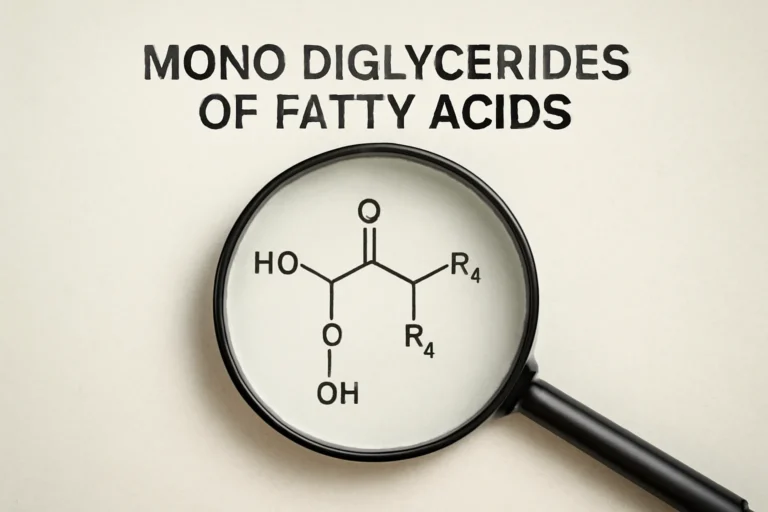
To begin with, the term diglycerides of fatty acids refers to molecules formed when two fatty acid residues are esterified to a single glycerol molecule. This places them between monoglycerides (one fatty acid) and triglycerides (three fatty acids) in the family of glycerides. In more formal or scientific language, these compounds are called diacylglycerols. The family also includes diacylglycerol esters and sometimes appears under the more general umbrella of mono- and diglycerides when used as food additives.
Key points to remember about terminology include:
Diglycerides are a subset of glycerides with two fatty acid chains.
Diacylglycerols is the systematic name used in scientific literature.
When used as a food ingredient, these often appear as part of formulations designated as emulsifiers or processing aids.
Similar compounds, monoglycerides and triglycerides, serve different roles in foods and metabolism.
In addition to the formal names, you may encounter shorthand or product-specific designations such as DAG for diacylglycerol and, in some labeling, as mono- and diglycerides (often abbreviated as MG/DG or similar). The exact fatty acid composition of the two acyl chains can vary, giving rise to different physicochemical properties, including the hydrophilic-lipophilic balance (HLB) that affects emulsification performance.
Chemical Nature and Variants
Structural features: A glycerol backbone with two esterified fatty acids and one hydroxyl group, which may influence solubility, melting behavior, and interfacial activity.
Variants by fatty acid composition: The two fatty acyl chains can be saturated or unsaturated, short- or long-chain, and may include one or more polyunsaturated fats. The resulting diversity helps manufacturers tailor performance for specific products.
Position on the glycerol backbone: In diacylglycerols, the two fatty acids can occupy different positions (for example, sn-1 and sn-2 or sn-1 and sn-3). This positional variation can influence how enzymes interact with the molecule in digestion or processing.
End-use implications: The fatty acid pattern can affect color, flavor release, and emulsion stability. For instance, a DAG mixture rich in certain unsaturated fats may confer particular sensory or textural benefits in dairy or bakery items.
In practice, most commercial products labeled as diglycerides of fatty acids are mixtures designed to deliver consistent emulsification performance across a broad range of foods. They are chosen not only for their ability to stabilize oil–water interfaces but also for their influence on texture, crumb structure, melt behavior, and shelf life in processed foods. Some products emphasize specific DAG types, such as those enriched in particular fatty acids, to optimize for a given processing step, like emulsification during batter mixing or fat crystallization in confectionery.
Production, Sources, and Industry Roles
The production of diglycerides of fatty acids generally follows two broad paths: synthetic production through glycerolysis or esterification, and the natural or incidental formation that occurs during fat processing. In industry, these routes are chosen to deliver predictable performance while meeting regulatory and label requirements.
Glycerolysis and esterification: In a controlled chemical or enzymatic process, glycerol (glycerin) reacts with fatty acids or fatty acid esters to form diglycerides. Enzymes such as lipases can catalyze these reactions with high specificity, allowing for products with targeted fatty acid profiles. This approach enables the production of DAGs with defined properties suitable for particular products, such as desserts, spreads, or baked goods.
Hydrolysis of triglycerides: When triglycerides are partially hydrolyzed, some molecules retain two fatty acids and become diglycerides. This pathway occurs in some processing environments or formulations where fats are partially degraded during prior steps. The resulting DAG content can contribute to emulsification and texture in the final product.
Natural occurrence and incidental formation: DAGs can be present in trace amounts in natural fats and oils. They may be formed during refining, deodorization, or high-temperature processing of oils, and they persist in finished products where emulsification is desired.
Sources in industry: The fatty acid components used in DAG production can come from a wide array of edible fats and oils, including plant-derived oils (such as soybean, canola, palm, and coconut) and, in some cases, animal fats. The choice of source affects flavor notes, melting behavior, and the environmental footprint of the ingredient.
In practical terms, diglycerides are used as emulsifiers and processing aids across many sectors of the food industry. They help stabilize oil-in-water emulsions, improve batter integrity, and influence the texture of bakery products, dairy alternatives, confectionery, and ready-to-eat meals. Beyond food, DAGs find niche applications in cosmetics and certain industrial formulations, where their surface-active properties can help with compatibility of oily and aqueous phases.
Uses in Food and Other Applications
The most common and well-documented use of diglycerides of fatty acids is as an emulsifier in a broad spectrum of foods. Their ability to migrate to interfaces between oil and water and to reduce interfacial tension makes them valuable for stabilizing mixtures that would otherwise separate. In addition, the presence of these molecules can alter crystallization behavior, texture, and moisture retention in foods. Below are key application areas and specific roles.
Baking and Dough Systems
Enhancing crumb and softness: DAGs can improve crumb structure and prolong softness in bread and cakes by stabilizing fat-containing systems during mixing and proofing.
Texture control: They help control oil distribution within batters and doughs, contributing to a more uniform texture and preventing phase separation during baking.
Fat reduction strategies: In some formulations, DAGs allow for better mouthfeel and volume even when fat content is reduced, supporting low-fat or reformulated products without sacrificing sensory quality.
Dairy and Dairy-Analog Products
Improved creaminess: In creams, custards, and dairy analogs, DAGs can enhance smoothness and perceived richness by influencing emulsion stability and fat crystallization.
Stable emulsions in spreads: For margarines, spreads, and reduced-fat spreads, DAGs participate in stable oil-in-water emulsions, contributing to spreadability and mouthfeel.
Ice cream and frozen desserts: The emulsification properties of diglycerides can help control fat crystal formation, leading to a more uniform texture and reduced ice crystal growth during freezing and storage.
Confectionery, Chocolates, and Nutritional Products
Chocolate and fat bloom control: In some chocolate applications, emulsifiers influence fat migration and polymorphic forms, contributing to stable texture and reduced blooming under certain storage conditions.
Nutritious and fortified foods: DAGs can serve as functional ingredients in fortified foods where stable emulsions are important for distributing vitamins, minerals, or specialty fats evenly.
Processed Foods, Sauces, and Dressings
Oil–water stability: In sauces, salad dressings, and creamy products, DAGs help maintain a uniform emulsion and resist separation during shelf life.
Mouthfeel and sensory attributes: By modifying emulsification and fat crystallization, diglycerides contribute to a smoother mouthfeel and more consistent flavor release.
Production, Safety, and Regulatory Status
Diglycerides of fatty acids have a long-standing history of use in foods around the world. They are widely recognized as safe for consumption under typical dietary levels, and they enjoy regulatory approval in many jurisdictions. The safety profile is supported by decades of use and by contemporary toxicological assessments in which no acute or chronic adverse effects are clearly linked to standard dietary intakes of these additives.
Regulatory recognition: In many regions, these compounds are permitted as food additives or as ingredients in processed foods, often listed under the umbrella term mono- and diglycerides on labels. Safety evaluations by food safety authorities typically consider their use in the context of typical dietary consumption and exposure.
GRAS status: In several jurisdictions, certain types of diglycerides have been designated as GRAS (Generally Recognized as Safe) based on available toxicological data and exposure assessments.
Labeling considerations: On product packaging, ingredients may appear as mono- and diglycerides of fatty acids or as diglycerides, sometimes accompanied by the fatty acid profile if relevant to the manufacturer.
Safety in typical use: For most people, regular consumption of foods containing DAG emulsifiers is considered safe, and no universal allergenic concerns are typically associated specifically with diglycerides beyond general food allergen considerations.
In addition to safety considerations, regulators often evaluate environmental and manufacturing factors, such as the sustainability of fat sources, energy use in production, and the potential for residues or byproducts in the processing chain. As with any food-processing ingredient, good manufacturing practices and supplier transparency help ensure that the DAGs meet applicable standards for quality and safety.
Metabolism, Health Considerations, and Safety Issues
Understanding how the body handles diglycerides of fatty acids provides context for their role in nutrition and health. Humans digest dietary fats primarily through lipases in the digestive tract, which break down triglycerides into free fatty acids, monoglycerides, and diglycerides. These products are then absorbed and reassembled into triglycerides or metabolized for energy. The path for diacylglycerols is similar, though their presence in the diet as DAG emulsifiers means some fraction reaches the small intestine as intact DAGs or minor hydrolysis products before absorption.
Digestive fate: Pancreatic lipase and other lipases act on dietary fats, including those containing DAGs. The resulting products are taken up by intestinal cells and can be used for energy, stored, or redistributed into various lipid pools.
Metabolic implications: Some research has explored whether structured lipids or DAG-rich fats alter fat storage, lipid profiles, or energy expenditure differently from traditional triglyceride-rich fats. Results are mixed and highly dependent on the specific DAG oil or DAG-enriched formulations studied. Overall, evidence does not indicate a need to avoid DAG-containing ingredients for the general population, when consumed within typical dietary patterns.
Potential health benefits and limitations: In the context of weight management and metabolic health, some studies have looked at DAG-containing fats as potential tools to influence fat deposition or postprandial responses. Conclusions are preliminary, and more rigorous, long-term human studies are needed to establish clear clinical guidance.
From a nutritional safety perspective, most authorities treat diglycerides as a normal component of a varied diet, with intake levels determined by the consumption of processed foods containing the ingredient. They are not typically associated with allergenic risk beyond standard food allergies, and there is no widespread evidence linking their consumption to adverse health outcomes at recommended intake levels. As with all fat-based ingredients, moderation and dietary balance are prudent, particularly for individuals who monitor fat intake due to cardiovascular risk factors or caloric goals.
Labeling, Myths, and Consumer Perception
Label clarity is a common concern for consumers who want to understand what diglycerides of fatty acids are and how they affect their diet. While DAGs are widely used, there are several nuances in labeling and consumer interpretation:
Label terminology: The ingredient may appear as mono- and diglycerides of fatty acids, diglycerides, or as diacylglycerol esters. In some cases, the label will indicate the presence of emulsifiers or may not explicitly differentiate DAGs from monoglycerides.
Perceived healthiness: Emulsifiers, including DAGs, sometimes attract skepticism among consumers seeking “clean labels.” While DAGs are functional and approved, some critics prefer ingredients with minimal processing or fewer additives. Education about the role of DAGs in texture, shelf life, and safety can help inform consumers.
Misconceptions: A common misconception is that all DAGs function as trans-fat replacements or are inherently unhealthy. In reality, the safety profile of diglycerides of fatty acids is supported by regulatory assessments, and their health impact depends on overall dietary patterns rather than the DAG ingredient alone.
Environmental and Economic Considerations
The production and use of diglycerides intersect with sustainability goals and economic considerations in several ways:
Sourcing of fats and oils: The environmental footprint of DAG production is influenced by the choice of fat and oil feedstocks. Plant-based oils with sustainable cultivation practices tend to lower the environmental impact compared with some conventional sources, though the mix varies by region and supplier.
Processing efficiency: Enzymatic production routes, such as lipase-catalyzed glycerolysis, can offer high selectivity and potentially reduced energy consumption. However, scale, raw material costs, and process controls determine the overall economics.
Waste and byproducts: Modern DAG production aims to minimize waste streams and maximize the reuse of glycerol and other co-products. Responsible sourcing and proper waste management are increasingly important for manufacturers in this space.
Food system role: By enabling fat reduction strategies or improving product stability, DAGs can contribute to reducing food waste and enabling shelf-stable formulations, which has downstream environmental and economic implications.
The field of glyceride science continues to evolve, driven by consumer demand for better texture, healthier fat concepts, and sustainable manufacturing. Several trends and research directions are shaping how diglycerides of fatty acids are developed and used in the coming years:
Targeted DAGs: Research into specific DAG profiles with predictable functional outcomes (emulsification strength, crystallization behavior, and flavor-release patterns) will help manufacturers tailor DAGs to particular products.
Enzymatic and green chemistry approaches: More energy-efficient and selective biocatalytic processes may reduce environmental impact and improve yield, enabling more sustainable production pathways.
Health-focused formulations: As scientists investigate the nuanced effects of different lipid structures on metabolism, there may be opportunities to position DAG-containing ingredients within dietary patterns aimed at specific health goals, such as improved satiety or altered postprandial lipid responses.
Label transparency and consumer education: With evolving consumer interest in ingredients, transparent labeling and accessible information about what a DAG ingredient does in a product will be valuable for informed choices.
Practical Considerations for Industry and Consumers
For manufacturers, diglycerides offer a toolkit for controlling texture, stability, and process efficiency. For consumers, understanding the role of DAGs in foods can help demystify ingredient lists and support informed dietary decisions. Here are practical points to consider:
Role in products you buy: Recognize that many foods, from bakery items to dairy alternatives and some sauces, may contain mono- and diglycerides as emulsifiers to maintain uniform texture and prevent phase separation during shelf life.
Label reading: If you are curious about the presence of DAGs, check the ingredients list for terms such as mono- and diglycerides of fatty acids, diglycerides, or diacylglycerol esters.
Dietary balance: As with all fats, it is wise to consider the overall dietary pattern. DAG-containing ingredients contribute to fat intake, but they are one component of a broader nutritional picture that includes total calories, types of fats, and other nutrients.
Quality and safety: Purchasing products from reputable brands and suppliers with clear sourcing and quality control helps ensure the DAGs used meet safety and regulatory standards.
Conclusion: The Role of Diglycerides of Fatty Acids in Food Science
In sum, diglycerides of fatty acids are a versatile class of emulsifying lipids that contribute to the stability, texture, and performance of a wide range of processed foods. Their chemical nature as diacylglycerols places them in a nuanced category between triglycerides and monoglycerides, endowing them with surface-active properties that are highly valued by food technologists. The production methods—whether via enzymatic glycerolysis, esterification, or partial hydrolysis—offer pathways to tailor fatty acid composition and functional performance to specific applications.
From a safety and regulatory standpoint, these compounds are well established as safe for consumption in typical serving sizes, with broad regulatory acceptance across major food markets. While health and nutrition research continues to explore the metabolic implications of different lipid structures, current evidence supports the continued use of diglycerides as a conventional ingredient within a balanced diet. For consumers, understanding the function of DAGs can foster informed choices about ingredients, while for industry professionals, these molecules remain a valuable tool for achieving desirable texture, stability, and shelf life in diverse products.
As the food system evolves toward more sustainable sourcing, clearer labeling, and targeted health-oriented formulations, the role of diglycerides of fatty acids is likely to become more nuanced and more precisely aligned with product goals. Whether used to improve emulsions in a cream-laden dessert, stabilize a low-fat spread, or enable a shelf-stable dressing, these molecules illustrate how chemistry and culinary science come together to shape the foods we eat every day.





Deja una respuesta