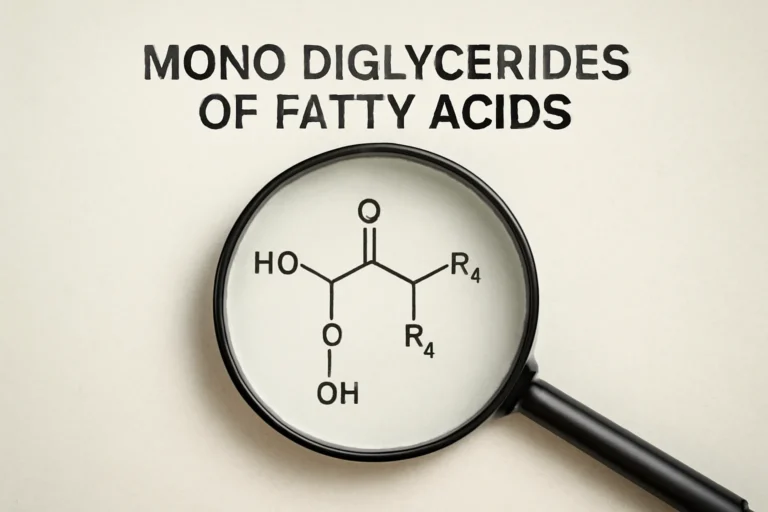
Mono Diglycerides of Fatty Acids are a class of emulsifiers widely used in the food industry to improve texture, stability, and shelf life. In common labeling, you may see terms such as monoglycerides, glyceride esters, or MDG for short. Consumers often encounter the ingredient under the label "mono- and diglycerides of fatty acids" or simply "monoglycerides." The chemistry behind these compounds is straightforward: they are partial glycerides formed when glycerol bonds with fatty acids, yielding molecules with one fatty acid attached to a glycerol backbone (monoglyceride) and, in some cases, two fatty acids (diglyceride). In practice, the term monoglycerides is frequently used as the shorthand for the family of related esters.
This article uses Mono Diglycerides of Fatty Acids as the primary designation, but we will also refer to monoglycerides, glyceryl monoesters, and esters of glycerol to provide semantic breadth. The broad family is sometimes labeled as emulsifiers E471 (and related derivatives) in regulatory contexts, but the everyday culinary and processing roles are best understood by looking at their function, not just their code.
Chemical Nature, Variants, and Production
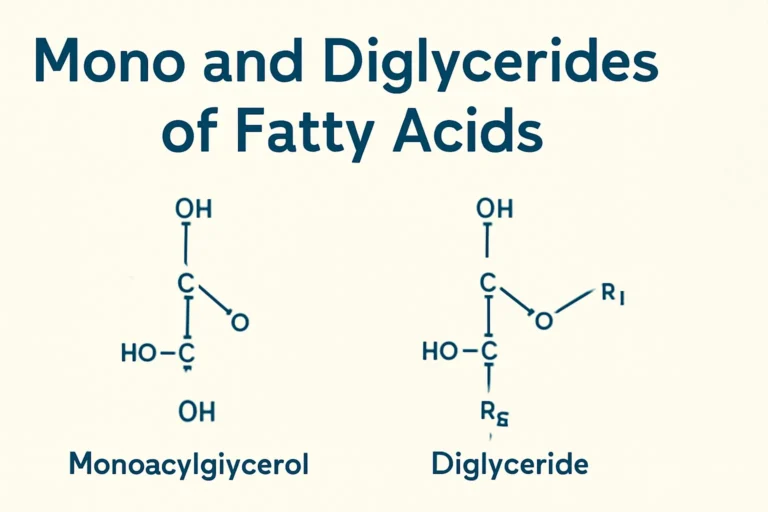
Chemical Structure and Nomenclature
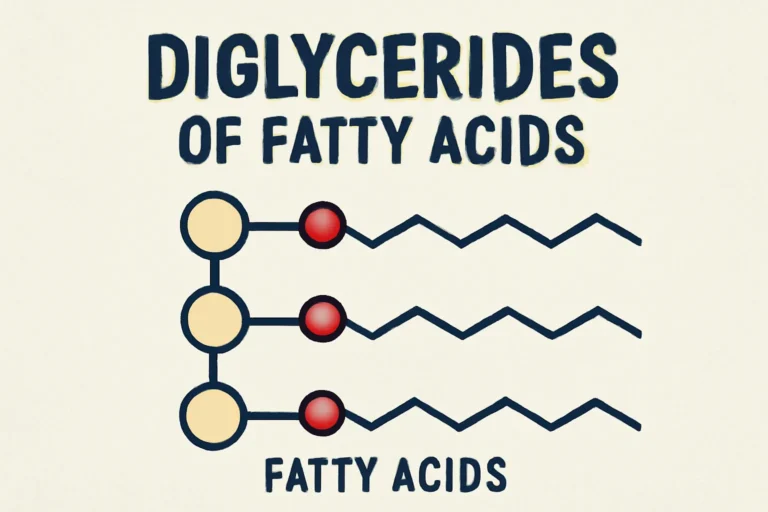
Each molecule in this family has a glycerol backbone with one or two fatty acid chains. The monoglycerides carry a single fatty acid on the glycerol, while the diglycerides carry two. The fatty acids may vary in chain length and saturation, leading to a spectrum of MDG molecules with different properties. Because the fatty acid composition depends on the source fats or oils used during production, the resulting emulsifier can be tailored toward a desired melting behavior, hydrophobicity, and compatibility with other ingredients.
Manufacturing, Sources, and Variability
The production of Mono Diglycerides of Fatty Acids generally involves esterification of glycerol with fatty acids derived from plant or animal fats. Common feedstocks include palm oil, soybean oil, rapeseed (canola) oil, and sometimes tallow or other fats, depending on the supplier. Because the fatty-acid profile varies by source, the exact mixture of monoglycerides and diglycerides can differ from batch to batch. For this reason, manufacturers often designate a grade or specification based on the intended application, such as bakery systems, dairy systems, or emulsion-based products.
In many regions, MDG emulsifiers are formulated as a blend of monoglycerides and diglycerides to balance functionality. The typical package label may indicate the presence of glycerol monoesters of fatty acids with a note about the predominant fatty acid types. The source of the fatty acids has regulatory and labeling implications, especially for consumers with specific dietary or allergen considerations.
Functional Roles in Food Systems
Emulsification, Texture, and Stability
The core function of mono diglycerides of fatty acids is to act as a robust emulsifier, helping oil and water phases mix uniformly. This leads to more stable emulsions, smoother textures, and improved crumb structure in baked goods. In dairy-like products and beverage emulsions, these compounds can prevent phase separation, which is a common issue in products with high oil content or complex formulations.
Emulsification: MDGs reduce surface tension between immiscible liquids, enabling more stable mixtures in products such as creams, sauces, and dressings.
Texture enhancement: They contribute to a tender crumb in bread, a creamier mouthfeel in ice creams, and a smoother dispersion of fats in emulsified products.
Foam and aeration control: In certain products, these emulsifiers stabilize foams and help maintain structure during processing and storage.
Beyond texture, MDGs can influence water distribution and moisture migration within a product. This can help maintain softness in baked goods and reduce staling, thereby extending shelf life. Their surface-active properties also support uniform heat transfer during baking, which indirectly affects product quality and consistency.
In low- and high-temperature processing, the presence of esterified glycerols can provide consistent performance under varying conditions. They help stabilize emulsions during mixing, reduce fat separation during storage, and improve product uniformity. This makes MDGs valuable in processed meats, margarines, spreads, and countless other formulations where a reliable emulsifier is desirable.
Uses in the Food Industry: Practical Applications
Bakery and Confectionery
In bakery formulations, monoglycerides contribute to softer crumb, better volume retention, and improved loaf structure. They act as shortening substitutes in some formulations and help prevent staling in sliced breads. In pastry creams and fillings, they aid in smoothness and stable emulsions, reducing separation between fat and water phases.
Dairy, Creams, and Beverages
Many dairy analogs and cream-based products rely on emulsifiers like MDGs to stabilize fat droplets and keep the product homogeneous. In beverages and smoothies, they improve dispersion of oils and flavors. In plant-based dairy alternatives, galactooligosaccharides or other gums may be paired with MDGs to achieve mouthfeel and stability similar to conventional dairy.
Gourmet and Processed Foods
For sauces, dressings, and spreads, esterified glycerides help maintain uniform texture, prevent oil separation, and enhance the sheen of the final product. In salad dressings, a small amount of MDG-based emulsifier can improve emulsion stability during storage and during bottle agitation.
Meat, Fish, and Alternative Proteins
In meat products and seafood analogs, these emulsifiers assist with fat emulsification and binding, contributing to a juicier bite and more uniform product appearance. They are used in formulations where fat distribution needs to be controlled for sliceability or textural consistency.
Sauces, Creams, and Spreads
For gravies, béchamel-type sauces, barbecue sauces, and ready-to-use spreads, glyceryl monoesters help maintain a stable emulsion under heat and during storage. They also assist with gloss and appearance, which can be important for consumer appeal.
Health, Safety, and Regulatory Considerations
Safety Assessments and Regulatory Status
Mono Diglycerides of Fatty Acids have a long history of use in food production and are generally regarded as safe by many regulatory authorities around the world. In various jurisdictions, these compounds are approved as food additives or used as GRAS ingredients (Generally Recognized as Safe) when sourced and processed according to good manufacturing practices. In Europe, many products in this class are associated with the code E471, though specific labeling and usage limits can vary by country and product category. In the United States, they are commonly listed on ingredient panels as monoglycerides or monoglycerides of fatty acids, and they are permitted under standard food additive regulations when used within approved limits.
Regulatory nuance matters, including whether a product is considered a direct additive or an incidental additive in an oil blend, can influence labeling requirements. Manufacturers may also choose to disclose the exact fatty-acid source (e.g., palm, soybean) on technical specifications or supplier declarations. Consumers with dietary restrictions derived from allergen labeling should review ingredient statements or contact manufacturers if the source of fats is a concern.
Digestibility, Metabolism, and Dietary Impact
When ingested, mono diglycerides are typically digested and absorbed in the gastrointestinal tract, providing glycerol and fatty acids as end products. They contribute calories as part of total fat intake. From a nutritional perspective, they behave similarly to other fat-based emulsifiers in terms of energy contribution. For people with specific lipid metabolism considerations, MDGs are not inherently problematic when consumed as part of a balanced diet, but total fat and calorie intake should be monitored as with any fat-containing ingredient.
A potential consideration is the source of the fatty acids used in MDG production. If derived from soy, palm, or other allergenic or sensitive feedstocks, there could be labeling implications for consumers with allergies or dietary restrictions. Many producers now provide source information or offer non-GMO or palm-oil-sustainability-compliant options. When in doubt, seek products that clearly state their source materials and any potential cross-contact concerns during manufacturing.
Labeling, Consumer Information, and Perception
Labeling Practices and Transparency
In many markets, monoglycerides and glycerol monoesters are listed by their functional name or the E-number code. For consumers who read ingredient lists, it can be beneficial to look for both the common name and any regulatory codes, such as E471, to understand the type and origin. Some product labels may also mention the fatty-acid source if regulatory or company policies require such disclosure.
Consumer Perception: Natural, Safe, or Artificial?
The word emulsifier can evoke a sense of technical complexity. However, many MDGs are derived from natural fats and oils and are present in a wide range of processed foods. Some consumers prefer the term food additive over ingredient, while others look for "natural" alternatives. It can be helpful for shoppers to recognize that the role of MDGs is to stabilize emulsions and improve texture, not to alter flavor in a way that would be easily detectable.
Safety Considerations for Special Diets and Allergies
Allergen-Sensitive Populations and Cross-Contact
People with known allergies to soy, peanut, or other nuts and seeds should review the source of fatty acids used in the manufacturing process. Even if the MDG is used in a small amount, cross-contact with allergen-containing equipment or trace ingredients can be relevant for sensitive individuals. Choosing MDG-containing products from manufacturers who publish allergen statements or certify allergen controls can help mitigate risk.
Vegan, Vegetarian, and Ethical Considerations
Because the fatty-acid feedstock can be plant- or animal-derived, vegan and vegetarian consumers may want to confirm the source. In many markets, MDGs made from植物-origin fats (such as palm- or soybean-derived oils) are acceptable for vegan diets, but some products may derive from animal fats in rare cases. Ethical concerns regarding palm oil sustainability are also a factor for some buyers, leading to preference for certified sustainable sourcing.
Applications Across Food Categories: A Practical Guide
Category-by-Category Overview
Below is a practical guide to where and how Mono Diglycerides of Fatty Acids are typically used, with notes on expected functional benefits and formulation considerations.
Baked goods:
Improve crumb softness, loaf volume, and even crumb structure.
Help delay staling by slowing moisture migration.
Assist in emulsifying fats during dough mixing and fat incorporation.
Spreads and margarines:
Enhance spreadability at cool temperatures and stabilize dispersed fat droplets.
Reduce oil separation during storage and distribution.
Dressings, sauces, and gravies:
Stabilize oil-in-water emulsions, improving pourability and uniform flavor distribution.
Contribute to gloss and visually appealing appearance in oil-rich sauces.
Dairy analogs and desserts:
Improve creaminess and mouthfeel in non-dairy milks, yogurts, and ice creams.
Support stable emulsions in whipped toppings and dairy-free creams.
Meat and seafood products:
Assist in fat emulsification, helping to bind ingredients and maintain juiciness.
Improve cohesive texture in processed products and reformulations.
Snack foods and confections:
Stabilize fats in chocolate coatings and caramel formulations.
Support consistent texture and appearance in coated snacks.
For manufacturers, MDGs are included as part of a broader suite of emulsifiers and texture-enhancing ingredients. Key quality-control practices include verifying supplier specifications, ensuring food-grade processing standards, and confirming that the product meets regulatory labeling requirements. Batch-to-batch consistency in fatty-acid composition can influence emulsification performance, so many producers track the source and fatty-acid profile as part of their quality systems.
Sourcing and Sustainability
Sustainability considerations, particularly regarding palm oil origins, influence purchasing decisions in many companies and among consumers. Certification schemes, such as RSPO (Roundtable on Sustainable Palm Oil) or other responsible-sourcing programs, help ensure that MDGs are produced from responsibly managed feedstocks. When possible, choosing MDGs with transparent supply chains and sustainability certifications aligns with broader environmental and social goals.
Formulation Tips for Professionals
Use MDGs at recommended levels to achieve emulsification without exceeding taste or mouthfeel targets.
Consider the fatty-acid profile when formulating; a higher unsaturated-fat composition can influence melting behavior and emulsification performance.
Combine with other emulsifiers or hydrocolloids if you need synergistic effects, such as improved creaminess or stabilized foams.
Monitor storage conditions to prevent fat separation in high-fat formulations and to maintain consistent texture over shelf life.
Environmental and Sustainability Considerations
The environmental footprint of MDGs is linked to the broader supply chain of the fats and oils used in their synthesis. Responsible sourcing, fair labor practices, and sustainable agricultural management contribute to a lower overall environmental impact. Companies often publish sustainability reports or supplier standards that cover the sourcing of fats, greenhouse-gas emissions, and waste management. Consumers who prioritize environmental stewardship can support brands that commit to sustainable MDG sourcing and transparent supply chains.
Common Myths and Realities
Myth: These emulsifiers are synthetic and unsafe. Reality: While MDGs are processed ingredients, they have a long history of safe use in food systems and are regulated by authorities worldwide. They are not inherently dangerous when used within approved limits.
Myth: They change flavor or taste. Reality: Typical usage levels are designed to be flavor-neutral and aimed at texture and stability rather than taste modification.
Myth: They must be derived from animal fats. Reality: MDGs can be derived from plant-based fats as well; label readers may seek source information if required for dietary beliefs.
Summary of Key Points
Mono Diglycerides of Fatty Acids are versatile emulsifiers used to stabilize oil-water mixtures, improve texture, and extend shelf life in a wide range of foods.
They exist as a family, including monoglycerides and diglycerides, with fatty-acid profiles that influence performance.
Usage spans bakery, dairy analogs, dressings, sauces, spreads, and processed meats, among others.
Regulatory status varies by jurisdiction, but these compounds are widely accepted under standard food-additive regulations and labeling rules.
Source transparency, sustainability, and allergen considerations are important for sensitive consumers and ethical buyers.
Conclusion: The Role of MDGs in Modern Food Systems
Mono Diglycerides of Fatty Acids are a robust, flexible tool in the food technologist’s toolkit. They enable better emulsions, smoother textures, and more consistent products across complex formulations. While their presence in a product may be subtle to the palate, the impact on consumer experience—through improved mouthfeel, uniform appearance, and stable shelf life—can be substantial. As with any additive, responsible use includes clear labeling, adherence to regulatory guidelines, consideration of allergen and source information, and commitment to sustainable sourcing. For practitioners and informed consumers alike, understanding the role of MDGs helps illuminate how modern foods achieve reliability, quality, and enjoyment in everyday life.






Deja una respuesta