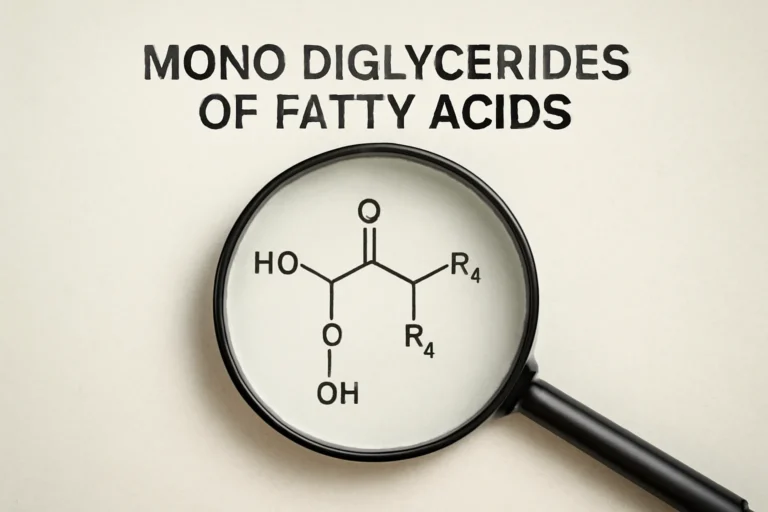
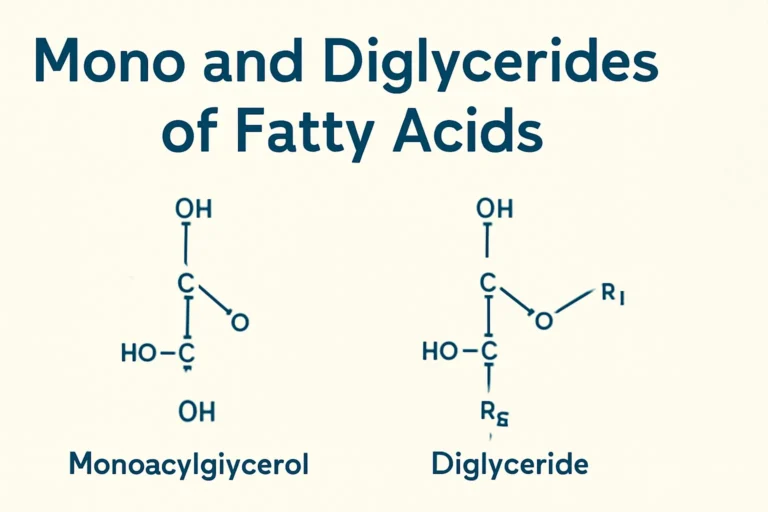
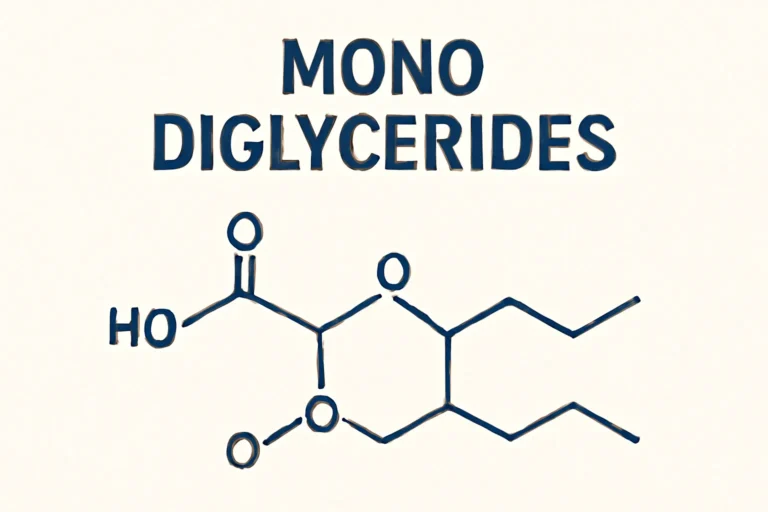
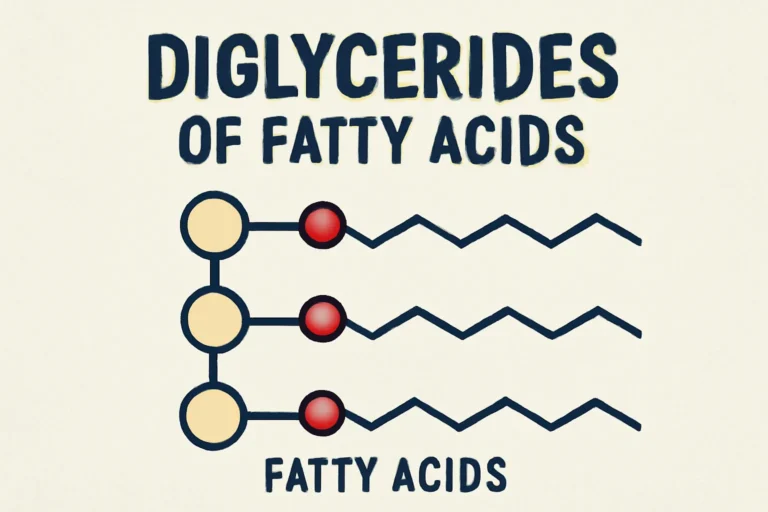
In the world of food additives, E471 stands for mono- and diglycerides of fatty acids, a type of emulsifier used to improve texture, stability, and shelf life. This family of emulsifiers is produced by esterifying glycerol with fatty acids, typically derived from edible fats and oils. The result is a molecule with both hydrophilic and lipophilic properties, allowing it to bridge water and oil phases in processed foods. In everyday terms, they help keep fats from separating in creams, ice creams, and bakery fillings, and they help doughs form uniform crumb and tender textures.
Despite being widely used, E471 is often misunderstood. It is not a single chemical compound but a class of related molecules. The various forms and variants of E471 come with subtly different properties and applications, which we’ll cover later.
Forms and Variants of E471
There are several variants of mono- and diglycerides of fatty acids, each selected for specific processing needs. The broad term can refer to a mixture of monoglycerides and diglycerides produced from fats and oils, typically by glycerolysis or esterification. In practice, manufacturers can use different sources and purification steps to tailor the emulsifier to a product.
Distilled mono- and diglycerides
One common variant is distilled mono- and diglycerides (sometimes abbreviated as DMDG or similar in supplier literature). This form is highly purified and has lower water content, which can improve stability in refrigerated or frozen desserts and in bakery fats. Because they are more refined, distilled MDGEs can offer more predictable performance and reduced off-flavors in sensitive products.
Mixed mono- and diglycerides
Other products are described simply as mixed mono- and diglycerides. These are blends containing a range of glyceride structures and chain lengths, derived from multiple fatty acids. The result is a versatile emulsifier that can support various types of emulsions, from foams to emulsified fats. For product developers, mixed MDGEs can provide a balanced performance across doughs, fillings, and spreads.
Source materials and potential origins
The fatty acid components of E471 can derive from plant oils such as palm oil, palm kernel oil, rapeseed (canola), soybean, and sunflower, among others. In some cases, animal fats may be used, depending on the product and the regulatory framework. This source variance has implications for dietary preferences and labeling, including halal, kosher, and vegan considerations. When consumers want to know the source, they should look beyond the E-number and check the product’s ingredient list for specific notes on the origin of MDGEs.
What E471 Does in Food: Uses and Functional Roles
Emulsifier E471 serves several critical functions in food manufacturing. Its primary role is to enable stable dispersions of fat in water, which helps achieve uniform texture and consistency. But the practical effects go beyond simple emulsification:
Texture enhancement: E471 helps form tender crumb in bread and pastries, creates creamier mouthfeel in dairy products, and contributes to smooth, stable icing and fillings.
Improved mixing: It improves dough handling and extends shelf life by reducing fat separation during storage.
Consistency in frozen products: In ice cream and frozen desserts, E471 helps prevent ice crystal growth and slows fat migration, yielding creamier textures.
Moisture retention: It can act as a humectant in some formulations, helping to keep products moist over their shelf life.
Globular stability in beverages and sauces: Emulsifiers help stabilize oil-in-water emulsions in dressings, sauces, and ready-to-drink beverages, preventing phase separation.
In different product categories, the exact function of E471 may vary. For instance, in baked goods it mainly improves crumb tenderness and bread volume, while in chocolate and confectionery it can help reduce fat blooming and improve pourability of fillings. In dairy products such as yogurts and desserts, it contributes to creaminess and stable gel structures.
How E471 interacts with other emulsifiers
In many formulations, E471 is used in combination with other emulsifiers and stabilizers, such as lecithin, polysorbates, or stabilizers like guar gum or carrageenan. The synergy between emulsifiers can yield improved texture, stability under temperature fluctuations, and superior creaming or foaming properties.
Safety, Regulation, and Consumer Considerations
The safety profile of E471 is well established for use in foods, and it is broadly considered safe for consumption when used within regulatory guidelines. The exact stance may vary by jurisdiction, but several major authorities share a common view:
EFSA (European Food Safety Authority) and many national agencies assess mono- and diglycerides of fatty acids as safe at typical exposure levels; in EFSA's reports, an ADI is often listed as not specified due to the nature of the additive and its widespread use.
FDA in the United States also recognizes E471 as an approved additive and lists similar safety considerations under the foods additives framework; it is treated as a GRAS-style food ingredient for its intended uses, subject to good manufacturing practices.
Labeling and consumer information typically use E471 as the additive code; some products may also disclose the source of MDGEs (e.g., palm-based MDGEs). Consumers with dietary restrictions should review ingredient lists and, when in doubt, contact manufacturers or look for products with certification such as RSPO-certified palm oil or non-palm alternatives.
Health considerations and ongoing research
For most people, consuming foods containing E471 within normal dietary patterns does not raise health concerns. However, there are a few points worth noting:
Calorie contribution: E471 adds fats and calories to foods, contributing to total energy intake; those watching fat intake should factor this in.
Source variability: Because the fatty acids in MDGEs can come from animal or plant sources, some individuals avoid E471 for ethical or dietary reasons (vegetarian/vegan, halal, kosher), and others for allergen-like concerns about cross-contamination. Always check product labeling if these factors matter to you.
Potential gut effects: Some animal studies on certain classes of emulsifiers have suggested gut microbiota changes and gut barrier effects; however, E471 is not the same as those emulsifiers studied (e.g., certain synthetic or nonionic emulsifiers). The research is ongoing, and current regulatory positions emphasize safe use at typical exposure levels.
How to Read Labels and Choose Products
Understanding ingredient lists can help consumers align products with their preferences and dietary needs. Here are practical tips for reading labels and making informed choices when you see E471 on a product:
Look for the E-number on the ingredient list; in many markets, you will see “E471” or the descriptive name mono- and diglycerides of fatty acids.
Check the possible source of MDGEs: some labels may indicate palm oil-based MDGEs or other sources. If you need to avoid palm oil, seek products explicitly stating non-palm MDGEs or palm-free formulations.
Seek certifications such as RSPO for palm oil or other sustainability marks if environmental concerns are important to you.
Be mindful of allergen and dietary notices. Although E471 itself is not a major allergen, the source material might raise concerns for vegan, halal, or kosher diets; verify with manufacturers if needed.
Note that some products may use a combination of emulsifiers; reading the entire ingredient list helps you understand the emulsification system and its potential interactions with other ingredients.
For chefs and product developers, selecting the right form of E471 is a decision about stability, texture, and mouthfeel. The choice between distilled and mixed MDGEs, or a blend with other emulsifiers, can affect processing conditions such as mixing temperatures, shear forces, and storage temperatures.
Practical considerations in food service and manufacturing
Behind the scenes, large-scale producers optimize the use of E471 to achieve consistent product quality. Considerations include:
Cheapest grades versus refined grades for a given product.
Stability under high shear mixing and long shelf life in frozen or refrigerated products.
Impact on freeze-thaw stability in desserts and dairy products.
Interactions with proteins and carbohydrates in complex formulations, affecting gelation and crumb structure.
Myths vs. Facts About E471
As with many food additives, there are common assumptions about E471 that deserve clarification. Here are some of the most frequently asked questions, framed as myths and facts:
Myth: E471 is a trans fat. Fact: Mono- and diglycerides are not trans fats; they are esters derived from glycerol and fatty acids and do not carry the same trans-fat profile as partially hydrogenated oils.
Myth: E471 always comes from animal fat. Fact: E471 can be derived from animal or plant sources; depending on regional dietary laws and labeling, you may want to check the source or choose non-animal-derived MDGEs.
Myth: E471 makes foods unsafe. Fact: Regulatory agencies evaluate E471 as safe when used within regulatory limits; it is a common ingredient in many foods with long history of use.
Myth: E471 is a controversial chemical. Fact: It is a well-defined class of emulsifiers with extensive safety evaluations; controversies are more often about specific sources or environmental concerns rather than the additive itself in typical consumption levels.
Understanding these distinctions helps consumers interpret ingredient lists more accurately and make informed choices about the foods they buy and eat.
Environmental and Ethical Considerations
Because a portion of E471 in some countries comes from palm oil or palm kernel oil, environmental and social concerns related to palm oil production are relevant. Deforestation, habitat loss, and supply chains are topics that affect public perception and corporate policies. To address this, many manufacturers pursue certified sustainable palm oil programs and non-palm alternatives when formulating MDGEs. If environmental sustainability matters to you, look for certifications such as RSPO or choose products that explicitly label non-palm or non-GMO MDGEs. Some companies also invest in responsible sourcing from traceable supply chains, which helps ensure ethical and environmental standards are respected.
In addition to sourcing, there are considerations about animal welfare if the fat used in MDGEs comes from animal tissues. For vegan and kosher/halal consumers, the source of fatty acids in MDGEs can be decisive. Transparent labeling and supplier disclosures are important for trust in this area.
Overall, sustainability discussions around E471 reflect broader food industry challenges: balancing ingredient functionality with environmental responsibility and consumer preferences. While E471 per se is not an environmental hazard in itself, how it is produced and sourced matters to many stakeholders.
Practical Guidelines for Formulators and Home Cooks
Whether you’re formulating products in a factory or cooking at home, knowing how E471 behaves can improve results. Here are practical guidelines for formulators and for home cooks who encounter this additive in packaged ingredients:
Temperature resilience: E471 is relatively stable under typical cooking and baking temperatures, but extreme high heat can alter some emulsions. Plan processing steps accordingly.
Proportion and scale: In most baked goods, the typical use level for MDGEs is low, often 0.1% to 0.5% by weight, depending on the product. In dairy and emulsified sauces, levels can vary more widely based on desired texture and stability.
Synergistic blends: Combining E471 with lecithin, polysorbates, or other emulsifiers can tailor texture, mouthfeel, and stability across the product's life cycle.
Quality control: MDGEs should meet purity criteria; watch for impurities that can affect flavor or darken formulations. In frozen desserts, purity helps maintain smooth texture during storage.
Label awareness: If you are selecting products for dietary restrictions, read the full ingredient list and consider contacting manufacturers for detailed sourcing information if needed.
For home cooks who want to understand the role of E471, consider that it helps oil and water mix more reliably, which is especially useful in salad dressings, creamy sauces, and some baked goods with fat-rich batters. While you are unlikely to encounter pure E471 at home as a standalone ingredient, you may encounter MDGEs in many ready-to-use mixes, frostings, and frozen desserts.
Healthy consumers typically consume E471 as part of ordinary foods. For people with specific dietary restrictions (vegetarian, vegan, halal, kosher), it is important to check the source of the fatty acids in MDGEs. If the product is palm-oil-based, some individuals may avoid it for ethical or dietary reasons. Safer choices include MDGEs from non-palm sources or explicitly labeled as vegan or non-animal-derived.
Does E471 contain trans fats?
E471 is not a trans fat. Monoglycerides and diglycerides do not contain the trans configuration of fatty acids in the same way as some partially hydrogenated oils. They are esters formed from glycerol and fatty acids and are categorized separately from trans fats in nutrition labeling.
Can E471 affect health?
For the general population, consumption of E471, like other emulsifiers, is not linked to serious health risks when used within regulatory limits. Some ongoing research explores the broader impacts of emulsifiers on gut microbiome and digestion, but E471 itself is not singled out as a major health risk. Individuals with specific dietary concerns should consult with healthcare or nutrition professionals and verify product sources if needed.
Conclusion: The Role of E471 in Modern Food Systems
E471, or the class of mono- and diglycerides of fatty acids, represents a versatile and widely used set of emulsifiers in the modern food industry. From baked goods and dairy desserts to confectionery and ready-to-eat sauces, this additive helps developers achieve stable textures, improved mouthfeel, and longer shelf life. The existence of multiple forms and variants—including distilled MDGEs and mixed MDGEs—gives formulators the flexibility to tailor performance to specific products and processing conditions.
Consumers who want to stay informed should read ingredient lists, understand the meaning of MDGEs and the E471 label, and consider sustainability and dietary preferences when choosing products. The regulatory status of E471 in major markets supports its safe use when applied properly. As with all food additives, ongoing research, transparent labeling, and responsible sourcing continue to shape how E471 is produced, used, and perceived in the years ahead.





Deja una respuesta