Definition and Nomenclature of Monoglycerides in Food
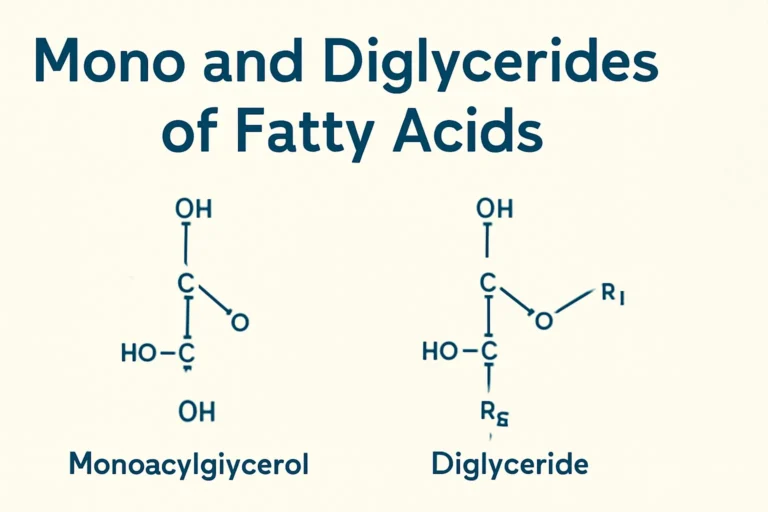
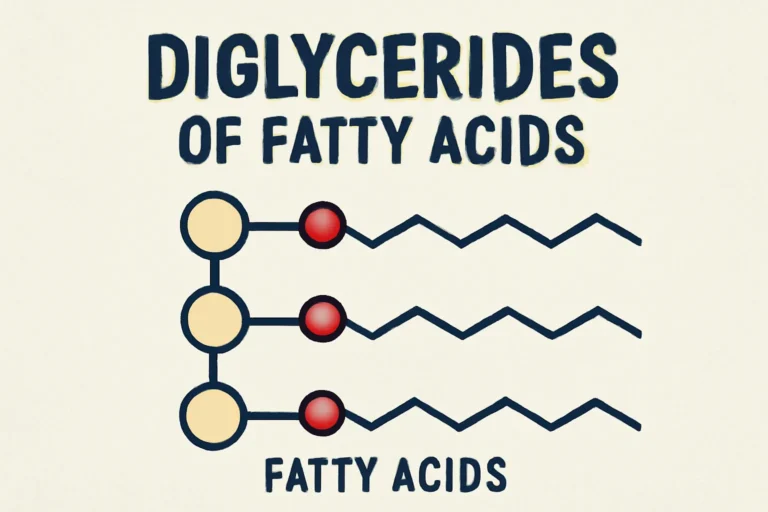
Monoglycerides, often discussed in the context of edible fats and emulsifiers, are a specific class of partial glycerides. In simple terms, they are glycerol molecules that carry a single fatty acid chain attached to one of the three hydroxyl groups. This chemical arrangement gives them distinct properties: a hydrophilic (water-loving) “head” from the glycerol backbone and a hydrophobic (fat-loving) “tail” from the attached fatty acid. In the food industry, these compounds are commonly encountered as monoglycerides as well as in mixtures with diglycerides. When they appear together with diglycerides, they are often labeled and regulated as mono- and diglycerides of fatty acids, frequently given the food additive code E471 in many regulatory jurisdictions.
When we discuss the broader group, we may encounter glycerol monoesters of fatty acids, glycerol monoglycerides, or simply MGs and DGs (for monoglycerides and diglycerides, respectively). In everyday product labeling, you will typically see “mono- and diglycerides of fatty acids” or the abbreviation E471. The important takeaway is that these substances function as emulsifiers—they help oil and water mix, stabilize emulsions, and influence texture and shelf life in a wide range of foods.
Production, Chemistry, and Variants
How monoglycerides are made
Most monoglycerides are produced through a process called glycerolysis or transesterification, wherein glycerol (the backbone of triglycerides) is reacted with fatty acids or with triglycerides themselves. In practical terms, a portion of the fatty acids from triglycerides is transferred to glycerol, yielding monoglycerides and diglycerides as partial glycerides. The process can be catalyzed by acids, enzymes, or bases, and is designed to produce a stable blend of MGs and DGs with a range of fatty acid moieties.
The resulting products are typically mixtures rather than single, pure compounds. They can contain monoglycerides of various fatty acids—saturated, monounsaturated, and polyunsaturated—giving a spectrum of hydrophobic tail lengths and degrees of saturation. This structural diversity helps manufacturers tailor the emulsifying and textural properties of the final product.
What counts as a variant or related compound?
Monoglycerides (MGs) as the primary functional class.
Monoglyceride emulsifiers, highlighting the role in stabilizing oil–water interfaces.
Glycerol monoesters of fatty acids, a broader naming variant used in some technical contexts.
MG-based emulsifiers, a general term for products relying on monoglyceride chemistry.
Monoglyceride esters, a descriptor emphasizing the ester linkage between glycerol and fatty acids.
Uses and Functional Roles in the Food Industry
Monoglycerides and the related di- and triglyceride species are widely used as emulsifiers and texture modifiers in foods. Their ability to migrate to interfaces and reduce interfacial tension helps stabilize oil-in-water emulsions, improve crumb structure in baked goods, and influence mouthfeel and moisture retention. The practical impact of mono and diglycerides is both technical and economic: they enable more consistent product quality, longer shelf life, and often simplified processing steps.
Key functional benefits
Emulsification: stabilize mixtures of oil and water, enabling uniform dispersions in products like spreads, creams, and sauces.
Texture enhancement: improve softness, creaminess, and smoothness in baked goods and dairy analogues.
Moisture retention: help breads and pastries stay moist for longer, reducing staling to some extent.
Crumb structure control: influence crumb cell size and crumb integrity in pastries and breads.
Control of phase behavior: enable predictable crystallization patterns in products containing fats and oils.
Bread and bakery products
In breadmaking and pastry production, monoglycerides are used to improve loaf volume, crumb softness, and overall sliceability. They help maintain a tender crumb by interacting with starch and gluten networks and by modifying fat crystallization during cooling. For many manufacturers, the result is a bread with more uniform texture, less crumbly edges, and a more consistent mouthfeel across batches.
In dairy and non-dairy creamers, yogurts, and spreads, these emulsifiers contribute to stable emulsions, prevent phase separation, and support creaminess. They can also influence fat distribution in non-dairy milks or plant-based cream substitutes, improving mouthfeel and reducing oil separation under heat or shear.
Confectionery and desserts
In chocolates, fillings, ganaches, and dairy-free desserts, monoglycerides help stabilize emulsions, control fat crystallization, and improve flow properties during tempering and filling processes. They can also reduce the tendency of fats to bloom and contribute to a smoother, more uniform product texture.
Spreads, sauces, and dressings
For spreads and sauces, emulsifier systems including MGs enable stable dispersion of oil droplets within aqueous phases, improving pourability, mouthfeel, and uniform texture. They are commonly used in margarine, culinary oils, and ready-to-use dressings where a consistent emulsion is essential.
Other food systems
Beyond the categories above, monoglycerides are used in a range of processed foods, including baked snack products, fillings, and frozen desserts. In many cases, they function in combination with other emulsifiers, such as diglycerides, lecithin, or polysorbates, to achieve synergistic effects on stability and texture.
Safety, Regulation, and Consumer Considerations
Safety profile and toxicology
Overall, monoglycerides and the related gradations of glyceride emulsifiers are considered safe for consumption by major food-safety authorities around the world. The FDA in the United States recognizes mono- and diglycerides of fatty acids as generally safe for use in foods, and they are commonly listed under the broad category of acceptable emulsifiers. In the European Union and many other jurisdictions, the corresponding label is E471, and the product is subject to purity specifications ensuring an absence of contaminants that would be hazardous to health.
When assessing safety, regulators consider:
Purity and adulterants in the ingredient stream (such as residual glycerol or free fatty acids).
Potential allergen or cross-contact concerns (while monoglycerides are not common allergens themselves, the oils from which fatty acids are derived could be allergen sources in rare cases or involve cross-contact with other ingredients).
Usage levels permitted in various food categories and the total daily intake of fats and oils in the diet.
Labeling and consumer transparency
On labels, the ingredient is typically listed as “mono- and diglycerides of fatty acids” or simply “mono- and diglycerides”, sometimes followed by the source identifier (for example, “mono- and diglycerides of fatty acids (from palm oil)”). Consumers seeking to avoid certain oils or to prefer sustainable sources may scrutinize the labeling for the fatty-acid source, such as palm, soybean, or sunflower. In some regions, manufacturers voluntarily provide sustainability or origin information, especially when using palm-derived components, to address environmental concerns.
Labeling considerations for special diets
For people following vegan, vegetarian, or plant-based diets, monoglycerides and diglycerides are typically acceptable as they are fat-based emulsifiers and do not contain animal-derived proteins. However, if dietary restrictions are strict, it is prudent to check the product’s sourcing and to look for certifications or statements about ingredient origins. In some cases, tortillas, baked goods, or plant-based beverages may include emulsifiers that are derived from mixed sources; awareness of the ingredient statement helps maintain dietary alignment.
Digestive Fate, Nutrition, and Physiological Considerations
How the body handles monoglycerides
Once ingested, monoglycerides undergo digestion in the small intestine, where they are emulsified by bile and hydrolyzed by pancreatic lipases to release fatty acids and glycerol. The glycerol backbone is absorbed, and the fatty acids are transported to tissues or used for energy. Some MGs are re-esterified into triglycerides within enterocytes and then packaged into chylomicrons for transport in the lymphatic system. In short, MGs behave like other dietary fats during digestion, absorption, and metabolism.
Compared with diglycerides and triglycerides, monoglycerides can be more polar at the interface and may be digested slightly differently, but the overall caloric contribution remains within the standard range for fats. The emulsifying action observed in food systems does not translate into a unique metabolic hazard; the body handles them in a manner consistent with dietary fats from natural or processed sources.
Sourcing, Sustainability, and Industry Practices
Raw materials and supply considerations
The fatty-acid chains attached to glycerol in monoglycerides come from a variety of lipid sources, including palm oil, soybean oil, sunflower oil, and others. The choice of source affects the fatty-acid profile (saturation, chain length) and can influence product performance in different foods. Industrial producers often blend MGs with DGs to create emulsifier systems that meet specific functional targets, such as stabilization at high shear or resilience to temperature fluctuations.
Sustainability and environmental concerns
Sustainability has become a central concern in the food-ingredient supply chain. When monoglycerides are sourced from palm oil, producers and manufacturers may seek RSPO-certified palm oil or alternatives from non-palm oils to address deforestation concerns and biodiversity impacts. Consumers who prioritize sustainability can look for certifications, supplier transparency, and third-party audits on the packaging or company reports.
Cost and market dynamics
As with many food processing aids, the cost of mono- and diglycerides is influenced by the price of raw fats, the refining process, and the regulatory framework in a given market. In practice, these emulsifiers are relatively economical, especially given their multifunctional role (emulsification, texture modulation, and moisture retention). This economic practicality helps explain their widespread adoption across bakery, dairy, and confectionery sectors.
Practical Considerations for Food Developers and Manufacturers
Selecting the right emulsifier system
When choosing MG- and DG-based emulsifiers, developers consider factors such as:
Target texture and mouthfeel of the final product
Stability under processing conditions (mixing, extrusion, baking, or freezing)
Interaction with starch, gluten, proteins, and other emulsifiers used in the formulation
Regulatory limits for specific food categories
Source of fatty acids and sustainability goals
Formulation strategies and combinations
In many formulations, monoglycerides are used in combination with other emulsifiers to achieve synergistic effects. For instance, MGs may be paired with lecithin, phospholipids, or sorbitan esters to tailor emulsification strength and textural attributes. The choice depends on the food matrix (bread, spread, chocolate, dairy) and the processing steps (baking temperatures, emulsification challenges, or freezing). A well-balanced blend can deliver better stability, reduced fat migration, and consistent product quality.
Quality assurance and safety checks in production
Manufacturers monitor purity, fatty-acid composition, and contaminant levels to ensure compliance with food-grade specifications. Process controls include verifying emulsion stability, lipid oxidation status, and absence of off-flavors that might arise from processing or storage. Routine sensory and analytical tests help ensure that the final product meets consumer expectations for texture, aroma, and appearance.
Common Myths and Clarifications
As with many food additives, there are misconceptions about mono- and diglycerides. A few points worth clarifying:
MGs are not trans fats; they are partial glycerides and do not possess the trans fat structure associated with certain hydrogenated fats.
They are not allergens by default; however, the oil sources could cause cross-contact in rare cases, so labeling for those with sensitivities remains important.
All MGs are not synthetic in the sense of being artificial flavorings; they are processed fats used for functional purposes in foods.
They do not inherently pose health risks at typical dietary levels; regulatory bodies review and approve their use based on safety assessments and usage limits.
Monoglycerides and diglycerides have been part of the food processing toolkit for decades. Early developments in fat science highlighted the value of partial glycerides as emulsifiers, enabling longer shelf life and easier processing for a wide range of products. Over time, standardized naming conventions, purity requirements, and labeling regulations emerged to provide clarity to manufacturers and consumers alike.
Regulatory status across major regions
In the European Union, these compounds are generally listed as E471 and must meet purity criteria set by EU regulations. In the United States, the FDA recognizes mono- and diglycerides as safe for use in foods, with usage governed by good manufacturing practices and existing food additive regulations. Other jurisdictions have similar frameworks that govern labeling, permissible levels, and source disclosures.
Health Perspectives and Dietary Context
Role in overall nutrition
As fats, monoglycerides contribute calories and provide concentrated energy. In the context of a balanced diet, they should be consumed within standard fat guidelines. Their presence in processed foods often replaces or complements other fats, potentially affecting palatability and portion control for some consumers. It is important to view MGs as part of the broader dietary fat profile rather than as a separate health concern.
Potential interactions with dietary patterns
For individuals who follow fat-restricted or low-fat diets, products containing mono- and diglycerides may be considered in the context of the total fat load. In plant-based or vegan diets, these emulsifiers are typically compatible, but consumers may seek responsibly sourced ingredients. For those with specific allergies, label reading remains essential, particularly if the ingredient list notes oil-derived sources.
Future Directions: Innovation and Sustainability in Emulsifier Technology
Advances in processing and purity
Ongoing research in food science aims to refine the production of partial glycerides to yield more uniform MG and DG fractions, enabling tighter control of emulsification properties. Advances in enzymatic catalysis and green chemistry may reduce energy use and byproduct formation, while improving overall purity and performance in diverse food matrices.
Towards sustainable sourcing and transparency
The industry increasingly emphasizes sustainability, traceability, and supplier transparency. By selecting sources with credible certifications and engaging in responsible sourcing programs, food makers can align emulsifier choices with environmental and social goals while maintaining product quality.
Conclusion: The Practical Value of Monoglycerides in Food
Monoglycerides and their related glyceride derivatives represent a versatile class of food-grade emulsifiers that play a central role in modern food manufacturing. Their ability to stabilize emulsions, influence texture, and assist in moisture retention makes them valuable across a spectrum of products—from bread and bakery items to dairy alternatives, confectionery, and spreads. While the chemistry behind MGs is complex, the practical outcomes are straightforward: more stable emulsions, better texture, and improved process efficiency in many cases.
For consumers, understanding that these ingredients are common, generally recognized as safe, and carefully regulated can support informed choices. For manufacturers, the ongoing challenge is to select the right combinations and sources to meet product goals, regulatory requirements, and consumer expectations around sustainability. In sum, mono- and diglycerides are small but mighty components of the modern food system, capable of delivering meaningful improvements in quality and consistency without compromising safety when used appropriately.






Deja una respuesta