Introduction: what are mono- and diglycerides of fatty acids?
Mono- and diglycerides of fatty acids, often abbreviated as monoglycerides and diglycerides, are a class of emulsifiers used across a broad spectrum of processed foods. They are sometimes referred to as glyceride monoglycerides or glycerides for short, and in industry literature you may also encounter the shorthand MDG or E471 (the code used in the European Union for this additive). In everyday food production, manufacturers rely on these compounds to manage the interface between oil and water, enabling better texture, uniform dispersion of ingredients, and improved shelf life.
The primary function of these molecules is emulsification — they act at interfaces to stabilize oil-in-water mixtures. They can also contribute to texture, mouthfeel, and volume in a variety of products. Because monoglycerides and diglycerides are derived from fatty acids and glycerol, they integrate with lipid-containing ingredients in predictable ways, helping to create smoother batters, creamier dairy products, and more stable emulsions in sauces and dressings.
What exactly are these emulsifiers? variations and synonyms
In the industry, you will see a handful of terms used interchangeably or to describe related products. To keep the concept clear, here are common variations and synonyms that readers may encounter:
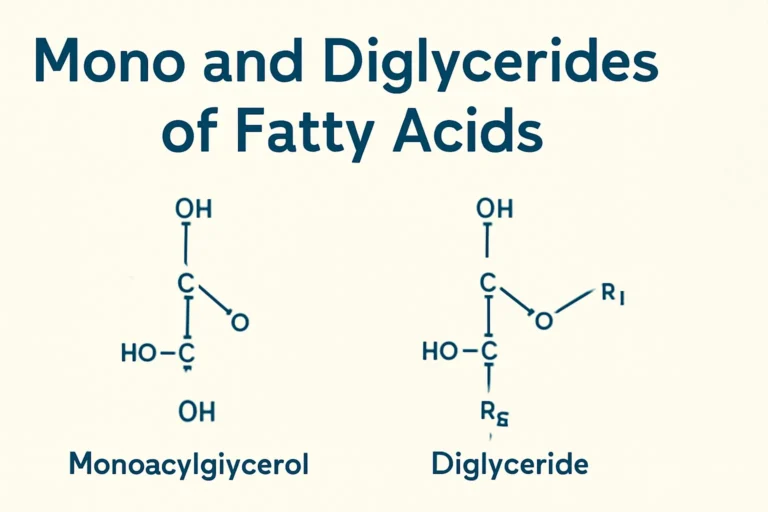
Monoglycerides of fatty acids (also called monoesters or glyceride monoglycerides)
Diglycerides of fatty acids (also called diesters or glyceride diglycerides)
Monoglycerides and diglycerides (the combined term for the emulsifier pair)
MDG emulsifier (a shorthand for mixed mono- and diglycerides used in some product specifications)
E471 (the European Union’s food additive codename for mono- and diglycerides of fatty acids)
Glycerin esters of fatty acids (a descriptive term seen in some technical literature)
Across different product labels, you may also see references to specific feedstocks or preparation methods, such as vegetable-oil-derived monoglycerides or animal-fat-derived diglycerides. In most consumer products, however, the emulsifier is a blend that combines monoglycerides and diglycerides in varying ratios to achieve the desired functional properties.
Production, sources, and chemistry of MDG emulsifiers
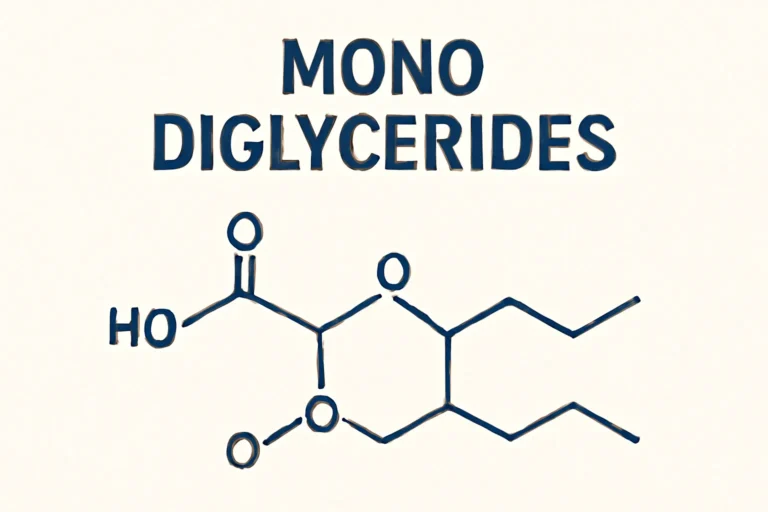
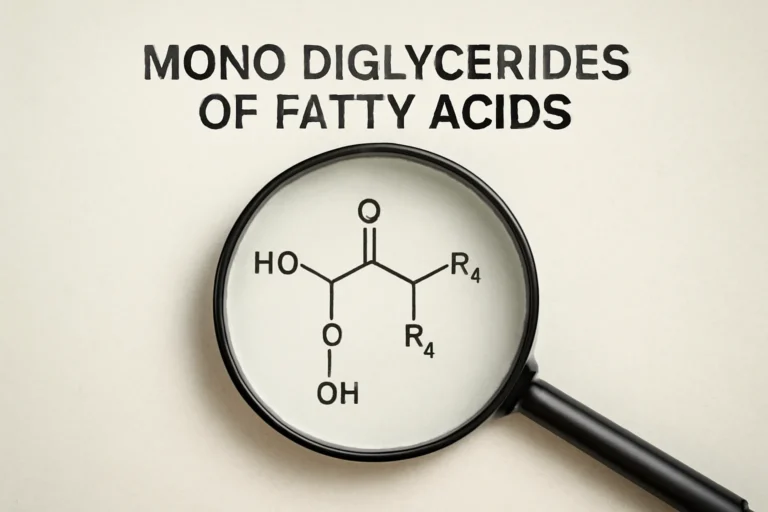
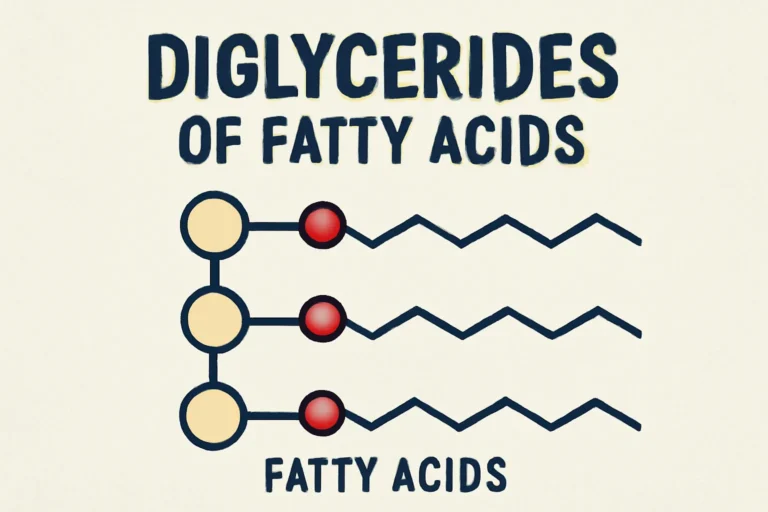
Mono- and diglycerides of fatty acids are produced by reacting glycerol with fats or fatty acids in a chemical process known as glycerolysis or esterification. Depending on the feedstock and process, manufacturers can tailor the relative amounts of monoglyceride and diglyceride to suit a given application. The fatty-acid portion of the molecule can be derived from a range of natural fats and oils, including palm oil, soybean oil, canola oil, and sunflower oil, as well as animal fats in some applications.
The resulting mixture is then refined, purified, and frequently deodorized to remove tastes or odors that might otherwise affect the finished product. Because MDG emulsifiers are not typically single, pure chemical compounds but mixtures of several related molecules, they are often described as complex blends of mono- and diglycerides with a range of fatty-acid chain lengths. This molecular diversity supports a broad range of functional behaviors in foods.
A key point for consumers and product developers is that, despite their different possible origins, mono- and diglycerides of fatty acids are designed to be compatibile with water-based and fat-based ingredients. They act at lipid-water interfaces to reduce surface tension and promote stable dispersions, a mechanism that is central to doughs, batters, creams, and emulsions.
What happens in the body? digestion and metabolism of MDG fats
After consumption, lipases in the digestive system cleave the glycerol backbone to yield glycerol and fatty acids. The digestion products are then absorbed and metabolized in ways similar to other dietary fats. Because mono- and diglycerides are partially converted and absorbed, they contribute calories in the same general range as other fats. For most people, these emulsifiers do not pose a toxicological risk when consumed within typical dietary levels established by regulators.
Uses in the food industry: where you’ll find MDG emulsifiers
The practical value of monoglycerides and diglycerides is broad: they help to bind water and fat, improve texture, extend freshness, and enhance the stability of emulsions in diverse foods. Below is an overview of common applications, followed by a few representative use cases.
Bread and bakery products — MDG emulsifiers help with dough handling, crumb structure, volume, and fresh-keeping properties. They can improve loaf rise and elasticity, leading to softer products with longer shelf life.
Dairy products — In ice cream, yogurt, cream, and some cheeses, monoglycerides and diglycerides improve creaminess, reduce ice crystal growth, and stabilize fat droplets within aqueous phases.
Spreads and margarines — These emulsifiers help create smooth, homogeneous spreads and can influence spreadability at different temperatures.
Confectionery and chocolate coatings — By stabilizing fat distributions and interacting with cocoa butter, MDG fats can improve texture and mouthfeel and help with uniform coating.
Dressings, sauces, and gravies — They stabilize oil-in-water emulsions, preventing phase separation during storage and use.
Processed meats and seafood — In some products, MDG emulsifiers help maintain moisture and fat distribution, contributing to juiciness and sliceability.
Ready-to-eat meals and soups — Emulsifiers assist with uniform dispersion of components and improve product consistency during cooking reheats.
Bakery fillings and creamy fillings — MDG emulsifiers can improve filling stability and texture, especially in refrigerated products.
Other food categories rely on mono- and diglycerides for texture enhancement, stability, and moisture retention. The versatility of MDG emulsifiers is why you will encounter them in a wide array of products, from everyday staples to specialty foods. They are often used in combination with other emulsifiers and stabilizers to achieve the precise rheology and sensory profile that a product specification requires.
Safety and regulatory status: what regulators say
Safety is a central concern for both manufacturers and consumers. Mono- and diglycerides of fatty acids have been evaluated by international and national authorities and are widely approved for use in foods under defined conditions. Below, we summarize the core regulatory and safety considerations, with separate notes for different regions.
In the United States, monoglycerides and diglycerides are permitted as food additives and emulsifiers, widely used under established food-use provisions. They are commonly categorized as emulsifiers in ingredient statements and often listed as monoglycerides and diglycerides, glycerides, or E471 on labels. The regulatory framework requires that manufacturers demonstrate safety, purity, and appropriate usage levels, with compliance monitored by the U.S. Food and Drug Administration (FDA).
Regulatory status in the European Union
In the European Union, the same family of emulsifiers is designated as E471. EFSA (the European Food Safety Authority) has assessed mono- and diglycerides and continues to consider their use safe within the specified conditions of use. In practice, products bearing the E471 designation are expected to meet purity and labeling standards, and the emulsifier is used to support texture and stability in numerous foods.
Regulatory status in other regions
Other major markets, including parts of Asia and the Americas, generally align with the understanding that MDG emulsifiers are safe for use as food additives when properly manufactured and used at approved levels. Regional authorities may have unique labeling requirements or thresholds, but the underlying safety profile remains favorable in most regulatory contexts.
In practice, the safety of mono- and diglycerides depends on the quality of the base fats, the refining process, and the absence of unintended contaminants. Responsible manufacturers implement quality-control measures to limit residual free fatty acids, trans fats, heavy metals, and other potential impurities. Consumers should note that:
MDG emulsifiers themselves are not considered common allergens in most regulatory systems, but trace ingredients or feedstock could vary by supplier.
Cross-contact with allergenic materials can occur in manufacturing facilities that produce multiple products, so labeling is prudent if you have severe allergies.
Some MDG products may be derived from palm oil, soy, or other feedstocks; if you have allergen concerns or ethical considerations (such as palm-oil sustainability), check the supplier’s documentation or certifications.
Safety considerations for specific populations and dietary contexts
For the general population, mono- and diglycerides are considered safe when used within regulatory guidelines. However, certain groups may want to be more attentive to their dietary sources:
Avoidance or reduction for those with severe corn or soy allergies (if the feedstock includes soy derivatives, though this is not typical for all MDG products).
Dietary planning for individuals with very limited fat intake or those managing triglyceride levels should account for all fat sources, including MDG-based emulsifiers that contribute energy.
Vegetarian or vegan diets may consider feedstock origin. If ethically or religiously motivated, look for products with plant-based feedstock declarations or certifications indicating the absence of animal-derived inputs.
In most cases, the exposure levels from MDG-containing foods are similar to those of other common emulsifiers. If you follow a restricted or medically supervised diet, consult a healthcare professional or a registered dietitian about all ingredients in your foods, including emulsifiers and their potential cumulative effects.
Environmental and sustainability considerations
The environmental footprint of food additives, including mono- and diglycerides, depends heavily on the feedstock and production processes. Some of the main considerations include:
Feedstock origin — Many MDG emulsifiers are derived from vegetable oils (palm, soy, canola, sunflower). The sourcing of palm oil raises sustainability questions in many regions due to deforestation and biodiversity concerns.
Sustainability certifications — Manufacturers may pursue certifications such as RSPO (Roundtable on Sustainable Palm Oil) or other chain-of-custody programs to demonstrate responsible sourcing. When available, these certifications provide a pathway to more sustainable MDG production.
Life-cycle considerations — The overall environmental impact includes land use, water use, processing energy, and transportation. Producers often optimize these factors to reduce carbon footprints and improve resource efficiency.
Packaging and waste — Like many food ingredients, MDG-containing products benefit from careful packaging strategies and waste reduction practices to minimize environmental impact.
For consumers concerned about sustainability, a practical approach is to seek products with clear sustainability statements, supplier transparency about feedstock origins, and third-party certifications when feasible. While the emulsifier itself is a small component of a finished product, its sourcing can reflect broader ecosystem choices.
Label reading and consumer tips
Understanding ingredient lists helps you make informed decisions. Here are practical tips for recognizing mono- and diglycerides in foods:
Look for monoglycerides, diglycerides, or the combined term monoglycerides and diglycerides in the ingredient list.
Watch for the code E471, particularly when reviewing EU-labeled products.
Be aware that MDG emulsifiers can be part of blends with other emulsifiers and stabilizers, so the overall additive system might be complex.
For allergen concerns, check supplier specifications if your dietary needs are strict, as feedstock origins (soy, peanut, dairy, etc.) may vary by manufacturer.
Consider sustainability declarations (for example, RSPO-certified palm oil or alternative feedstocks) if this aligns with your values.
If you are avoiding certain fats or seeking natural ingredients, it is worth noting that MDG emulsifiers are processed ingredients designed to improve functionality, not flavor. They are generally used in relatively small amounts and do not impart strong tastes or odors when properly refined.
Common myths and misunderstandings about MDG emulsifiers
As with many food ingredients, there are myths surrounding mono- and diglycerides of fatty acids. Here are a few points to clarify common misconceptions:
MDG emulsifiers are artificial or synthetic — While these ingredients are manufactured, they are derived from natural fats and glycerol through controlled chemical processes, and are considered safe by regulatory authorities.
They are a source of trans fats — Monoglycerides and diglycerides are distinct from trans fats. They do not introduce trans fatty acids as a byproduct of their typical production processes.
All MDG emulsifiers are palm-oil-based — Not necessarily. MDGs can be sourced from various fats and oils, including soybean, canola, sunflower, or palm oil. Traceability matters for sustainability concerns.
They cause allergies in most people — MDG emulsifiers are not generally listed as common allergens; however, cross-contact and feedstock variability mean that some individuals should verify ingredient sources if they have severe allergies.
Practical considerations for manufacturers and product developers
For professionals in food science and product formulation, mono- and diglycerides offer a robust toolbox for achieving desired textures and stability. Key practical considerations include:
Blend ratios — The relative amounts of monoglyceride versus diglyceride can be tuned to optimize emulsifying power, rheology, and melt behavior for a given product.
Compatibility with other additives — MDG emulsifiers are often used in concert with other stabilizers, emulsifiers, and fat systems to achieve a synergistic effect.
Processing parameters — Temperature, shear, and water activity influence how well MDG emulsifiers perform during dough mixing, batter development, or sauce emulsification.
Quality and regulatory compliance — Producers should ensure their MDG emulsifiers meet purity specs and declare them accurately on labels per regional regulations.
Label health considerations — Consumers increasingly scrutinize ingredient lists; providing a transparent, accurate description of MDG use can support consumer trust.
Research and ongoing safety monitoring
The scientific literature on mono- and diglycerides of fatty acids continues to support their general safety in typical dietary use. Regulatory assessments consider exposure estimates, toxicology data, and potential for adverse effects. Nevertheless, ongoing research and post-market monitoring help ensure that any new evidence about long-term effects or cumulative exposure is evaluated. The food industry also invests in refining sources to maximize sustainability and minimize environmental impact while preserving functionality.
Case studies: illustrative examples of MDG use
While specific formulations are proprietary, the following hypothetical scenarios illustrate how mono- and diglycerides are used in real-world products:
Bakery bread — A loaf uses MDG to improve crumb structure and volume, producing a softer texture that remains fresh longer, even after several days.
Ice cream — Monoglycerides help stabilize the fat droplets in an air-logged matrix, contributing to a smooth mouthfeel and preventing icy crystallization during storage.
Mayonnaise or creamy dressings — The emulsifier blend supports a stable oil-in-water dispersion, ensuring a uniform appearance and consistent viscosity across batches.
Chocolate confectionery — A cocoa-butter-rich system benefits from MDG emulsifiers that facilitate proper fat crystallization and even coating behavior on surfaces.
Conclusion: why MDG emulsifiers matter in modern food systems
Mono- and diglycerides of fatty acids are a well-established class of food emulsifiers that enable a broad spectrum of products to achieve desirable texture, stability, and sensory appeal. They are versatile, compatible with multiple feedstocks, and supported by extensive regulatory review. Producers rely on these emulsifiers to control fat-water interfaces, stabilize emulsions, and maintain product quality over time. For consumers, understanding that MDG emulsifiers are common, low-impact ingredients in the overall dietary landscape helps demystify processed foods.
When evaluating foods containing monoglycerides and diglycerides, consider not only the immediate sensory attributes but also factors such as sourcing transparency and sustainability certifications. While MDG emulsifiers are chemically small components, their role in the texture, stability, and shelf life of countless products is large. Balancing functionality with health, ethics, and environmental stewardship remains a shared responsibility among manufacturers, regulators, and consumers alike.






Deja una respuesta