The question “What was zakat?” often opens a wider conversation about Islamic charity, social duty, and the ethics of wealth. In a broad sense, zakat is the obligation to set aside a portion of one’s wealth for those in need, with a framework that makes charity not a matter of personal whim but a structured act of worship and social policy. Throughout Islamic history, the practice of zakat has been described as purification of wealth, a means of redistribution that aims to reduce inequality while strengthening the bonds of the community. In this article, the goal is to explore not only the definition but also the many uses, forms, and implications of zakat, including how the concept has evolved, what it means today, and how it has been interpreted by different schools and communities.
We will use variations of the question to broaden understanding: what zakat is, what zakat means, what zakat was intended to accomplish, how zakat works, and why zakat remains relevant. By tracing its linguistic roots, theological foundations, historical development, and practical applications, readers can gain a holistic view of zakat that goes beyond simple percentages and rulebooks.
Origins, Definitions, and Core Meaning
The word zakat derives from a root that connotes cleansing or purification. In its religious usage, zakat denotes a divinely prescribed form of charity that applies to specific categories of wealth. In Arabic, the principle is often summarized as a twofold idea: spiritual purification and moral responsibility toward the less fortunate. This dual aim—cleaning the soul and supporting society—has shaped how zakat is understood and implemented across Muslims and Muslim communities around the world.
When people ask “what was zakat”, they are often seeking to connect the concept to a practical system: who must pay, how much, to whom, and under what conditions. The two major dimensions of zakat are:
Ritual/obligatory dimension: a formal duty in the Islamic faith, one of the five pillars, incumbent upon eligible believers who possess wealth above a defined threshold.
Social/ethical dimension: a mechanism of social welfare and solidarity that helps safeguard vulnerable members of the community and fosters economic balance.
In practice, the most common understanding of what zakat was meant to do centers on the redistribution of wealth, the relief of poverty, and the creation of a more just economic order. Different eras and regions have emphasized various aspects of zakat, but the underlying aim remains a blend of divine ordinance and human compassion.
Textual Foundations: Sources, Verses, and Scholarly Interpretations
The concept of zakat is anchored in Islamic scripture and prophetic traditions. The Quran mentions zakat in several places, often in parallel with prayer (salat) as a pillar that complements spiritual practice with social obligation. The core idea is that wealth is entrusted by God to the believer, and a portion must be returned to the community for the benefit of the needy, debtors, travelers, and other eligible categories.
In addition to the Quran, numerous hadith (sayings and actions of the Prophet Muhammad) elaborate on how zakat should be calculated, who qualifies, and how it should be distributed. Scholars over the centuries have debated technical details—such as eligible assets, nisab thresholds, and different rates for various kinds of wealth—producing a rich body of jurisprudence that informs today’s practice in different traditions.
A useful way to think about the meanings of zakat is to see it as a bridge between personal devotion and social reform. While the act is framed as a personal obligation before God, its consequences are measured in real-world outcomes: greater social cohesion, more predictable support for those facing hardship, and a more transparent economy with fewer pockets of extreme scarcity.
One of the most practical parts of understanding what zakat is concerns the wealth that is eligible for zakat. The traditional categories—cash, savings, business inventory, and certain kinds of productive assets—are tied to the directive that only wealth that remains with the owner for a full lunar year (hawl) and exceeds the nisab is zakatable. The nisab serves as a threshold that keeps zakat from becoming a punitive tax on the poor and ensures that welfare is funded by those who can afford it.
Cash and bank balances (including savings, investments, and money market instruments) that exceed the nisab and have been held for a complete year.
Gold and silver held as wealth, not as personal jewelry or ornamentation, beyond the nisab thresholds for precious metals.
Trade goods and business inventory held for sale, where zakat is calculated on the value of the inventory and not just on cash receipts.
Agricultural produce and certain crops, with zakat calculated according to specific methods that depend on whether irrigation is natural or artificial.
Livestock (in some traditional schools) when kept for sale or for productive use, subject to exact numbers and conditions.
Debts owed to the zakat payer can sometimes reduce the amount of zakat owed if the debt is a valid obligation to be paid by the debtor.
It is equally important to understand what does not count toward zakat: personal items such as an individual’s primary residence or clothing, household items used for daily living, and certain debts owed by the zakat payer to others are typically exempt when calculating the obligation. The intention behind these exemptions is to preserve the essential needs of the person paying zakat while prioritizing those in real need.
Across different Muslim communities, there are additional nuances in determining which assets qualify and under what conditions they must be assessed. Some traditions distinguish between the zakat owed by individuals and that paid by communities or institutions. For instance, national or local charitable organizations might collect zakat on behalf of eligible recipients, following guidelines that align with local laws and religious interpretations.
How Much to Pay: Rates, Nisab, and Calculation
The most commonly cited rate for zakat in today’s practice is 2.5 percent (1/40) of eligible wealth that has been held for a full lunar year. This rate applies to cash, savings, investments, and business assets that meet the nisab threshold. Some agricultural contexts use different rates based on traditional jurisprudence or local agreements among scholars.
The nisab is a minimum wealth level—often pegged to the current price of a certain amount of gold or silver—that determines whether zakat is due. If a person’s wealth falls below this threshold, zakat is not obligated for that year. If wealth rises above the nisab and remains there for a full year, zakat becomes due on the qualifying portion.
For practical calculation, you can think in steps:
Determine which assets are eligible for zakat (cash, assets intended for sale, etc.).
Calculate the total value of eligible wealth at the zakat calculation date.
Subtract any legitimate debts or financial obligations that offset the net wealth, where applicable.
Compare the remaining amount to the nisab. If it is above the threshold, calculate 2.5% of that amount.
Identify eligible recipients (as the categories below define), and distribute accordingly.
It is important to note that some communities may have slightly different rules about the exact nisab value, the treatment of certain assets, and whether to include or exclude certain debts. In practice, many households maintain a clear accounting record for zakat calculations, and some governments or religious authorities publish annual nisab benchmarks to guide individuals and organizations.
Who Receives Zakat and How It Is Allocated
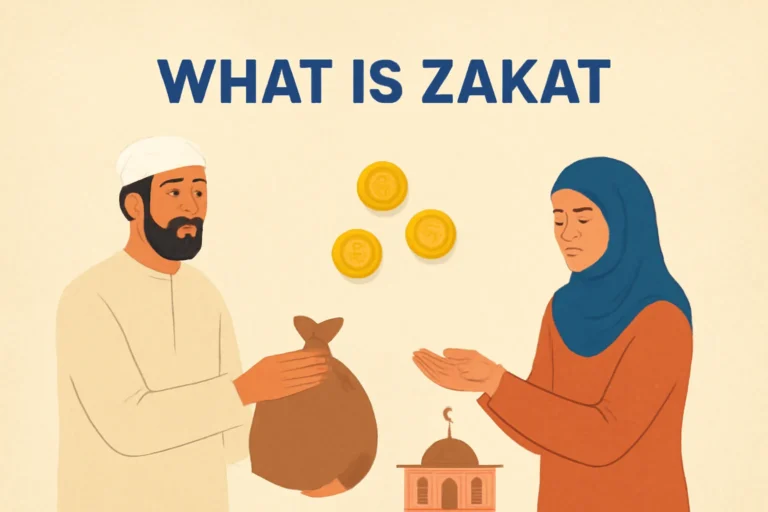
A defining feature of zakat is its directedness: zakat funds are meant to reach specific categories of recipients. In traditional listings, the recipients are described in terms that emphasize social welfare and community resilience.
Those in debt who cannot repay legitimate loans and face hardship as a result.
Wayfarers or travelers who are stranded and in need.
Those employed to administer zakat (the organizers who collect and distribute zakat, within agreed limits).
New Muslims or those who are converting to Islam and might need support during a transition.
To reconcile hearts (fi sabillillah) in some interpretations, which can include projects that promote community welfare or reduce social strife.
The freeing of enslaved or oppressed people in historical contexts, though in modern contexts this category is often interpreted in broader terms of emancipation and social uplift.
In modern practice, many communities publish zakat distribution plans to ensure accountability and transparency. Some communities allocate zakat for immediate relief (e.g., food, clothing, shelter), while others fund long-term programs (e.g., microfinance, education, healthcare). The central aim is to ensure that those in need are reached in ways that improve their capacity to become self-sufficient.
Zakat vs. Sadaqa: Distinctions and Intersections
A common question is “how does zakat relate to sadaqa?” The term sadaqa refers to voluntary charity, given out of generosity without the obligatory constraint of wealth thresholds or the annual calculation. Zakat is a fixed, mandatory obligation with defined rules, whereas sadaqa is optional and can be given at any time and in any amount.
Yet many people use both concepts together. Donors may pay their zakat and also give additional sadaqa to support causes they care about, such as education, healthcare, or disaster relief. The combination of zakat and sadaqa is often described as a comprehensive model of religiously grounded philanthropy: obligatory duty plus voluntary generosity.
Another related term is khair, which broadly means good deeds or charitable acts. While not a formal category in every tradition, khair captures the spirit of doing good, which can include zakat-eligible acts and many other forms of aid that contribute to social welfare.
Differences Across Schools and Local Practices
Across the Muslim world, jurists from different schools (madhhabs) have nuanced views about zakat. While the 2.5% rate on liquid wealth is widely accepted in many communities, some schools have particular rules about:
The precise nisab value and whether to calculate it in gold or silver or a local currency benchmark.
What assets count as nisab-bearing wealth (e.g., whether certain forms of investment are includable).
Different rules for agricultural zakat, where irrigation methods affect the rate.
Exceptional cases such as zakat on professional income or on wealth that is tied up in long-term projects.
Because of these variations, many members of Muslim communities consult local scholars or trusted religious authorities to determine how to fulfill their zakat obligations properly. The general principle remains consistent: zakat should be paid with honesty, care, and accountability, and it should be directed to those who are most in need.
Zakat in Contemporary Life: Practicalities and Debates
In modern times, zakat has taken on new dimensions. Some argue that zakat should be integrated with formal social welfare programs run by governments, while others insist on maintaining zakat as a private religious duty. Still others advocate for a hybrid model in which zakat funds support national or community welfare initiatives while ensuring accountability and auditability.
Debates often center on questions like:
How to modernize zakat collection without compromising its religious character?
Whether zakat should be tax-deductible in some jurisdictions or treated as a charitable donation for regulatory purposes.
How to measure impact, evaluate outcomes, and ensure that funds reach the most vulnerable groups.
Regardless of the policy debates, the essential elements of zakat stay clear: it is a systematic charity tied to wealth, a tool for social welfare, and a means of actively practicing justice in economic life.
A Step-by-Step Guide to Calculating Zakat
For individuals who want a practical, actionable guide, here is a clear, step-by-step approach to calculating zakat. The steps are designed to be adaptable to various personal circumstances and asset types.
Inventory your assets: List cash, savings, investments, business stock, and other wealth that could be eligible for zakat.
Identify nisab: Determine whether your total eligible wealth meets the nisab threshold. If below, zakat is not due for that year.
Subtract personal debts (where applicable): Deduct legitimate debts that you are obligated to pay, to arrive at the net zakatable wealth.
Apply the zakat rate: If the net wealth is above the nisab, multiply by 2.5% (1/40).
Choose recipients: Decide how the zakat will be distributed among eligible categories (the poor, debtors, travelers, etc.).
Distribute transparently: Make distributions in a way that can be tracked, and, where possible, document the process for accountability.
It is often helpful to use a simple worksheet or trusted zakat calculator provided by local religious authorities. The calculator can take into account local nisab benchmarks, agricultural specifics, and other factors that differ by region.
Some people also engage in a supplementary practice: intention (niyyah) and mindful sincerity. In many traditions, the intention behind zakat—expressed as a conscious decision to fulfill a religious duty and to help those in need—is as important as the numerical calculation itself.
Like any long-standing religious practice, zakat has its share of myths and misunderstandings. A few common ones include:
“Zakat is only for the rich.” False. Zakat is designed to assist those in need, and the threshold is set to ensure fairness rather than to punish modest means.
“Only cash counts.” In many traditions, non-cash wealth like inventory, crops, and certain assets may also be zakatable, provided they meet the criteria.
“Zakat replaces government welfare.” In modern societies, zakat is typically complementary to public welfare programs, not a substitute for them, though the exact relationship varies by jurisdiction and community.
“Zakat must be given within a specific country.” The recipients are defined by need, regardless of geography, although practical collection and distribution often align with local communities.
Understanding these clarifications helps prevent misinterpretations and supports more effective charitable action consistent with the intended goals of zakat.
Conclusion: The Meaning and Relevance of Zakat Today
The question “What was zakat?” points to a tradition that has endured for centuries: a disciplined form of charity that blends spiritual discipline with social obligation. Its enduring relevance lies in its capacity to channel resources toward the most vulnerable, to reduce economic disparities, and to cultivate a sense of shared responsibility within a community. The practice invites believers to examine their wealth with care, to act with justice, and to participate in a collective project of welfare that transcends individual gain.
Across cultures and eras, zakat has been proposed as a practical instrument for addressing needs and strengthening civil society. When implemented with transparency, accountability, and compassion, zakat fulfils a divine command while also delivering tangible improvements in people’s lives. The relationships it fosters—between giver and recipient, between faith and civic life, between wealth and moral responsibility—are at the heart of what many Muslims mean by living a faith that speaks to every aspect of daily life.
For anyone seeking to understand what zakat was intended to accomplish, the answer lies in its dual aim: to purify the wealth of the giver and to relieve the suffering of others. By embracing both dimensions—the inward, spiritual motive and the outward, social impact—zakat becomes more than a rule; it becomes a method of ethical stewardship in a modern world that still grapples with poverty, inequality, and economic fragility.
If you are exploring what was zakat for your own life, consider starting with a careful inventory of your wealth, a clear understanding of nisab, and a plan for distributing zakat to those in need. Combine that with ongoing acts of voluntary charity (sadaqa) and good deeds (khair), and you have a practical, living expression of faith in action—one that keeps the priorities of compassion, justice, and community at the center of financial life.


Deja una respuesta