Mono & Diglycerides of Fatty Acids: Uses and Safety
Mono & Diglycerides of Fatty Acids: Uses and Safety
Mono- and diglycerides of fatty acids, commonly referred to as monoglycerides and diglycerides,
are a family of lipid-based food additives used worldwide to improve texture, stability, and mouthfeel.
They are a type of glycerol esters of fatty acids produced through the partial esterification of glycerol with fatty acids.
In food labeling you will often see the E-number E471, which signals their role as an additive in a multitude of products.
This article explores the chemistry, uses, regulatory status, safety considerations, and consumer-related guidance related to mono- and diglycerides of fatty acids in everyday foods and beyond.
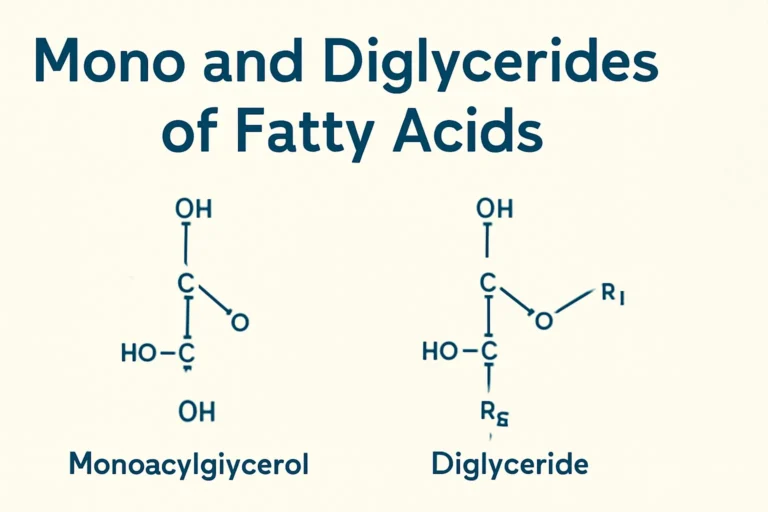
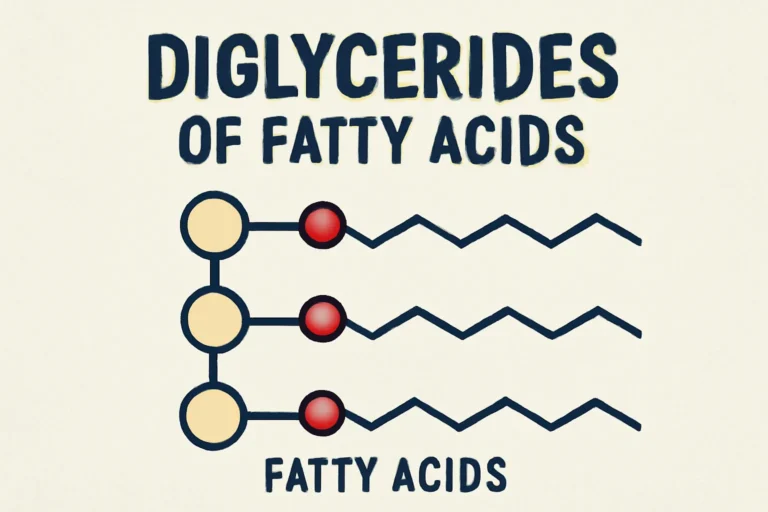
At the most basic level, monoglycerides are molecules where a single fatty acid chain is attached to a glycerol backbone,
while diglycerides have two fatty acid chains attached. When both types are present together, chemists and regulatory bodies
group them as mono- and diglycerides of fatty acids, or MGDs for short, though you will hardly see a single term
used universally.
These compounds are derived from fats and oils and can be produced from plant-based sources (such as soybean, palm, or sunflower oils)
or from animal fats. The fatty acid chains can be saturated or unsaturated, and the resulting esters vary in tail length and degree of
unsaturation. In practice, the exact composition is not usually specified on product labels, but the functional class remains the same:
they act as effective emulsifiers and texturizing agents.
Common synonyms and variations
Monoglycerides and diglycerides of fatty acids
Monoglyceride esters of fatty acids
Glycerol esters of fatty acids
Mono- and diglycerides
MGDs (acronym used in some technical references)
Basic chemistry and functional role
Partial esterification of glycerol with fatty acids creates amphiphilic molecules that can orient at oil–water interfaces.
As a result, emulsification becomes more stable, which helps disperse fats in water-based systems.
They also contribute to desired textures by influencing fat crystal formation, crumb structure in baked goods, and creaminess in dairy-like products.
The broad acceptance and extensive study of MGDs reflect their long history in the food industry as well as their utility across
diverse product categories. While they are broadly considered safe, it is useful to understand where they are most commonly applied and why.
Uses and applications in the food industry
Industrial and commercial baking
In bakery products, monoglycerides and diglycerides serve as emulsifiers and as fat
replacers in some formulations. They help stabilize emulsions in doughs and batters, improve crumb softness, and can contribute to
extended shelf life. In some cases, they act as shortening aids, enabling desirable layering and flakiness in pastries.
Dairy and dairy-like products
Many dairy products, including spreads, ice cream, and non-dairy creamers, rely on DGs and MGs to reduce
fat separation, improve texture, and create a smooth mouthfeel. They help to suspend fat globules and to stabilize foams and emulsions
that are common in dairy analogues.
In confectionery, the presence of monoglycerides and diglycerides can improve the flow properties of fats and oils so that products
such as fillings, coatings, and centers maintain a uniform texture during processing and storage. They can also assist in tempering and
stabilization of spreads and ganaches.
Some processed meats and savory products use MGDs to ensure a more uniform distribution of fat, improve moisture retention,
and aid in emulsification of fat-in-water systems that are common in emulsified sausages and similar products.
Floating and shelf-stable products
Beverages and liquid products sometimes rely on emulsifier activity from mono- and diglycerides to prevent separation during
storage. They help maintain a consistent texture and appearance, even after packaging and transport.
Non-food uses and cosmetics
Beyond foods, monoglycerides and diglycerides find use in cosmetics and personal care products as emulsifiers and conditioning agents.
While these applications are outside of the culinary scope of this article, it is useful to recognize that the same chemical class can appear in
skincare formulations and topical products.
Safety considerations in use
The emulsifying property of mono- and diglycerides makes them compatible with a wide range of other ingredients. Because they are
typically used at relatively low levels, the overall contribution to caloric intake is modest, and their presence usually does not create
major changes in nutrition profiles. Nevertheless, their role as processing aids means that they may be present in products where labeling
must reflect their inclusion as an additive in accordance with local regulations.
Production, purity, and variability
The production of mono- and diglycerides typically involves glycerolysis of fats and oils or esterification of glycerol with fatty
acids. The resulting product is a mixture of monoglycerides and diglycerides with varying fatty acid chain lengths and degrees of unsaturation.
Sources of fatty acids
Vegetable oils such as soybean, palm, sunflower, and cottonseed oils
The exact fatty acid composition of MGDs is not usually specified because the functional properties (emulsification, texture) depend
more on the overall amphiphilic character than on a single fatty acid profile. Suppliers typically provide a specification for the total monoglyceride/diglyceride content and the moisture content, with other impurities kept below regulatory limits.
Quality control and contaminants
Regulatory bodies monitor for trace contaminants that can arise during processing, such as residual glycidyl esters or 3-monochloro-1,2-propanediol
in some cases. Modern manufacturing practices focus on minimizing these contaminants, and regular testing is standard in the production of
food-grade mono- and diglycerides.
Regulatory status and safety assessments
Global regulatory overview
E471 is one of the most widely approved emulsifiers in the world. In many regions, including the United States, the European Union,
and parts of Asia, mono- and diglycerides are permitted for use in a broad array of foods. They are typically considered
a food additive with a long history of use and a robust safety record.
In the United States, mono- and diglycerides are commonly treated as GRAS (Generally Recognized as Safe) or are
used as exempt from certification ingredients in amounts consistent with good manufacturing practices. This status reflects a
long history of use, toxicology data, and the absence of adverse effects at typical exposure levels.
EFSA, JECFA, and other authorities
The European Food Safety Authority (EFSA) and the Joint FAO/WHO Expert Committee on Food Additives (JECFA) have conducted extensive reviews
of E471 and concluded that it is safe for its intended uses when produced and used according to good manufacturing practices.
They emphasize that exposure levels in representative diets are within acceptable margins, with no need for a numeric ADI (acceptable
daily intake) in many contexts.
Safety considerations and limitations
While regulatory bodies generally consider MGDs safe, there are ongoing discussions around trace contaminants that may arise during processing,
as well as considerations for highly specialized populations. In practice, these considerations rarely affect everyday consumers who consume typical
foods containing the additive in standard amounts.
Safety considerations, misconceptions, and health effects
Allergenicity and intolerance
Mono- and diglycerides are not commonly recognized as allergens. They are derived from fats and oils, and while some people may have
sensitivities to specific sources (for example, nut oils or dairy fats used in their production), the emulsifier class itself is not a primary allergen.
If you have a known allergy to a particular fat source, you should check with manufacturers about the source materials used to produce the MGDs in a given product.
Impact on nutrition and health outcomes
From a nutritional perspective, MGDs contribute calories as fat, like other lipid-containing ingredients. They do not supply
essential nutrients in meaningful amounts, and their primary value for consumers lies in texture, stability, and sensory attributes.
Glycidyl esters and 3-MCPD concerns
Some partial glycerides may be produced under processing conditions that can generate trace amounts of glycidyl esters or 3-monochloro-1,2-propanediol
(3-MCPD) esters. Regulatory authorities have established limits and monitoring programs to minimize exposure to these contaminants.
Modern refining and processing techniques aim to keep such contaminants well below hazardous levels, and the overall risk from long-term consumption
of MGDs is considered to be low at typical dietary exposure.
For most people, consumption of foods containing MGDs falls within the range observed in national dietary surveys. Some groups may
have higher exposure due to dietary patterns or occupational exposure in food manufacturing, but regulatory oversight and industry quality
controls mitigate these concerns. If you have specific dietary restrictions or health conditions, consult a healthcare professional about how
certain additives may interact with your individual needs.
Practical guidance for consumers
Label reading and identification
When you see E471 on a label, you are looking at a class of ingredients that includes monoglycerides and diglycerides.
Some products may list the additive as monoglycerides or diglycerides separately, depending on the formulation. If you want to
know more about the source, you would usually need to contact the manufacturer, as labeling is not always explicit about the fat source used to
produce the MGDs.
If you avoid fats from certain sources for ethical or health reasons, check with manufacturers about the origin of the MGDs in a given product.
For individuals with sensitivities to specific fats (e.g., dairy or nut-derived oils), consider products that clearly label their base ingredients or provide allergen statements.
In general, MGDs are considered safe for the vast majority of consumers, but individual responses may vary.
Home cooking and food safety
If you are preparing foods at home, you are unlikely to encounter food-grade monoglycerides and diglycerides unless you purchase
them specifically as ingredients for commercial use. In most home cooking scenarios, natural fats and oils used as ingredients already contain
glycerides that contribute to texture and flavor.
Future directions, research, and evolving perspectives
Continued safety monitoring
Regulators and researchers continue to monitor E471 usage patterns and exposure scenarios. Advances in analytical chemistry enable
more precise measurement of trace contaminants, and the industry is increasingly focused on refining processing methods to minimize such concerns
while preserving the functional benefits of MGDs.
Alternative emulsifiers and formulation trends
As consumer preferences shift toward cleaner labels or more plant-based ingredients, manufacturers may experiment with alternative emulsifiers or
emulsifier blends. Monoglycerides and diglycerides will remain valuable due to their broad compatibility with fats, oils, and water-based
matrices, but they will be considered alongside other options regarding cost, label readability, and regulatory comfort.
Research areas of interest
Interactions of MGDs with proteins in dairy and meat systems
Role in fat crystallization and crystallization control in bakery shortenings
Impact on digestibility and gut microbiota in long-term dietary studies
Conclusion: understanding mono- and diglycerides of fatty acids
Mono- and diglycerides of fatty acids are a versatile and widely used class of emulsifiers and texture modifiers
in the modern food supply. The terms monoglycerides and diglycerides describe their core chemical structure, while
the broad umbrella of glycerol esters of fatty acids captures their relationship to fats and oils.
Regulatory authorities around the world have reviewed these compounds and repeatedly concluded that, when used appropriately, E471
poses no meaningful safety risk to consumers. The emphasis is on good manufacturing practices, appropriate source materials,
and ongoing monitoring for trace contaminants. For most people, these emulsifiers are simply a routine ingredient that helps deliver the
texture, stability, and sensory experience they expect from processed foods.
As with all food additives, readers and consumers can make informed choices by reading labels, understanding the role of MGDs in the final product,
and recognizing that the vast majority of uses are within established safety parameters. Whether referred to as monoglycerides, diglycerides, or collectively as mono- and diglycerides of fatty acids, their contribution to modern food science
remains clear: emulsification, improved texture, and product stability across a wide range of products.




Deja una respuesta